Finding a dependable dual-tank propane regulator is essential for campers who rely on continuous gas supply while RVing, camping, or trailer living. This guide highlights five top-performing regulators for dual-tank setups, explaining who each is best for, how they operate, and practical considerations. The selections emphasize safety features, ease of use, and compatibility with common RV hoses and fittings. Use this overview to compare options and choose the regulator that best fits your dual-tank system and outdoor lifestyle.
Summary table of selected products:
| Product | Primary Benefit | BTU Rating | Hose/Connections | Best For |
|---|---|---|---|---|
| Flame King KT12ACR-2 | Auto-changeover with two 12″ pigtails | 345,200 | 1/4″ SAE inlets, 3/8″ NPT outlet | |
| RecPro 2-Stage Auto Changeover | Automatic switching, lightweight and compact | up to 287,500 | ¼” NPT inlets, ⅜” NPT outlet | |
| Devvicoo 2-Stage With Gauge | Gauge indicator and brass fittings | 210,000 (primary) / 130,000 (reserve) | ¼” SAE inlets, 3/8″ NPT outlet | |
| NQN 2-Stage With Pigtails | Two 18″ hoses and clear installation steps | 210,000 (primary) / 130,000 (reserve) | ¼” SAE inlets, 3/8″ NPT outlet | |
| Canamax 2-Stage Dual Tank Regulator | CSA certified complete setup | 210,000 / 130,000 | ¼” SAE inlets, 3/8″ NPT outlet |
Flame King KT12ACR-2 2-Stage Auto Changeover
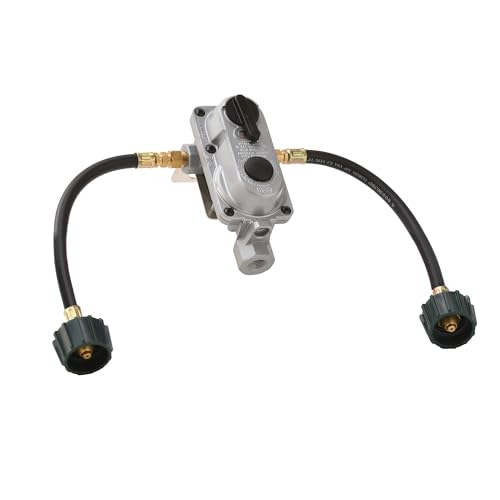
The Flame King KT12ACR-2 is a two-stage, auto-changeover regulator with two 12-inch pigtails. It supports dual-RV tank setups, automatically switching from the primary to the reserve tank when the primary is depleted. It’s UL Listed and uses 1/4″ SAE inverted flare inlets and a 3/8″ NPT female outlet, with a high BTU rating of 345,200. Best for RVs or vans with dual propane cylinders and a need to continue supply during refills. A potential limitation is the need to manage two supply lines and ensure correct pigtail connections during installation.
Who it’s best for: RV owners with dual tanks who want seamless supply without manual tank switching. Why chosen: high BTU capacity and automatic changeover reduce downtime during camping trips. Caution: check compatibility with your tank fittings and ensure the pigtails reach your storage space without strain.
Aekops Dual Tank Regulator Kit

The Aekops regulator kit provides a two-tank setup with 210,000 BTU primary and 130,000 BTU reserve. It includes two 18″ hoses and features 1/4″ SAE inverted flare inlets with a 3/8″ female NPT outlet. The kit is CSA certified and combines brass components with stainless-steel hose braiding for durability. Best for: RVs requiring a complete, certified package with visible tank status and a robust hose assembly. Caution: verify hose length and clearance in your storage bay to avoid kinks or stress on fittings.
RecPro RV Propane Gas Regulator 2-Stage Auto Changeover

The RecPro regulator is designed to eliminate manual tank switching. It supports dual-tank operation with a red indicator window showing when a tank is empty. It weighs about 2.5 pounds and uses ¼” female NPT inlets with a ⅜” female NPT outlet. Best for campers who value easy operation and clear status indicators. Caution: ensure the regulator’s monitored pressure aligns with your grill or heater equipment to avoid over-pressurization.
Devvicoo 2-Stage Auto Changeover With Gauge
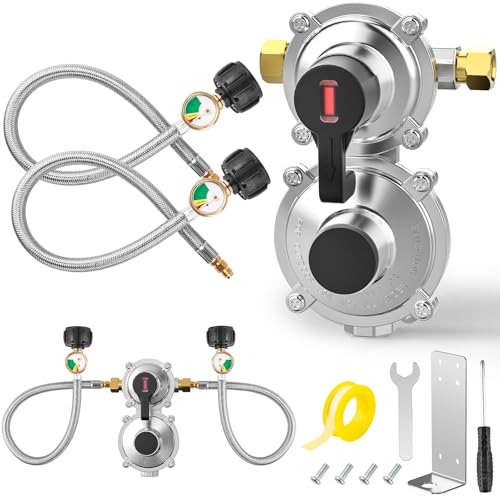
The Devvicoo regulator features a gauge for visual pressure and automatic switching between tanks. It is compatible with dual 5-40 lb propane tanks and uses ¼” SAE inverted flare inlets and a 3/8″ NPT female outlet. It supports up to 210,000 BTU/hour primary output and 130,000 BTU/hour reserve. Best for: RVs that benefit from a transparent gauge and brass durability. Caution: gauge readability can depend on lighting; store in a place where it remains visible and protected from damage.
Canamax 2-Stage Dual Tank Regulator Kit
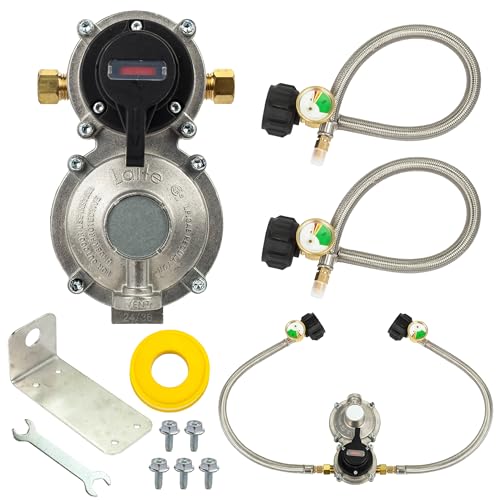
The Canamax kit offers a CSA-certified dual-tank regulator with two 18″ stainless braided hoses and a complete installation package. It provides 210,000 BTU/hour primary and 130,000 BTU/hour reserve. Inlets are ¼” SAE inverted flare, and the outlet is 3/8″ NPT. Best for: campers seeking an all-in-one, certified setup with longer hoses for easier routing. Caution: verify OE part compatibility and ensure all fittings are securely tightened to prevent leaks.
Buying Guide: Key Considerations For Dual-Tank RV Propane Regulators
- Changeover Method: Choose automatic changeover to maintain uninterrupted gas flow when one tank is empty. This reduces manual tank switching during travel and camping.
- BTU Capacity: Ensure the regulator’s primary and reserve BTU ratings meet your appliances’ demands. Higher BTU ratings support grills, heaters, and appliances at higher usage.
- Inlets and Outlets: Common configurations use ¼” SAE inverted flare inlets and 3/8″ NPT outlet. Confirm compatibility with your hoses and gas appliances.
- Hose Length And Durability: Long hoses offer routing flexibility but must maintain safety margins. Stainless braided hoses resist wear and outdoor elements.
- Indicators And Gauges: Visual cues for tank status help prevent unexpected gas loss. Gauges are helpful but rely on clear visibility and proper mounting.
- Certification: CSA or UL listings indicate adherence to safety standards. This matters for long-term reliability and insurance considerations.
- Installation Considerations: Some kits include mounting brackets and hardware for quick setup. Check for compatibility with your RV chassis and storage area.
- Safety Practices: Always perform leak checks after installation, and follow manufacturer guidelines for gaskets, tape, and connectors.
Frequently Asked Questions
- What is a changeover regulator?
It automatically switches the gas supply from a depleted tank to a full one to maintain continuous flow. - What BTU rating do I need?
Choose a regulator with primary and reserve BTU ratings that exceed the total BTU draw of your propane appliances. - Do regulators require maintenance?
Regular inspection for leaks, cracks, or corrosion is recommended, especially in outdoor environments. - Is CSA or UL certification important?
Certification enhances safety standards and may be preferred for insurance and compliance reasons. - Can I install a regulator myself?
Basic installations can be DIY with proper tools; however, follow all safety guidelines and consult a professional if unsure.