Looking for a reliable two-person tent for bikepacking? This guide highlights top options that balance weight, space, and weather protection. Each pick suits specific riders—ultralight enthusiasts, all‑weather campers, or value‑oriented cyclists. Read on to see which tent best fits your bike setup, riding style, and gear needs. Below is a quick summary of the five tents highlighted here.
| Product | Best For | Key Benefit |
|---|---|---|
| Montiro Wander Hawk 1-2 Person Tent | Versatile two-person bikepackers | Ample interior height and space for two |
| MSR Hubba Hubba Bikepack | Lightweight, bike-on-the-go setups | Bike-specific storage and compact packing |
| Naturehike Mongar 2 Person Tent | Budget-conscious explorers | Expandable awning for extra covered space |
| Naturehike Cloud Up Pro 2 Person | Ultralight, well-ventilated | Higher door, better airflow |
| ShinHye 2 Person Backpacking Tent | Easy setup, reliable protection | Double-layer design with two doors |
Montiro Wander Hawk 1-2 Person Tent
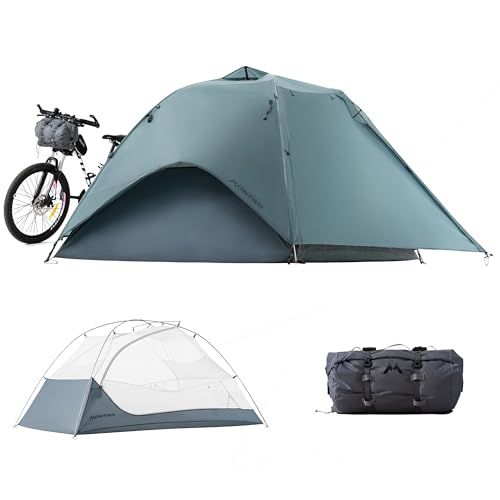
The Montiro Wander Hawk is a lightweight, 2‑person bikepacking option with a compact trail weight around 3 lb 14 oz and a total package of about 5 lb with footprint. Its interior measures provide 90 inches of length, 54 inches of width, and 43 inches of height, giving two occupants enough space to sleep or sit upright. Best for riders who need a flexible space that works for bikepacking and casual camping, especially where weight and interior headroom matter. A potential limitation is the 20D ripstop fabric; while strong, it may require careful setup in very windy conditions to maintain taut lines.
MSR Hubba Hubba Bikepack 2 Person

The MSR Hubba Hubba Bikepack is a refined, bike-oriented option designed for riders who prioritize light weight and bike-specific features. It includes compact DAC poles that fold to fit on handlebars or in tight bike storage, plus a water‑proof handlebar storage bag. This tent is best for riders who want quick setup and dedicated space for bikes near the shelter. A potential limitation is its higher price point relative to some rivals, which may be a factor for budget-conscious buyers.
Naturehike Mongar 2 Person Tent

The Naturehike Mongar offers spacious interior dimensions with a 86.6” x 53.1” floor area and a 41.3” peak height, making it comfortable for two people. Its expandable awning adds sheltered space for gear or shade, which can be valuable in variable weather. Weighing around 6 lb, it remains portable for bikepacking, though it’s heavier than ultralight options. Choose this when you want extra living space and flexible weather coverage without a premium price.
Naturehike Cloud Up Pro 2 Person

The Cloud Up Pro is an ultralight two-person tent designed for backpackers who pace bikes across varied terrain. It features a larger front door and an upgraded roof ventilation window to improve airflow and reduce condensation. Its weight is around 3.97 lb, with compact packing dimensions—ideal for riders who prioritize light gear and quick setup. It may be best avoided in extremely windy environments if staking options are limited, as bagged wind gusts can challenge a light shelter.
ShinHye Backpacking Tent 2 Person

The ShinHye 2‑person tent emphasizes easy setup with lightweight aluminum poles and a two-door, double‑layer design. It provides robust protection via taped seams and a PU 5000 coated rainfly and groundsheet. This makes it a reliable option for riders who want quick assembly in changing conditions and extra vestibule space for wet gear. A minor caveat is that, as with many affordable tents, airflow may be more limited in heavier rain scenarios unless the vents are used effectively.
Buying Guide: Key Considerations For Bikepacking Tents
- Weight vs. space: In bikepacking, lighter tents reduce fatigue, but you still need room for two people and gear. Consider the trail weight and packed size when comparing models.
- Weather protection: Look for waterproof ratings, seam construction, and fabric durability. Double‑layer designs and taped seams improve reliability in rain and wind.
- Door and vestibule design: Two doors provide easy access and separate storage space. Vestibules help keep wet gear outside the sleeping area.
- Setup simplicity: Freestanding designs and color-coded poles speed setup, especially after long rides. Assess how easily tents can be pitched on uneven ground.
- Ventilation: Adequate ventilation reduces condensation in humid conditions. Look for doors or vents positioned to promote airflow without compromising warmth.
- Bike-specific features: Some tents include gear bags or storage solutions that attach to or near the bike. Consider how these features fit your bike layout.
- Durability vs. budget: More durable fabrics and stronger poles add cost but extend life in rough conditions. Balance with your budget and usage frequency.
- Footprint and compatibility: Some tents include footprints. If not, verify groundsheet compatibility and the tent’s footprint footprint size for practical terrain use.
Frequently Asked Questions
- What is a bikepacking tent? Answer: A bikepacking tent is designed to be lightweight, compact, and easy to set up, often with features that accommodate storing gear and occasionally attaching to a bike or bike rack.
- Is a two-person tent comfortable for two adults on bike trips? Answer: Yes, most two-person tents provide sufficient sleeping space for two adults, with variations in interior height and vestibule space depending on the model.
- Should I choose a double-wall or single-wall tent for bikepacking? Answer: Double-wall tents offer better weather protection and less condensation, while single-wall tents are lighter and more compact but may condense more in humid climates.
- How important is ventilation in a bikepacking tent? Answer: Ventilation is important to prevent condensation and maintain comfort, especially in warm or humid environments and during hot nights inside the tent.
- Are bikepacking tents compatible with footpath or mountaineering gear? Answer: Most bikepacking tents are designed to be compatible with typical gear setups; check dimensions and vestibule size to ensure room for your equipment.
- What should I consider about the tent’s weight on multi-day bike trips? Answer: Weighing options and packing the lightest practical tent helps reduce fatigue and allows more room for essential gear during long rides.