Answering the question most RV owners ask: which skylight or rooftop air conditioner is best for my rig? The top picks below are chosen for different RV sizes, energy needs, and installation preferences. Whether you want powerful cooling for hot summers, efficient inverter operation for off-grid use, or quiet operation for night enjoyment, these units are strong contenders. The buyers described next are best suited for full-time travelers, weekend campers, and mid‑sized RVs seeking reliable climate control.
| Product | Best For | Key Benefit |
|---|---|---|
| TURBRO RV Air Conditioner, 15,000 BTU | Mid-to-large RVs | Strong cooling with electric heat and WiFi control |
| Furrion Chill Cube 18k BTU | Hot climates, ducted systems | High capacity with efficient, quiet operation |
| TURBRO Inverter 13.5K BTU | Off-grid trips | Energy-saving inverter with heat pump option |
| VEVOR RV Air Conditioner 13,500 BTU | Standard RV spaces | Balanced cooling with simple install |
| Dometic FreshJet 3 Series 13.5K BTU | Lightweight efficiency | Higher airflow with lighter design |
TURBRO RV Air Conditioner 15,000 BTU

Best for: RVs that require substantial cooling and year-round comfort. This non-ducted rooftop unit provides up to 15,000 BTU cooling plus 1,500W electric heating for cold conditions. It also includes a fan and dry mode, helping manage humidity and comfort across seasons. The unit supports remote and WiFi control for convenient, on-the-fly adjustments. It’s a solid choice for larger interiors where quick cooling and reliable heating are priorities.
Why selected: High cooling capacity in a single rooftop unit makes it ready for hot travels or crowded bunk areas. The integrated atmosphere lamp adds ambiance, while recessed handles aid installation and movement. The 9.6 EER suggests efficiency for its class. Consider this if you prioritize raw cooling power and smart-control features in a non-ducted setup.
Caution/limitation: Higher BTU units can consume more power; ensure your power source and wiring are sized for peak operation and consider pairing with efficient modes to optimize energy use.
Furrion Chill Cube 18k BTU RV Rooftop AC

Best for: Campervans and larger RVs that need robust cooling with efficient operation. The 18,000 BTU unit uses variable speed compressors to move air quickly and efficiently. It’s designed for higher performance and energy efficiency, which helps extend battery life during off-grid adventures. It’s a ducted option, and is noted for higher capacity versus typical RV units.
Why selected: A strong mid-to-high capacity option with improved efficiency. The unit’s weight and installation considerations suit owners upgrading from basic models who want faster cool-down times and quieter operation in hot environments.
Caution/limitation: This is an AC unit only; ADB components are sold separately. Verify ducting compatibility and ensure installation space accommodates the higher BTU and potential ducting needs.
TURBRO Inverter 13.5K BTU RV AC with Heat Pump
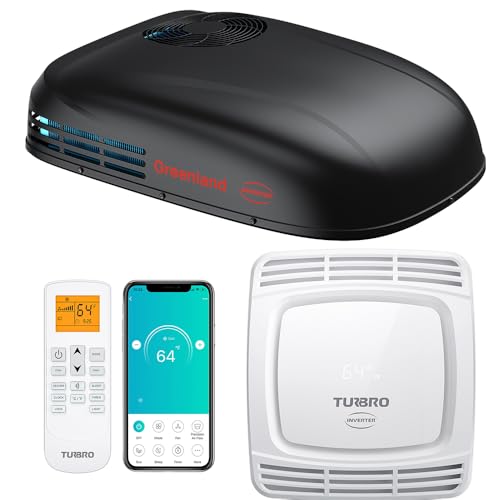
Best for: RV owners who prioritize energy efficiency and off-grid capability. The 13,500 BTU system uses an inverter compressor to adjust speed, delivering up to 30% better efficiency and quieter operation. It includes a heat pump function that can provide warmth in milder climates and a slim, low-profile rooftop form factor.
Why selected: Inverter technology reduces energy draw and improves start-up behavior, which is helpful for battery systems. The LED atmosphere light adds a touch of ambiance, appealing to travelers who value comfort and aesthetics.
Caution/limitation: Performance depends on ambient temperatures; in extreme heat or cold, the heating/cooling balance may differ from non-inverter designs. Ensure your electrical system can support inverter startup loads.
VEVOR RV Air Conditioner 13,500 BTU

Best for: Campers, vans, and trailers needing a balanced, ductless option with straightforward installation. The 13,500 BTU unit is designed to deliver rapid cooling and features three modes: Auto, Cooling, and 3-Speed Fan. It includes a simple operation panel and is noted for easy roof mounting on standard rooftop vents.
Why selected: Good blend of cooling capacity and ease of installation for mid-size spaces. The Auto mode helps maintain comfortable conditions with minimal manual adjustments, which is convenient for travelers who want set-and-forget climate control.
Caution/limitation: Not compatible with ducted RV systems. Check roof space and mounting area to ensure a smooth fit within your current roof profile.
Dometic FreshJet 3 Series 13.5K BTU

Best for: RVs seeking higher airflow and lighter equipment. The FreshJet 3 Series offers a 13.5K BTU capacity with improvements in airflow and overall weight—beneficial for RVs where weight savings or reduced roof load are priorities.
Why selected: Focusing on airflow efficiency and weight, this unit can support comfortable conditions in a compact package. It’s a solid option for those who want a dependable, lighter roof unit without sacrificing cooling performance.
Caution/limitation: While lighter, ensure compatibility with your current ductwork and roof construction. Verify mounting dimensions and electrical requirements before purchase.
Buying Guide
What to consider when choosing an RV skylight or rooftop AC
Rooftop cooling power (BTU) should match your RV size and typical climate. Larger spaces need higher BTU units, but that also increases power use and installation complexity.
Power source compatibility matters. Inverter-equipped models save energy and suit off-grid trips, while non-inverter designs deliver steady performance on grid power.
Installation type matters. Ducted units distribute air through vents; non-ducted units blow through ceiling ports. Consider your roof setup, existing vent openings, and whether you need a single-zone or multi-zone solution.
Noise levels affect comfort. Look for units with low dB ratings to minimize disruption during sleep or work inside the RV.
Controls and smart features add convenience. Remote and app control allow adjustments from inside the RV or from outside, improving ease of use on travel days.
Weight and dimensions influence roof load. Check the unit’s weight and height to ensure it fits within roof clearance and does not strain the vehicle’s structure.
Maintenance and refrigerant type impact long-term reliability. R32 refrigerant is common for efficiency, but verify service options and replacement parts for your chosen model.
How to compare options quickly
- Best for hot climates: consider higher BTU units like 15,000–18,000 BTU.
- Off-grid readiness: prioritize inverter compressors and energy-efficient models.
- Noise sensitivity: check dB ratings and look for “quiet operation” claims.
- Installation ease: non-ducted units are often simpler to install; ducted units require more planning.
- Weight considerations: lighter models improve roof load tolerance in smaller RVs.
FAQ for RV skylight AC buyers
- Q: Do I need a professional to install an RV rooftop AC? A: Installation can often be DIY if you have rooftop access and mechanical aptitude, but many installations are best done by a professional to ensure proper sealing and electrical connections.
- Q: Is inverter cooling more expensive to install? A: Inverter units can have a higher upfront cost, but they typically save energy during operation, which can reduce running costs on longer trips.
- Q: Can these units cool small and large RVs alike? A: Cooling capacity should match room size. Larger RVs require higher BTU units to achieve comfortable temperatures effectively.
- Q: Are all RV rooftop units compatible with non-ducted setups? A: Not necessarily. Some units are designed for ducted systems, while others are non-ducted and easier to install on standard vents.
- Q: What should I check before purchasing? A: Roof space, electrical supply capacity, mounting dimensions, and compatibility with your RV’s vent openings and power system.