The best 17 lb propane tank for most buyers is a portable, easy-to-monitor cylinder that offers sufficient fuel for camping, grilling, or small outdoor heaters. This guide highlights five relevant options and clearly explains who each is best for, plus any practical limitations. If you’re outfitting an RV, boat, or overlanding setup, you’ll find alternatives in similar 17–20 lb and 30 lb categories to fit your stability, weight, and mobility needs.
Quick comparison
| Product | Best For | ||
|---|---|---|---|
| 17lb Capacity Lightweight Composite Propane Tank | Campers and outdoor cooks | 50% lighter than steel; translucent level visibility | Not steel; may have different fittings for some appliances |
| Flame King YSN5LB 5 Pound Propane Tank | Backup small grills | Compact, easy to transport | Smaller capacity; frequent refills needed |
| Flame King YSN330 30lb Steel Propane Tank | Heavy-use grills and long trips | Built-in gas meter gauge; OPD valve | Heavier to transport |
| Flame King YSN5LB-GAUGE 5lb Tank with Gauge | Precise monitoring on small setups | Integrated gauge for level awareness | Limited capacity |
| Flame King YSN-201 20-Pound Steel Tank | Mid-size grilling and camping | OPD valve; DOT/TC certified | Standard steel weight and handling |
17lb Capacity Lightweight Composite Propane Tank

Best for campers and outdoor cooks who prioritize portability. This 17-lb tank weighs about half as much as a comparable steel cylinder and features an ergonomic handle for easy carrying. The translucent outer walls allow quick propane level checks, and the stable base helps prevent tipping during storage and use. It is well-suited for shrink wrap applications and works with Dr. Shrink heat tools. Choose this if you want a lighter option with good visibility of fuel level and a stable base.
Who it’s best for: backpackers and campers needing a light, easy-to-move tank with visible fuel. Limitations: Not a steel tank—handle compatibility with certain mounting systems may vary.
FLAME KING YSN5LB 5 Pound Propane Tank Cylinder
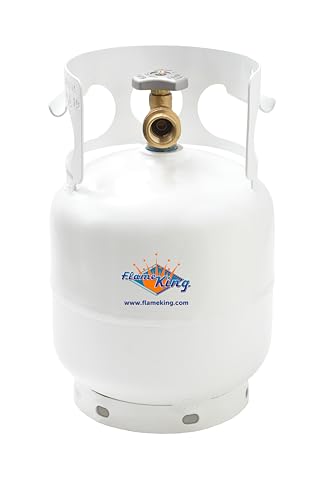
Best as a supplementary small cylinder for portable grills and compact setups. This tank ships pre-purged and ready for filling, and includes an overfill prevention device (OPD) for safer transport. It’s ideal for scenarios where space and weight are at a premium and the user has low to moderate fuel needs. Use this if you want a compact option and don’t mind refilling more often.
Who it’s best for: light-duty, on-the-go grilling or outdoor heating where size matters. Limitations: Low capacity means more frequent fills for longer cooks.
Flame King YSN330 30lb Steel Propane Tank

Best for high-demand grilling, camping, and longer outdoor sessions. The built-in gas meter gauge helps you avoid running out, and the tank’s steel construction combined with an OPD valve aligns with safety requirements in many regions. Choose this if you need reliable fuel levels at a glance and greater capacity for extended use. A limitation can be heavier weight and bulk compared to smaller tanks.
Who it’s best for: families or groups that require steady propane supply and active monitoring. Limitations: Heavier to transport and maneuver.
Flame King YSN5LB-GAUGE 5lb Steel Tank With Gauge
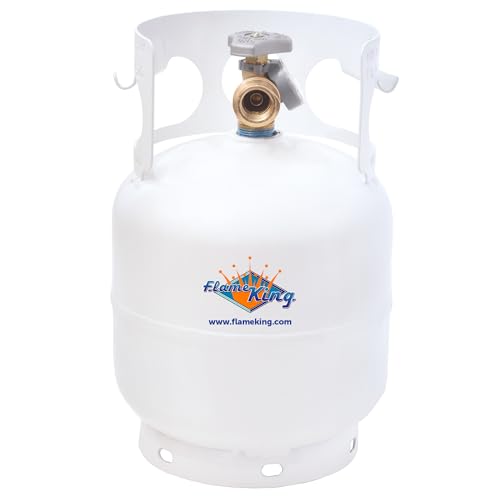
Best for precise fuel level awareness in small-capacity setups. The gauge provides a quick read of remaining propane, reducing the guesswork that can interrupt cooking. It’s suitable for campers and tailgaters who don’t need large quantities of fuel and want to avoid tank resupply interruptions. Limitation: limited fuel capacity, requiring more frequent refills than larger tanks.
Who it’s best for: users who value gauge visibility in a compact tank. Limitations: Small capacity means more frequent topping up.
Flame King YSN-201 20-Pound Steel Tank

Best for mid-size grilling and camping needs, offering a balance of capacity and portability. This steel tank includes a Type 1 OPD valve and robust exterior protection. It is suitable for users who want a standard, widely compatible option with safety features. Limitation: heavier than composite tanks, which can impact handling during transport.
Who it’s best for: campers and cooks who want a reliable 20-lb option with established compatibility. Limitations: Steel construction adds weight and may require more storage space.
Buying Guide
Key considerations help narrow down the best 17 lb propane tank choice for your setup:
- : If you cook for multiple people or long durations, larger tanks (20–30 lb) reduce refills. For light camping, a 17 lb or smaller unit may suffice.
- Material: Composite tanks are lighter and easier to handle, but steel tanks are typically more durable and widely compatible with mounting options and outdoor gear.
- Portability: Look for ergonomic handles, built-in gauges, and stable bases to prevent tipping on uneven ground or during transport.
- Safety features: An OPD valve is standard on modern tanks and helps prevent overfilling. Consider tanks with built-in gauges if you need quick fuel level readings.
- Mounting and storage: If you need to secure a tank on an RV, boat, or cargo setup, verify bracket compatibility and mounting options (vertical/horizontal).
- Regulatory compliance: Verify local regulations regarding DOT/TC certification and required safety features for your travel area.
FAQ
- What does OPD stand for and why does it matter? OPD stands for Overfill Prevention Device. It helps prevent propane tank overfilling and is required by many safety regulations.
- Is a lighter 17 lb tank safer than a steel one? Safety depends on usage and handling. Lighter composite tanks are easier to carry, but steel tanks offer durable construction and consistent compatibility with mounting hardware.
- Can I use a 17 lb tank with a standard grill? Most grills designed for 11–20 lb cylinders are compatible, but confirm the connector type and regulator requirements for your model.
- How often will I need to refill a 17 lb tank? Refilling frequency depends on usage, but for long outdoor cooking sessions, a larger tank or multiple tanks reduces interruption.
- Are there safety considerations for transporting propane tanks? Always transport upright in a well-ventilated area, secure the tank, and avoid exposure to heat or flame sources during transit.