Answer: If you’re outfitting a travel trailer for reliable cooling off the grid, a 3‑way or propane refrigerator is typically the best choice. These models run on LPG, 12V, or 110V, giving you options for anywhere from full-time RV living to weekend camping. The top picks below are ideal for small to mid‑sized travel trailers, motorhomes, and trucks, with clear guidance on who benefits most from each option. A quick comparison table follows to help you decide at a glance.
| Product | Capacity | Power Options | |
|---|---|---|---|
| Smad 2.1 Cu.Ft. Propane Refrigerator | 2.1 cu ft | 12V / 110V / LPG | Small trailers, trucks, off-grid weekend trips |
| RV Refrigerator 2.1 Cu.ft (Smad) | 2.1 cu ft | 12V / 110V / LPG | Compact spaces, off-grid or temporary installations |
| Smad Propane Refrigerator 2.1 Cu.ft | 2.1 cu ft | 12V / 110V / LPG | Off-grid campers and semi-trucks needing reliable cooling |
| Smad 1.4 Cu.Ft. 3 Way RV Fridge | 1.4 cu ft | 12V / 110V / LPG | Tight spaces, apartments or smaller RVs needing door flexibility |
| Propane Refrigerator 1.6 cu.ft | 1.6 cu ft | 12V / 110V / LPG | Compact cabins, vans, and small travel trailers |
Smad 2.1 Cu.Ft. Propane Refrigerator

Capacity and versatility meet travel needs with a 2.1 cu ft interior designed for RVs, trucks, and campers. The refrigerator operates on 12V, 110V, or LPG, letting you choose the best power source for each trip. Temperature can be controlled from 32 to 50°F, enabling reliable storage of meats, dairy, and drinks. The unit includes adjustable feet and removable shelves for easy leveling and organization. It runs with a quiet, no-noise absorption cooling system, which is ideal for light sleepers or homes with kids.
Best for: Small trailers and off-grid trips where LPG or 110V power is available. Choose this if you need flexible power and quiet operation in a compact footprint.
Caution: LPG pressure must be maintained at around 2.8 Kpa (28 mbar) for proper cooling performance.
RV Refrigerator 2.1 Cu.ft (Smad)

This 2.1 cu ft 3‑way refrigerator is designed for off-grid and on‑grid use, with LPG, 12V, and 110V operation options. It features two adjustable shelves and a protective door frame to prevent spills during travel. Temperature range from 32 to 50°F provides reliable storage for fruits, vegetables, and beverages. It’s lightweight and compact enough to fit in smaller campers or semi-trucks, while still offering meaningful capacity for daily use.
Best for: Off-grid campers and compact RVs that need a balanced power setup and simple, secure storage while traveling.
Caution: LPG operation requires proper venting and gas line setup to ensure safety and performance.
Smad Propane Refrigerator 2.1 Cu.ft

This 3‑way refrigerator emphasizes compact design with a reversible door, giving flexible installation in limited spaces. The 2.1 cu ft capacity holds essentials like fruits, vegetables, cheeses, and drinks. It cools from 32 to 50°F, using LPG, 12V, or 110V power depending on availability. The door drawer features two protective frames to keep items secure while traveling.
Best for: Camper vans and semi-trucks where door orientation matters and space is at a premium.
Caution: Ensure LPG gas pressure is maintained at 2.8 mbar for reliable cooling.
Smad 1.4 Cu.Ft. 3 Way RV Fridge

This 3‑way refrigerator offers a compact footprint with 1.4 cu ft capacity and a reversible door. It supports 12V, 110V, and LPG, making it adaptable for apartments, dorms, offices, semi trucks, and RVs. Temperature control ranges from 32 to 50°F, suitable for daily essentials. The dimensions (roughly 15.8 x 17.7 x 25 inches) fit tight spaces while maintaining usable interior space.
Best for: Smaller living spaces where door direction flexibility and multi‑power sources are beneficial.
Caution: The smaller capacity means limited bulk storage, so plan for shopping frequency accordingly.
Propane Refrigerator 1.6 Cu.ft
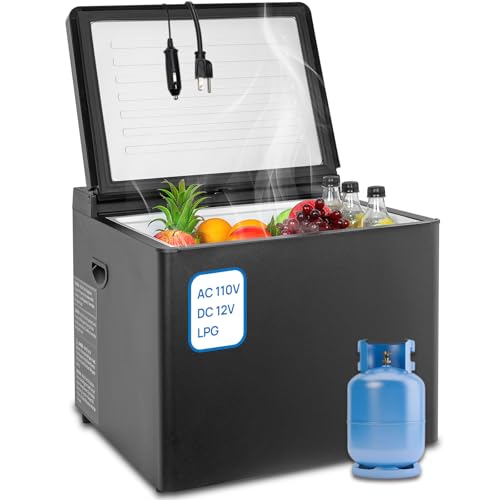
This 1.6 cu ft compact fridge uses three-way power: 12V, 110V, or LPG, making it versatile for off-grid camping and on‑the‑road use. The top‑open door design supports flexible loading and unloading in tight spaces. Temperature control maintains 32–50°F, suitable for beverages and snacks on long trips. Its compact form supports installation in vans, campers, and small travel trailers.
Best for: Ultra-compact setups where every inch of space matters and multiple power options are desired.
Caution: Top-open design can affect loading in very narrow spots or during sharp turns; ensure clear access paths.
Buying Guide: Propane Refrigerators For Travel Trailers
What power options do I actually need?
Most travel trailer refrigerators offer three power modes: LPG for off-grid use, 12V for RV battery systems, and 110V for shore power. LPG provides independence from electrical hookups but requires proper venting and gas line installation. 12V is great during travel and for battery-assisted operations, while 110V is convenient at campsites with electrical hookups. If you camp off-grid often, prioritize LPG compatibility and efficient energy use.
What capacity is right for my space?
Compact models around 1.4–2.1 cu ft suit small trailers or vans with limited space. Larger units around 6.1 cu ft are better for bigger RVs or food-prep areas like campers or chalets. Balance storage needs with available mounting space and how frequently you shop during trips.
How important is door orientation?
Reversible doors add installation flexibility, letting you adapt to where the fridge will sit in your layout. If your space has a fixed orientation, this feature helps avoid awkward loading or clearance issues.
What are the installation considerations?
Take note of dimensions, airflow clearance, and whether you need venting for LPG operation. Some models are top‑opening, which can influence cabinet layout. Ensure a level surface and secure mounting, especially in mobile setups.
Are there trade-offs I should expect?
Smaller units save space and weight but limit storage capacity. Three‑way models provide flexibility but may have slower cooling performance than dedicated electric fridges. Consider where you’ll mostly rely on LPG versus shore power to tailor your choice.
What about maintenance and safety?
Regular inspection of LPG connections and vents is essential for safety and efficiency. Keep shelves removable for easier cleaning, and ensure any gas lines are installed by a qualified technician in accordance with local codes.
Practical quick-access tips
- Label LPG sections and maintain a small gas vent kit if you plan to use LPG frequently.
- Place the fridge away from heat sources and provide adequate ventilation for best performance.
- Use adjustable shelves to optimize space for bulky items or tall bottles.
FAQ
- Can I use LPG refrigerators while driving? Yes, many models support LPG operation for off‑grid or travel scenarios, but ensure proper venting and safety checks.
- What installation space is required? Most units specify height, width, and depth; verify your cabinet or vehicle dimensions before purchase.
- Do three‑way fridges cool as fast as standard 12V units? They are designed for flexibility, but cooling speed can vary based on power source and ambient conditions.
- Is a reversible door always necessary? It’s helpful in tight spaces; if your layout is fixed, you may not need this feature.
- Are these safe for long‑term off‑grid living? Many are designed for off-grid use, but always follow manufacturer guidance and install according to safety codes.