Answering the question a camper asks first: these small generators deliver reliable, portable power for tents, RVs, and remote campsites without creating a loud nuisance. The top picks below are best for different needs—compact carries for solo trips, higher-output units for RV setups, and ultra-light options for hikers or beach camping. Each product is evaluated for portability, run time, fuel options, and suitability for sensitive electronics. Use this guide to choose the right unit for your camping style and equipment list.
| Product | Best For | Key Power | Runtime |
|---|---|---|---|
| Oxseryn Power Equipment 4400W Inverter | RV camping and home backup on the go | 4400 peak / 3400 running | Up to 14 hours at 25% load |
| WEN 56477i Quiet Inverter | Sensitive electronics on the move | 4800 surge / 4000 running | Noted runtime varies by load |
| PowerSmart 3600W Inverter | Mid-size camping with AC needs | 3600 surge / 3200 running | Up to 8 hours at 25% load |
| Westinghouse 4650 Peak Dual Fuel | Versatile fuel options for longer trips | 4650 peak / 3600 run (gas) | Up to ~14 hours per tank |
| PowerSmart 1200W Portable | Lightweight, ultra-portable for solo campers | 1200 surge / 900 running | Up to 5 hours at 50% load |
Below is a curated set of five compact generators. Compare their strengths to match your camping style—whether you need quiet operation, RV-ready outlets, or ultra-light portability for hiking trips.
Oxseryn 4400W Inverter: Portable RV Backup

Best for: RV campers who need a robust, gas-powered unit with inverter technology for sensitive electronics. This model delivers 4400 peak watts and 3400 running watts, with a 2-gallon tank and an EV-style ECO mode for extended runtimes. Features multiple outlets including 120V AC, 12V DC, and an RV port. The unit is noted for a long run time at light loads, which helps during evening camping needs or emergency home backup. A limitation is the 2-gallon tank, which may require refueling on longer runs at higher loads.
Oxseryn 4400-Watts Inverter Generator With RV Outlet
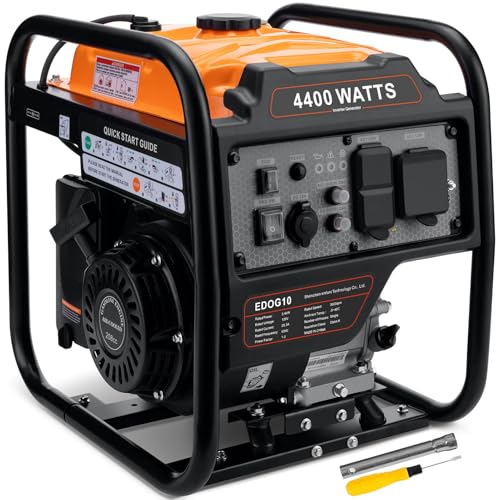
Best for: Campers who want a dedicated RV 30A outlet and inverter efficiency. It mirrors the power specs of the other Oxseryn model but emphasizes RV-ready functionality and eco-friendly operation. Choose this if you frequently power RV appliances or need reliable pure-sine-wave output. Limitation: design emphasizes power for RV use, which can be less efficient for very light loads in some scenarios.
WEN 56477i Quiet 4800-Watt Inverter

Best for: Campers needing clean power to protect smartphones, laptops, and tablets. This unit provides up to 4800 surge watts and 4000 running watts, and includes a CO shutdown sensor to enhance safety. It’s a strong all-arounder for moderate camping, tailgating, or small RV setups. Consider its slightly higher noise level compared with some ultra-quiet models if you’re in a quiet campground.
PowerSmart 3600W Inverter for Camping

Best for: Campers needing a balance of power and runtime with a 1.3-gallon tank for up to 8 hours at 25% load. The 3600W surge/3200W running output, combined with inverter technology, makes it suitable for climates where fuel efficiency and stable voltage are important. Limitation: smaller fuel capacity means more frequent refueling on longer trips.
Westinghouse 4650 Peak Dual Fuel
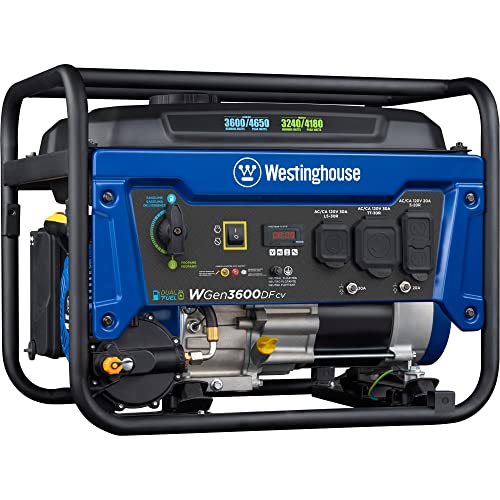
Best for: Campers who want flexibility with fuel options and a good balance of power for RV or home backup. It runs on gasoline or propane and delivers up to 4650 peak watts with 3600 running watts (gas) and 3240 running watts (propane). It includes multiple outlets and a basic CO sensor. Limitation: dual-fuel capability adds complexity and potential maintenance considerations for casual users.
PowerSmart 4300W Portable Inverter

Best for: Campers needing heavy-load start capability with clean energy. It delivers 4300 surge watts and 3500 running watts, with a 1.98-gallon tank and Eco-Mode to extend runtime. This unit strikes a balance between output and fuel efficiency for weekend trips or longer stays. Caution: higher watt output may require more careful load management to maximize efficiency.
WEN DF680iX 6800W Dual-Fuel

Best for: Campers who want electric vehicle backup options and dual-fuel flexibility. The unit runs on gasoline (6800 surge / 5100 rated) or propane (6000 surge / 4500 rated) and includes a CO shutdown sensor for safety. It’s well-suited for larger camp setups or longer outings where higher power is essential. Limitation: larger size and weight may reduce portability for solo hikers.
Buying Guide: How To Choose The Right Small Camper Generator
- Power needs: Estimate essential appliances and tools (fridge, A/C unit, lighting, laptop). Choose a unit with a steady running wattage comfortably above your highest load, not just peak watts.
- Portability: Consider weight and handle design. If you travel by foot or bike, ultra-light and compact models are preferable; for RVs, a mid-size unit with several outlets is often best.
- Fuel and runtime: Gasoline engines are common, but dual-fuel models offer flexibility. Look for larger fuel tanks if you expect long outages or extended camping trips.
- Inverter technology: Inverter generators produce clean power with low total harmonic distortion (THD), protecting sensitive electronics like phones, laptops, and CPAP machines.
- Quiet operation: Noise level matters at campsites. Compare decibel ratings or user-reported noise to ensure compliance with campground rules and comfort for nearby campers.
- Safety features: CO sensors, auto shutoff on low oil, and robust spark arrestors help prevent hazards in camping environments.
- Outlets and compatibility: Check outlet types (120V, RV TT-30, 30A), and ensure the unit supports your devices and RV connections.
- Maintenance: Consider oil reminders, fuel gauge, and ease of servicing when choosing a generator you’ll use repeatedly.
Frequently Asked Questions
- What size generator is best for camping with a small RV?
A: A 3000–4000W inverter often provides sufficient power for lights, a small fridge, and essential electronics, with better fuel efficiency and quiet operation than larger units. - Do I need an inverter generator for sensitive electronics?
A: Yes. Inverter generators deliver a stable, clean sine wave (low THD) that protects sensitive devices from power surges. - Can I use a dual-fuel generator for camping?
A: Dual-fuel options offer flexibility when fuel availability is inconsistent, but ensure you understand fuel storage and conversion requirements. - Is 6–8 hours of runtime enough for a camping trip?
A: For many trips, yes, especially with ECO modes. If you need longer runtimes, seek larger tanks or models designed for extended operation. - What safety features should I look for?
A: CO sensors, automatic shutoff for low oil, and proper ventilation are essential for safe camping use. - How should I store fuel for camping use?
A: Store in approved containers away from heat sources and never indoors. Follow local safety regulations and manufacturer guidelines.