Answering buyers seeking reliable, well-regarded portable power, this guide highlights top-rated options across gas, dual-fuel, inverter, and solar-ready models. These picks suit frequent campers, RV owners, and home backup planners who want quiet operation, dependable run times, and easy transport. Each section explains who the product is best for and why it stands out, with practical cautions when applicable. A quick comparison table below helps you scan key attributes at a glance.
| Product | Best For | Notes |
|---|---|---|
| Oxseryn Power Equipment 4400 | Medium RV use and home backup | Inverter with ECO mode, 14h runtime at 25% load |
| Champion 4000-Watt RV Ready | Lightweight, portable backup | Very quiet, optional parallel kit |
| Westinghouse 12500 Dual Fuel | Whole-home backup | High wattage, transfer switch readiness |
| Jackery Explorer 300 | Outdoors, camping and light power | Solar-ready, ultra-portable |
| WEN 2350-Watt | Travel, cabins, petites loads | Ultralight and quiet |
The following sections detail five top picks, with clear reasoning and practical considerations to help you choose the best portable generator for your needs.
Oxseryn Power Equipment 4400 Watts Inverter Generator

Best for RV enthusiasts and home backup where moderate power is sufficient. This portable open-frame generator delivers 4400 peak watts and 3400 running watts, with multiple outlets including 2x 120V AC, 1x 12V DC, and an RV port. Its ECO mode extends runtime, allowing up to 14 hours at 25% load on a 2-gallon tank. The low-noise profile supports quiet camping and early evening use. Choose this if you need reliable, mid-range power with simple fuel management and straightforward interface.
Best for: RV owners, small-home backups, weekend campers. Limitation: Not ideal for heavy-duty whole-house loads or long continuous high-power runs.
Champion Power Equipment 4000-Watt RV Ready Portable Inverter

Best for travelers seeking light, quiet power with flexibility. Weighing less than 49 pounds, this inverter provides 4000 starting watts and 3000 running watts with up to 10 hours of runtime. It operates at about 64 dBA at 23 feet, which suits camping and tailgating environments. An optional parallel kit lets you pair two units for doubled output. Safety features include CO shield auto shutoff.
Best for: Camping, RV sites, and emergency backups with a preference for portability. Limitation: Parallel operation requires an additional unit and kit (not included by default).
Westinghouse 12500 Dual Fuel Home Backup Generator

Best for whole-home power protection with fuel flexibility. This dual-fuel unit offers 12500 peak watts (gas) and 9500 running watts, with propane ratings of 11200 peak and 8500 running. It includes remote electric start, a large 6.6-gallon tank, and a digital hour meter. It is transfer switch ready and provides multiple outlets, including 120V and 120/240V options. The VFT display shows real-time voltage, frequency, and run time. Select this model for robust, long-running power in outages or job sites.
Best for: Whole-house backup and site power with fuel flexibility. Caution: Higher weight and size require proper mounting and setup in a suitable space.
Westinghouse 5000 Peak Watt Inverter Generator

Best for travel trailers and essential-load scenarios where quiet operation matters. This inverter model delivers 5000 peak watts and 3900 running watts with a sub-3% THD, making it suitable for sensitive electronics. It features a telescoping handle, multiple outlets including 120V duplex and RV-ready TT-30R, and USB ports. Its digital display provides fuel level and runtime information for planning. Choose this if you need strong, stable output with travel-friendly design.
Best for: RVs, small homes, and outdoor events requiring quiet, reliable power. Limitation: Higher wattage units can be less portable than compact models.
Jackery Explorer 1000 v2 Portable Power Station

Best for off-grid living and camping with solar panel compatibility. The Explorer 1000 v2 offers a 1070Wh LiFePO4 battery, 1500W AC output with a 3000W surge, and a lightweight 23.8 lb frame with a foldable handle. It supports rapid charging (1-hour fast charge with emergency mode) via the Jackery App and provides a durable 10-year lifespan expectation with the LiFePO4 chemistry. This model is ideal for laptops, CPAP machines, small appliances, and charging devices during outdoor trips.
Best for: Campers and emergency kits needing compact, safe energy with solar expansion. Limitation: Not designed for high-power appliances like full-size air conditioners without parallel or larger units.
WEN 2350-Watt Portable Inverter
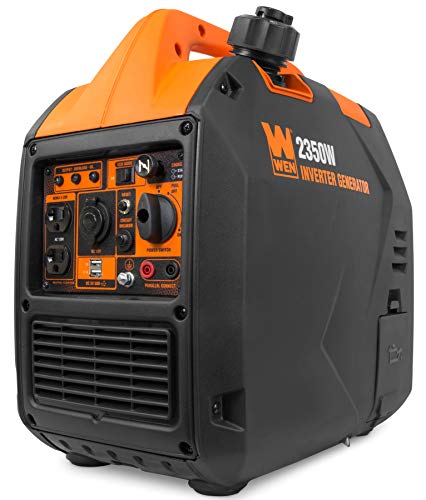
Best for light-use travelers and small loads where ultra-quiet operation is valued. Weighing just 39 pounds, the WEN 2350 offers 2350 surge watts and 1900 running watts. It is designed for easy transport and quiet operation, suitable for charging devices, small electronics, and essential lights. This model is a good entry point for budget-conscious buyers who still need reliable power without heavy equipment.
Best for: Minimalist setups, carriers with limited space, and novice users. Limitation: Lower continuous wattage means it cannot power high-demand appliances simultaneously.
Buying Guide: Portable Generator Essentials
What should you consider before buying?
- Power needs: Estimate total running watts for the devices you intend to power. Inverter generators typically provide cleaner power and better efficiency for sensitive electronics.
- Fuel type and availability: Gasoline is common, but dual-fuel models and propane options offer flexibility during outages. For long outages, propane or dual-fuel may be preferable.
- Run time and fuel capacity: Look for fuel tank size and efficiency; ECO or economy modes extend runtime at lower loads.
- Portability: Weight, wheel kit, and handle design affect transport. Inverters are often lighter and quieter, suitable for camping and RV use.
- Noise level: Measured in decibels; aim for units around 50-65 dBA at 23 feet for comfortable operation in camp settings.
- Safety features: CO shutoff, automatic low-oil shutdown, and transfer switch compatibility improve reliability during emergencies.
- Durability and warranty: Consider build quality, frame design, and whether the warranty covers core components under typical use.
Frequently Asked Questions
What is the difference between peak watts and running watts?
Peak watts (starting watts) are the maximum surge a generator can deliver for a brief period. Running watts indicate continuous power available for operating appliances.
Are inverter generators safer for electronics?
Yes. Inverter generators produce cleaner, more stable power with a lower total harmonic distortion (THD), reducing risk to sensitive devices.
Should I buy a dual-fuel generator?
Dual-fuel offers flexibility during fuel shortages and longer runtimes; choose this if you want fuel choice in emergencies.
Is there a risk with parallel operation?
Parallel operation lets you increase output by connecting two compatible units. Ensure you have the correct kit and compatible models.
How big a generator do I need for a home backup?
For whole-home support, look for higher wattage, transfer switch readiness, and fuel capacity. For essential-only backups, mid-range models with 3000-5000 watts may suffice.