Looking for an RV awning screen attachment that adds privacy, blocks UV, and keeps you cooler on sunny days? This guide compares five top options, highlighting who each product is best for and why it was selected. Whether you’re a weekend camper, full-time traveler, or family enjoying parks, these screens help create a comfortable outdoor living space under your RV awning.
The table below summarizes the five recommended products to help you decide quickly. For each option, you’ll find the best use case and a quick tradeoff to consider.
| Product | ||
|---|---|---|
| Dulepax RV Awning Side Shade (9′ x 7′) – Second Gen | Casual campers seeking extra shade and privacy | Knife-coated mesh for enhanced UV block and privacy |
| Tentproinc RV Awning Side Sun Shade Screen (9′ x 7′) | Those who want strong UV protection with open view | Blocks ~86% UV while maintaining visibility |
| Dulepax RV Awning Shade Screen with Zipper (8′ x 15′ 3″) | Extended shade area with weather adaptability | Zipper design for flexible weather management |
| SHADEPLUS RV Awning Side Shade (9′ x 7′) – Black Mesh | Durable, wind-resistant shade for frequent travelers | 7.9 oz mesh with small hole size for wind and privacy |
| Fonzier RV Awning Sun Shade Screen (9′ x 15′ 3″) | Premium top-and-bottom construction with easy setup | 600D Oxford top with dense bottom mesh, quick zipper setup |
Dulepax RV Awning Side Shade 9′ x 7′ (Second Gen)
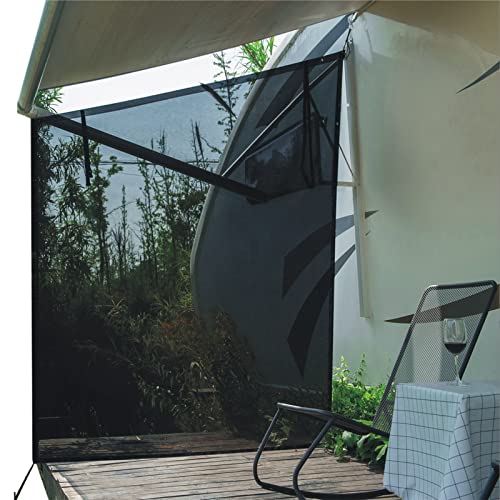
The Dulepax 9′ x 7′ second-generation shade screen uses a knife-coated curtain mesh designed for improved shadow and privacy. It emphasizes UV blocker and privacy protection through a smaller mesh hole size. Best for: casual campers and families who want a reliable, private shade with simple setup. Limitation: mesh sizing and material specifics are focused on UV/privacy; wind performance depends on installation and environment.
Why selected: Strong emphasis on privacy with enhanced UV protection due to finer mesh and heavier material (7.9 oz). The second-gen design targets better shading for outdoor enjoyment under typical RV awnings.
Tentproinc RV Awning Side Sun Shade Screen 9′ x 7′
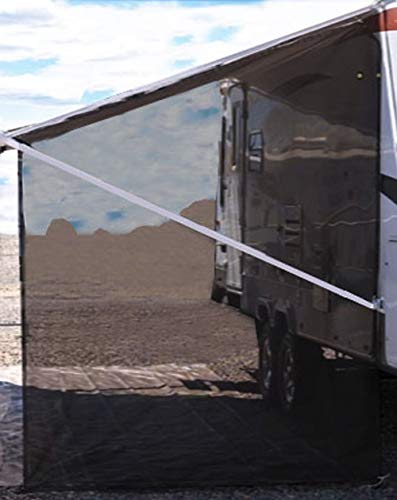
This screen provides UV blockage with an open view, offering a balance between shade and visibility. It blocks about 86% of UV to protect skin and eyes while maintaining transparency to the outdoors. Best for: travelers who want reliable UV protection without sacrificing openness. Caution: effectiveness is described as a general UV block without explicit wind resistance data.
Dulepax RV Awning Shade Screen with Zipper 8′ x 15’3″

This version adds a zipper design for easy on/off access and weather adaptability across a larger 8′ x 15’3″ area. Best for: those who need easier weather-related adjustments and larger shade coverage. Limitation: zipper operation can be a minor hassle if fabric is stiff in cold conditions or improperly aligned.
SHADEPLUS RV Awning Side Shade 9′ x 7′ (Black Mesh)

ShadePLUS uses a 7.9 oz durable mesh with a small hole size to enhance privacy and wind resistance. Best for: frequent travelers seeking durable shade that reduces wind impact while preserving outside visibility. Caution: durability claims rely on standard outdoor use; heavy wind conditions may require additional anchoring.
Fonzier RV Awning Sun Shade Screen (9′ x 15’3″)

The Fonzier model blends a 600D Oxford top with a dense mesh bottom, offering up to 95% UV blockage, plus a zipper-enabled quick setup. Best for: campers seeking premium top-and-bottom construction and fast installation. Limitation: higher-end materials may come with a more complex setup that benefits from following included instructions closely.
Buying Guide
- What size do I need? Most options shown come in 9′ x 7′ or 9′ x 15’3″. Measure your RV awning before buying to ensure a snug fit that avoids sagging or gaps.
- What level of UV protection is important? Mesh density and fabric weight (e.g., 7.9 oz vs 8.11 oz) influence UV blocking and privacy. Higher density generally means better UV protection but potentially reduced ventilation.
- Zipper vs. non-zipper designs: Zippers add flexibility for weather changes and easier removal, but may require more precise installation and maintenance.
- Wind and weather considerations: Screens with smaller mesh holes improve wind resistance but can limit airflow. Anchor options and installation quality affect performance.
- Installation ease: Some products include complete kits and simple attachment methods. Consider whether you prefer easy setup on your own or add-on hardware for secure mounting.
- Durability and care: Look for premium mesh and reinforced edges. Drying and cleaning guidelines help extend life in outdoor use.
- Privacy vs. openness: Knife-coated meshes provide more privacy and UV blocking, while some designs prioritize keeping views open while shading.
FAQ
- What helps most with heat under an RV awning? A denser mesh shade screen that blocks UV and reduces cross-wind can lower ambient temperatures near the shade area.
- Are these screens universal for all RV awnings? Most are designed to fit standard 9′ or 8′ sizes, but always verify dimensions and mounting hardware compatibility with your specific awning.
- Do these screens affect visibility from inside the RV? Mesh screens aim to balance privacy with outside view; higher density may reduce visibility slightly from inside during bright days.
- Is installation difficult? Many options come with complete kits and simple attachment methods; some require careful alignment for zipper designs or wind-resistance features.
- How do I maintain the mesh screen? Rinse with water, avoid harsh detergents, and air-dry away from direct heat. Check grommets and seams periodically for wear.
- When should I choose a zipper design? If you expect variable weather or want easier removal and storage, a zipper model offers flexible operation.