Answering the question: which portable flushing camping toilet gives you reliable waste management, straightforward setup, and comfortable use in outdoor settings? This guide highlights five top options, each suited to different outdoor needs—from RV travelers and boaters to campers and hikers. Whether you need large tank capacity, easy flushing, or a compact build, you’ll find a fit here. The buyer profiles below help you choose based on capacity, portability, and ease of maintenance.
| Product | Best For | Key Benefit |
|---|---|---|
| Kohree Portable RV Toilet (5.8 Gal) | RV travelers; large groups | High capacity with level indicator |
| Kohree Camping Toilet (5.3 Gal; Diagonal Elongated Seat) | Comfort-focused campers | Elongated seat for home-like comfort |
| VEVOR Portable Toilet (3.2 Gal Waste / 3.2 Gal Flush) | Full-feature on-the-go users | Pressurized flush with level indicator |
| YITAHOME Portable Toilet (5.8 Gal) | Group trips; long stays | Strong flushing with level indicators |
| Kohree 6.34 Gal Portable Toilet | Extended outdoor stays | Largest waste tank among picks |
Kohree Portable RV Toilet, 5.8 Gal: Big Capacity and Easy to Use
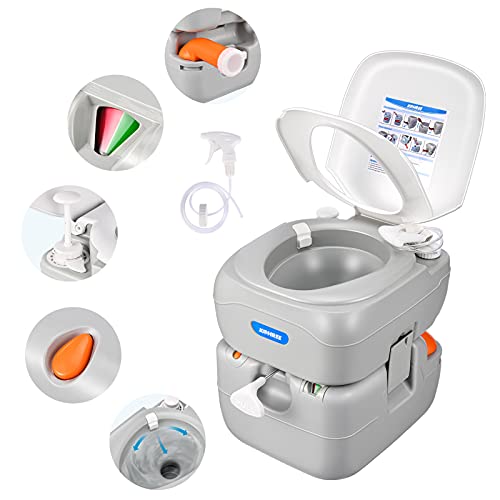
The Kohree 5.8-gallon RV toilet combines a detachable waste tank with a 3.2-gallon fresh water reservoir. It uses a level indicator to show when the waste tank needs emptying. The unit is designed to be assembled or disassembled quickly, and its dimensions (approximately 14.4 by 16.3 by 16.3 inches) fit in most vehicle storage spaces. Best for: RV users and boaters who need a high-capacity, odor-controlled solution for longer trips. Limitation: the overall dimensions require prior space measurement to ensure proper fit in compact setups.
Why this product is selected: It emphasizes large capacity, ease of transport, and a straightforward emptying process, making it ideal for frequent travelers who prioritize fewer refill stops. The odor-sealant valve and leak-proof design help maintain a clean living area during travel.
Kohree Camping Toilet Portable 5.3 Gal: Comfort Meets Home Benchmark

Designed with an upgraded diagonal seat and a 13-inch extended seat length, this Kohree model offers seating comfort closer to a standard home toilet. It features a 2.64-gallon freshwater tank that can support up to about 90 flushes and a 5.3-gallon waste tank for fewer dumps on extended trips. Best for: users who prioritize home-like comfort in RVs, campers, or travel trailers. Limitation: compact dimensions may still require planning for storage in smaller vehicles.
VEVOR Portable Toilet With Flush, 3.2 Gal Tanks

VEVOR’s model provides a fully functional experience with a 2.6-gallon flush tank and a 3.2-gallon waste tank, plus a level indicator. Its compact footprint (about 15.2 by 13.4 by 13.1 inches) and a 440-lb load rating support a wide range of users. Best for: travelers who want a compact, full-feature toilet with reliable flush performance. Caution: venting and sealing are important when driving in high-altitude areas to prevent odor concerns during transport.
YITAHOME Portable Toilet for Adults, 5.8 Gal

YITAHOME offers a robust 2.64-gallon freshwater tank paired with a 5.28-gallon waste tank and a level indicator. The system uses a T-type water outlet for thorough cleaning and includes a hand pump and a spray gun to target hard-to-reach areas. Best for: group trips or long-duration outings where reliable flushing and easy maintenance are important. Limitation: heavier than some compact models, which may affect portability for solo hikers.
Kohree 6.34 Gal Portable Toilet: Largest Tank, Odor Control

This model emphasizes a larger sewage capacity (6.34 gallons) with a 5.3-gallon fresh water tank, enabling approximately 130–140 flushes. It uses an upgraded odor-control design and a longer, more comfortable seat. Best for: extended trips where frequent emptying is less desirable and odor management is critical. Limitation: increased size may reduce portability for solo travelers with limited storage space.
Buying Guide: Key Considerations For Portable Flushing Toilets
- Tank capacity vs. frequency of emptying: Larger waste tanks mean fewer dumps, but may be heavier and bulkier to transport. Balance capacity with vehicle or camp setup.
- Ease of flushing: Look for models with efficient flush mechanisms (pump or gravity) and clear user feedback on performance in outdoor conditions.
- Water supply and ergonomics: Freshwater tank size and seat design impact comfort and refill needs. An elongated seat can improve comfort for longer stays.
- Odor control and seals: Odor-proof materials and secure seals reduce campsite odors and leakage, especially in cars, boats, or RV storage areas.
- Portability and storage: Consider overall dimensions, weight, and whether the unit disassembles for easier packing.
- Durability: High-density HDPE and PP plastics provide resistance to punctures and weather exposure; verify load ratings to fit users of different weights.
Frequently Asked Questions
- What capacity is best for weekend camping? A waste tank around 3–5 gallons can be sufficient for a couple of days, paired with a multi-day plan if you monitor waste levels.
- Do portable toilets need venting? Some models include venting features; venting helps manage pressure changes during transport, especially in RVs or trailers.
- Is a larger seat always better? A more comfortable seat improves user experience, especially for longer trips, but it may add to the unit’s footprint.
- Can these toilets be used in boats? Yes, most are designed for indoor/outdoor use and handle marine environments, with leak-resistant features.
- How important is a level indicator? Level indicators help prevent overflow and simplify maintenance, especially when camping in uneven terrain.
- Are there any maintenance tips? Regularly clean the flushing system, check seals for wear, and ensure the waste tank is emptied before it reaches capacity.