When you need portable relief from heat in tents, RVs, and other compact spaces, a pop up tent air conditioner is the practical solution. This guide highlights five compact units that balance cooling power with portability, ideal for campers, hikers, and road-trippers. Each product is evaluated for who it’s best for, its cooling capability, noise levels, and ease of use in outdoor settings. Use the buying table below to compare core specs at a glance.
| Product | Approx. BTU | Best For | Notes |
|---|---|---|---|
| BODEGA Portable Tent AC | 6000 BTU | Small tents, warm nights | Compressor cooling; 5 modes |
| BAYKUL 5000 BTU | 5000 BTU | Mid-size tents, RVs | Quiet operation; timer |
| BougeRV PC35 | 3500 BTU | Small tents, van life | App control; compact |
| Karinear 3300 BTU | 3300 BTU | Budget outings, tight spaces | 3 modes; remote |
| Outohome 5200 BTU | 5200 BTU | Camping and small areas | 4 modes; timer |
BODEGACOOLER Portable Tent Air Conditioner

Best for: Campers in compact tents who need real cooling, not just a fan. This unit uses a compressor system with a fin evaporator to deliver cold air in small spaces. It’s designed for tents around 32-54 sq ft and offers five modes for tailored conditions. The compact size (11.1 x 22.2 x 12.3 inches) helps placement near sleeping areas or tent openings.
Why this selection: Real compressor cooling is a clear advantage in hot outdoor environments. The range of modes—including Sleep and Dehumidifier—helps manage humidity and noise, making it versatile for short trips or overnight stays.
Caution: Best used in well-ventilated tents; effectiveness decreases as tent size increases beyond recommended square footage.
BAYKUL 5000 BTU Portable Air Conditioner

Best for: Tents, RVs, and small rooms where quick cooldown is needed. This 5000 BTU unit uses a GMCC compressor to drop temperatures rapidly, reportedly within minutes. It’s designed for portable use with a compact footprint and a handle for easy carrying.
Why this selection: Fast cooling in tight spaces is a strong fit for weekend campers and truck travelers who want relief on hot days without large equipment. The built-in timer supports overnight use with minimal energy waste.
Caution: Might struggle in very humid climates where dehumidification is equally important; consider pairing with a dehumidifier if humidity is high.
BougeRV PC35 Portable Air Conditioner
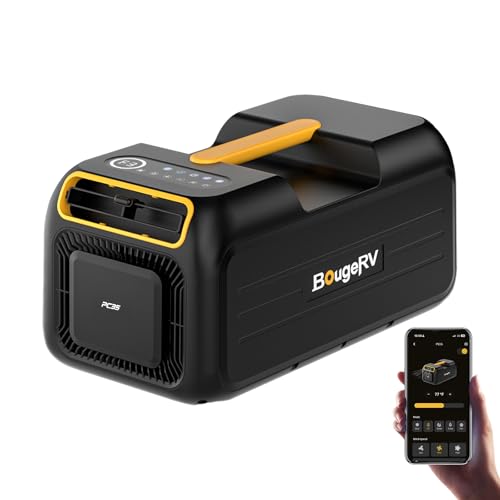
Best for: Tent and small camper setups in need of app-controlled comfort. The 3500 BTU unit cools efficiently and offers remote operation via an app, plus an ergonomic handle for easy relocation.
Why this selection: App control adds convenience for outdoor dining or while relaxing away from the unit. The compact design makes it easier to position near a sleeping area while maintaining airflow.
Caution: App connectivity may require a stable mobile connection; consider a backup remote for reliability.
Karinear Portable Air Conditioner 3300 BTU

Best for: Budget-conscious campers needing basic cooling in small tents or rooms. This model provides three modes (Cool, Dehumidify, and Fan) and a remote for convenient climate control. It supports standard 110V plug-in and a 30–62 sq ft cooling range.
Why this selection: A lower BTU option can be cost-effective for small spaces and less demanding usage, while still offering essential cooling and humidity control.
Caution: Lower BTU means less cooling power in very hot environments; not ideal for large tents or high heat days.
Outohome 5200 BTU Portable Tent AC

Best for: Campers needing a balance of cooling capacity and quiet operation. This unit delivers 5200 BTU with four modes and a 24-hour timer. The unit is designed for both indoor and outdoor use in tents or small shelters.
Why this selection: Higher cooling capacity than the smallest units, with a sleep-friendly noise level. The timer adds convenience for overnight comfort without constant supervision.
Caution: Ensure the tent or shelter has adequate ventilation to dissipate exhaust and heat, especially in sunny conditions.
Buying Guide: Key Considerations For Choosing A Tent AC
What space will you cool? Measure the tent or target area (square footage and height) to match BTU needs. Smaller tents around 32-54 sq ft typically perform best with 3500–6000 BTU units.
How portable should it be? Consider weight, handle design, and whether you need app control or a remote. Lighter units are easier to move between camp sites or vehicle interiors.
Noise and comfort matter: Look for decibel ratings and modes like Sleep or Dehumidify. Quieter operation improves rest in tents and RVs.
Power options: Most units run on standard 110V outlets. Some models support vehicle power (12V/24V) or portable power stations; check compatibility with your planned power source.
Humidity management: If your climate is humid, prefer units with a dedicated dehumidify mode to improve comfort beyond cooling alone.
Durability and setup: Favor models with simple assembly and robust handles or wheels. A compact footprint helps situate the unit near your sleeping area or tent entrance.
FAQ
What size tent should I pick for a 6000 BTU unit?
6000 BTU is typically suitable for small tents around 32-54 sq ft. For larger spaces, a higher BTU or multiple units may be required.
Are these units noisy?
Most devices in this category list noise levels around 46-50 dB in Sleep or Quiet modes, but actual noise varies with mode and ambient conditions.
Can I use a tent AC with a power bank?
Most tent air conditioners require regular AC power. Some models support 12V/24V or use portable power stations, but check each model’s power compatibility first.
Do these units dehumidify as well as cool?
Many models offer a dedicated Dehumidify or Dry mode to reduce humidity, which is helpful in muggy environments.
Is app control worth it?
If you want to operate the unit from a distance or while seated outside, app control adds convenience. It may require stable connectivity in remote sites.