Answering the question “which fire starters should I trust in a survival scenario?” this guide highlights five dependable options. These tools are designed to produce reliable sparks in wet, windy, or cold conditions and are suited for hikers, campers, anglers, emergency preppers, and outdoor enthusiasts who want fast, dependable ignition. Each product section explains who it’s best for, why it was chosen, and a practical limitation to consider. Below is a quick buying table to compare key points side by side.
| Product | Best For | Why It Stands Out |
|---|---|---|
| AOFAR Magnesium Fire Starter AF-374 | All-weather campers and backpackers | Two-pack, waterproof, includes paracord and scrapers for reliability |
| bayite 4 Inch Survival Ferrocerium Rod | Hikers needing grip and a long-lasting striker | Paracord grip with a robust Striker-Pro; multiple striking edges |
| Clwryviduu 4-Inch Ferro Rod Fire Starter | Bushcraft enthusiasts and emergency kits | All-weather performance with high heat sparks and included striker |
| Prepared4X Fire Starter Survival Tool | Anyone wanting an all-in-one solution | Patented design with wick and bellow-style ignition |
| HOPKASE 2-Pack Magnesium Fire Starter | Emergency kits and travel kits | Two-pack with tinder and waterproof storage |
AOFAR Magnesium Fire Starter AF-374 (2-Pack)

The AOFAR AF-374 is a compact, waterproof fire starter kit with two magnesium-based starters. It includes a steel scraper and a 3-inch magnesium fuel rod, paired with a 3-foot paracord rope, all designed to ignite in diverse weather. Best for expeditions where redundancy matters and gear must stay dry, such as winter mountaineering or long backpacking trips. The two-pack setup helps ensure a spare if one unit becomes damaged or wears down over time.
Best for: Outdoor enthusiasts who want a durable, weather-resistant option with a spare unit. Why selected: The dual-pack provides reliability in critical moments, while the waterproof design helps ensure ignition even after exposure to rain or immersion. Limitation: Magnesium rods wear down after repeated use; expected thousands-of-sparks capability means users should manage wear with normal use.
Features at a glance: two magnesium fire starters, waterproof construction, steel scraper, 3″ magnesium rod, 3″ steel scraper, paracord rope for quick handling. Implications for buyers: select this when you want redundancy and straightforward use in wet conditions.
bayite 4 Inch Survival Ferrocerium Rod Kit

Bayite’s 4-inch ferro rod kit combines a robust ferro rod with a dedicated Striker-Pro striker attached to a paracord hand-lanyard. The 4″ length and 3/8″ diameter offer ample surface area to generate a shower of sparks, while the paracord grip improves handling in cold or wet conditions. This option is ideal for those who value a reliable strike or who frequently switch hands during fire-starting.
Best for: Hikers who want a confident strike with a high-quality striker on hand. Why selected: The included Striker-Pro uses tool-grade steel for durable, high-spark performance. Limitation: The durability of the striking edge depends on proper care; using a softer blade can limit spark output.
Features include: 5-foot paracord, Paracord grip, Striker-Pro striker, multiple striking edges, long ferrocerium rod (4″); diameter 3/8″. Consider this kit if you want a sturdy, left- or right-handed experience and a reliable spark shower.
Clwryviduu Survival Fire Starter Kit

The Clwryviduu kit emphasizes all-weather use with a 4-inch ferro rod and a third-generation kit approach to durability and spark reliability. It includes a Paracord lanyard and a Striker-Pro made from tool-grade HSS steel to maximize spark output. This setup is well-suited for bushcraft, hunting, fishing, and camping where reliable ignition is essential even after exposure to rain.
Best for: Bushcraft and emergency kits that require consistent sparks from a rugged ferro rod. Why selected: The design prioritizes corrosion resistance, robust spark production, and ease of use for both left-handed and right-handed users. Limitation: It relies on ferrocerium rod efficiency; heavy use can wear the rod faster than lighter kits.
Key points: 4″ ferro rod, Paracord handle, Striker-Pro included, water-resistant build, designed for wet environments. Choose this if you want a durable, go-to fire starter with dependable sparks in tough weather.
Fire Starter Survival Tool — Prepared4X
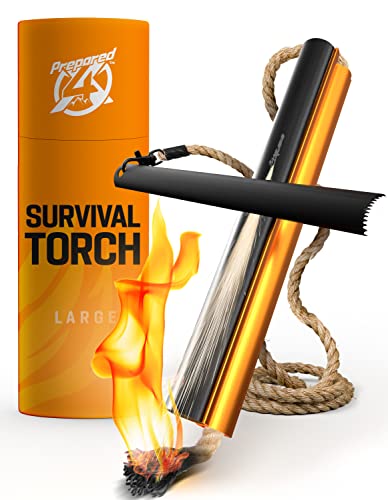
The Prepared4X kit markets itself as an all-in-one solution. It includes a patented fire torch concept that directs sparks to a wick, aided by a curved striker. The intent is quick, controlled ignition even in wind and rain, eliminating the need to juggle separate ferro rods, strikers, tinder, and a bellows. This can simplify the setup for quick emergency fires or quick base camp cooking.
Best for: Anyone who wants an all-in-one ignition system with a fast-start fire. Why selected: It directly targets wind and rain challenges by guiding sparks to a ready wick, reducing multiple-step ignition. Limitation: As with any integrated system, field maintenance and part replacement can be less flexible than modular kits.
HOPKASE 2-Pack Magnesium Fire Starter
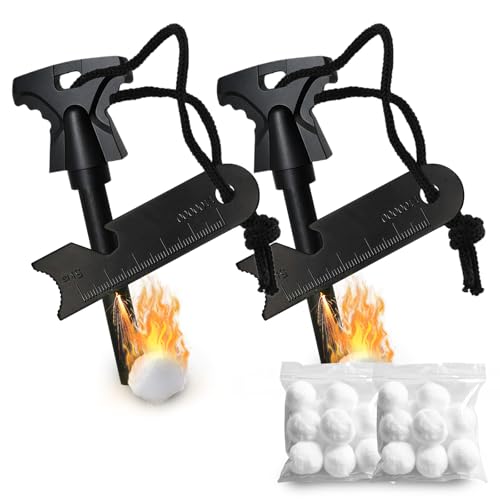
HOPKASE offers a practical two-pack magnesium fire starter with an included striker and a 20-pack of tinder (waterproof bags). This kit emphasizes emergency readiness with ample tinder and a reusable magnesium rod capable of producing showers of sparks at high temperature. It’s a good fit for those building a full survival stash or stocking a car or bug-out bag for quick ignition in adverse conditions.
Best for: Emergency kits and travel packs where you want multiple ignition chances and tinder. Why selected: The combination of two starters plus pre-packed tinder improves readiness for rapid fire starting. Limitation: The tinder packs can add bulk; ensure you have space in compact kits.
Buying Guide: How To Choose Your Survival Fire Starter
Essential considerations help buyers pick a tool that fits their needs and environment. Below are practical questions and guidance to evaluate options.
- What weather conditions matter most for you? Waterproof designs and high-heat sparks are crucial in wet environments; consider whether all-weather capability is essential for your trips.
- Do you prefer all-in-one solutions or modular kits? All-in-one kits reduce setup steps, while modular sets offer customization and replacement flexibility.
- How portable should your kit be? Length, weight, and included tinder influence portability. Pocket-sized options are best for day trips; larger kits suit expedition gear.
- What is your grip and handling preference? Paracord grips, lanyards, and striker design affect ease of use in cold or wet hands.
- Are there durability concerns? Look for rugged materials such as tool-grade steel, stainless steel, and sturdy ferro rods with protective packaging.
Fire Starter Features To Compare
- Ignition method: magnesium rods versus ferrocerium rods and wick-based systems.
- Heat output: high-temperature sparks (roughly 3,000–5,500°F) versus broader spark showers.
- Water resistance: waterproof pouches and coatings help ensure operation after rain exposure.
- Durability: striker edge quality, rod length, and overall build quality impact longevity.
- Included tinder: ready-to-use tinder can accelerate ignition in diverse environments.
Frequently Asked Questions
- What type of fire starter is best for wet conditions? Ferrocerium-based rods with waterproof packaging or wick-based kits designed for rain are typically best for wet environments.
- Can I rely on a single fire starter for emergencies? For redundancy, a two-pack or additional tinder options improve reliability in critical moments.
- Are all magnesium rods the same? Not all are equally durable; tool-grade steel strikers and robust scrapers help maximize spark output and longevity.
- Is an all-in-one kit worth it? If you want simplicity and speed, an all-in-one kit can be advantageous; if you prefer customization, modular designs may be better.
- How should I store tinder with ferro rods? Keep tinder in waterproof bags or containers to preserve dryness, ensuring quick ignition when needed.
- What maintenance is required for these fire starters? Dry and inspect rods and strikers after use; replace worn components to maintain reliability.