When RVing, reliable propane generators offer portable power for AC, appliances, and electronics without relying on noisy, run-down units. This guide highlights five RV-ready, dual-fuel options that balance run time, noise, and outlet versatility. Ideal for full-time RVers, weekend campers, and emergency backup planners, these models provide clear advantages depending on fuel availability and camp etiquette. Below is a quick table to compare the picks side-by-side and help you decide which is best for your setup.
| Product | Key Benefit | Best For |
|---|---|---|
| Westinghouse 4650 Dual Fuel | RV-ready outlets; sizable run time | Campers who need multiple outlets and strong gas/propane power |
| PowerSmart 3800 Dual Fuel | Quiet operation; long propane runtime | Silent caravans and extended camping |
| WEN DF480iX | Inverter quality power; CO watchdog | Electronics-heavy setups at RV parks |
| Westinghouse 2550 | Lightweight; RV-Ready; economy mode | Portable, lightweight needs with RV hookup |
| ERAYAK 4500W Dual-Fuel | Compact design; dual-fuel flexibility | Budget-friendly, space-conscious RV use |
Westinghouse 4650 Peak Watt Dual Fuel Portable Generator
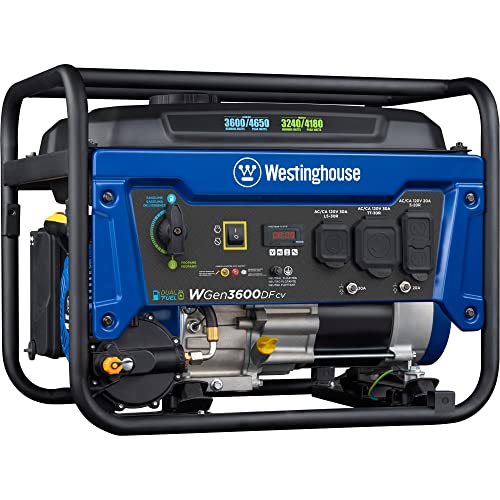
The Westinghouse 4650 offers 4650 peak watts and 3600 running watts on gasoline, and 4650 peak with 3240 running watts on propane. It includes an RV-ready TT-30R 30A outlet and a standard 120V outlet, plus a 4-gallon tank with a fuel gauge. Best for RV travelers who need dependable, dual-fuel power with multiple outlets. It suits campers who want immediate plug-and-play setup with included oil and a basic toolkit. A potential limitation is that higher power needs may reduce run time on propane compared to gasoline.
PowerSmart 3800 Watt Dual Fuel Inverter Generator
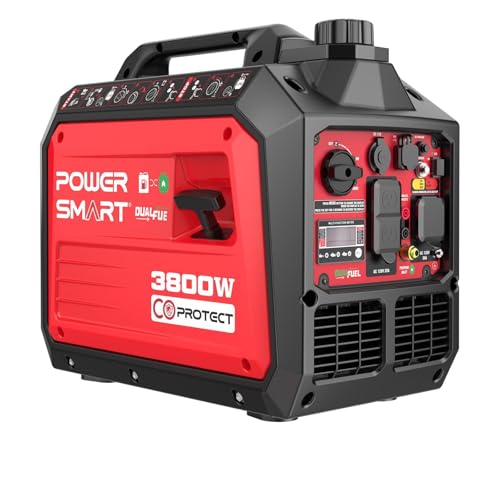
The PowerSmart unit runs 3300 watts on gasoline and 3100 on propane, with starting watts up to 3800 and 3500 respectively. It emphasizes quiet operation (low noise) and clean power suitable for sensitive electronics. It’s best for RV owners who prioritize minimal noise at campsites and longer propane runtime for extended trips. A limitation to note is the slightly lower continuous power compared with larger duel-fuel models, which may affect higher-appliance use.
WEN DF480iX Quiet and Lightweight RV-Ready Inverter

The WEN DF480iX offers 4800 surge watts and 4000 running watts on gasoline, with propane delivering up to 4320 surge and 4000 running watts. It emphasizes ultra-quiet operation and clean power, making it well-suited for RVs with sensitive electronics or crowded campgrounds. Best for campers who need reliable, low-noise power and a compact form factor. Caution: higher runs on propane may reduce on-board runtime if propane capacity is limited.
Westinghouse 2550 Peak Watt Inverter, RV Ready

The Westinghouse 2550 provides 2550 peak and 1900 running watts, with multiple outlets and RV compatibility. It weighs about 42 pounds and offers economy mode for improved fuel efficiency. Best for minimalist setups or when portability is essential. A potential limitation is lower wattage, which may not power larger RV appliances simultaneously.
WEN DF6800iX Dual Fuel RV-Ready Generator

The WEN DF6800iX delivers 6800 surge watts and 5100 running watts on gasoline, with propane options up to 6000 surge and 4500 running watts. It includes a CO watchdog for safety and is designed for RV use and electric vehicle backup scenarios. Best for campers who require substantial power in a portable inverter unit. A caveat is that higher power models can be heavier and noisier than smaller inverter options.
Westinghouse 12500 Watt Dual Fuel Home Backup Generator

Although larger, this unit offers high power with dual-fuel capability and remote/electric start. It’s a strong choice for full-time RVers who also rely on home backup infrastructure when traveling. It’s best for those who want a future-proofed, transfer-switch-ready solution for substantial electrical needs. The main limitation is its size and weight relative to portable RV generators.
WEN 8000-Watt Dual Fuel RV-Ready Portable Generator

The WEN DF8000X offers 8000 surge and 6500 running watts on gasoline, with propane capacity around 7200 surge and 5850 running watts. It supports RV-ready configurations, includes CO watchdog, and is aimed at users needing robust, versatile power with gas and propane options. Choose this if you frequently run multiple high-watt appliances. Limitation: larger footprint and heavier than mid-range units.
Buying Guide: Key Considerations For RV-Ready Propane Generators
- What safety features matter most? Look for CO detectors or watchdog sensors and low-oil shutdown to protect equipment and users.
- How much power do you actually need? Match running watts to your RV’s essential loads (fridge, AC, water heater, outlets). Consider surge watts for startup.
- Is dual-fuel important? Propane is cleaner and easier to store; gasoline typically offers longer running time per tank.
- Noise and fuel efficiency? Inverter generators provide cleaner power and lower noise, ideal for campgrounds and residential areas.
- Outlets compatibility? Ensure TT-30 (30A RV), 120V duplex, and USB outlets line up with your equipment and shore power needs.
- Portability vs. power? Lighter units are easier to move but may offer less continuous wattage; weigh the trade-offs against your travel style.
- Starting method? Electric start is convenient; recoil start offers a backup if the battery fails.
- Safety and maintenance? Check fuel shut-off valves, oil fill indicators, and user manuals for proper storage and startup.
Frequently Asked Questions
- Are dual-fuel generators safe for RV use? Yes, when used following the manufacturer’s guidelines and with proper ventilation.
- What is considered “RV-ready”? Outlets like TT-30R 30A and a dedicated RV port for 120/240V power, plus appropriate safety features.
- Can a generator power an air conditioner? Larger, high-wattage units are typically needed; verify your AC’s starting watts.
- Should I choose an inverter or conventional generator for RV use? Inverters provide cleaner power and quieter operation, ideal for camping.
- Is propane safer than gasoline? Propane storage is generally safer and cleaner; however, availability and tank size can affect runtime.
- Do these generators run quietly at RV parks? Inverter models are designed to be quiet, but actual noise depends on load and enclosure.