Finding the right camping sleeping pad can transform a night under the stars into a true retreat. This guide highlights five top ultralight and durable options that balance comfort, portability, and value. Each pick suits different travelers—from weekend hikers to long backpacking trips—while offering clear pros and practical limits. Use the buying table below to compare key features at a glance.
| Product | Thickness | Weight | Best For | Notes |
|---|---|---|---|---|
| FUN PAC Camping Sleeping Pad | 3 inches | Lightweight (roughly water-bottle sized) | Backpackers seeking built-in pillow and quick inflate | Built-in pillow, 30-60s inflate, compact for backpacks |
| Gear Doctors Ether 17.5oz | Unknown exact thickness; expands to full size | 17.5 oz | Ultra-portable with high weight capacity | Detachable foot pump, 90s inflate, durable fabric |
| HAWAJOK Camping Sleeping Pad | 4 inches | Ultra-light | Travelers needing compact size and built-in pump | Foot pump inflates in 30–60s, packs small |
| OGERY Self-Inflating Sleeping Pad | 3 inches | Lightweight, mid-range | Car camping and multi-position sleepers | Foam-air hybrid with foot pump, non-slip base |
| FNARMW 5-Inch Camping Pad | 5 inches | Moderate weight | Comfort-first campers who want extra cushion | Egg-cell design, built-in pillow, quick inflation |
FUN PAC Camping Sleeping Pad With Pillow

The FUN PAC pad is an ultralight self-inflating option designed for backpackers who want built-in comfort. Its 3-inch profile aims to relieve back and neck pressure with egg-shaped air cells and an integrated pillow. It inflates in about 30–60 seconds using the built-in pump and deflates quickly. It is best for solo hikers who prioritize compact packing and simple setup, especially when space is at a premium in a daypack. A limitation to note is that the pad’s 3 inches of thickness may be less insulating in extreme cold conditions compared to thicker pads.
Gear Doctors Ether 17.5oz Ultralight Sleeping Pad

The Gear Doctors Ether pad focuses on portability with a size-close-to-a-water-bottle when packed. It inflates to a full 76″ x 25″ with an ErgoCushion surface and supports up to 440 lb. The detachable foot pump and anti-leak valve system streamline setup and breakdown. This pad suits campers who want a robust, compact mat for long treks and rugged ground. It may be heavier than ultra-light options for ultra-light backpackers, but it scores high on stability and durability for its weight class.
HAWAJOK Camping Sleeping Pad
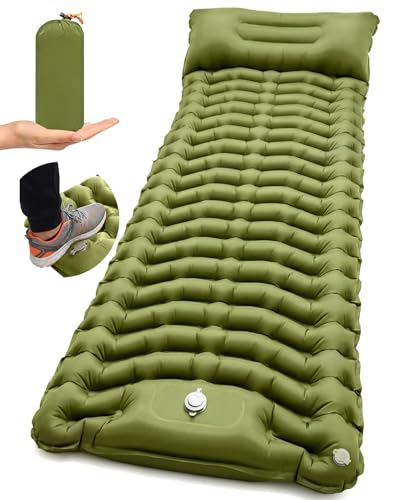
This 4-inch thick pad emphasizes comfort and portability. The built-in pillow and ergonomic air-cell design create support for back and side sleepers alike. The quick foot-pump inflation (30–60 seconds) minimizes setup time, making it a strong choice for a weekend camping trip or a short backpacking excursion. If you expect very cold nights, consider a pad with higher insulation or a ground tarp as a supplementary layer.
OGERY Self-Inflating 3-Inch Pad

The OGERY 3-inch pad blends a foam-and-air structure for even support across sleeping positions. Its self-inflating feature plus a foot pump allows precise firmness control without extra gear. A non-slip base reduces shifting on tent floors or vehicles, which is particularly helpful for car campers and those sharing a tent. A potential limitation is that 3 inches may feel less cushioned for very rough ground compared to thicker models.
FNARMW Extra Thick 5-Inch Pad

The FNARMW pad prioritizes thickness for hotel-like comfort in the outdoors. Its 5-inch thickness cushions hard ground and supports longer sleeps, especially for side sleepers. The egg-cell design and built-in pillow help align the spine and relieve pressure. Quick inflation via built-in foot pump and a rapid 1-second deflation add practical convenience. Best for campers who value comfort over packability, or for solo car campers with a bit more space in their setup.
Buying Guide
- Thickness vs. portability: Thicker pads typically offer more cushioning but are heavier and bulkier. Choose based on expected ground hardness and your carry strategy (backpacking vs car camping).
- Inflation method: Built-in pumps save time and effort. Detachable foot pumps offer flexibility but add component weight. Consider climate and setup time in your decision.
- Weight capacity and durability: Read the stated weight limit and material construction (nylon, TPU coatings, or foam-core blends). Look for non-slip bases for stability on uneven floors.
- Insulation and warmth: If camping in cold environments, choose pads with higher R-value or plan for an additional insulating layer beneath.
- Packability: Ultralight options typically compress to water-bottle sizes, while thicker pads may require larger stuff sacks. Ensure your pack space matches your trip length.
- Use case: Side sleepers often benefit from contouring air cells and built-in pillows; car campers may prioritize maximum thickness and durability over weight.
Frequently Asked Questions
- What thickness should I choose? For lightweight backpacking, 3–4 inches balances comfort and weight. For heavier grounds or longer trips, 5 inches or more offers extra cushioning.
- Are self-inflating pads better than air-only pads? Self-inflating pads combine foam support with air for comfortable contouring, while air-only pads are lighter but may require more frequent adjustments.
- Can I use a sleeping pad without a pillow? Yes, but built-in pillows reduce neck strain and simplify packing by removing an extra item.
- How do I prevent leaks? Look for pads with dual-layer or anti-leak valves and robust fabric coatings. Following the manufacturer’s inflation and deflation instructions reduces leakage risks.
- What is the best pad for cold nights? Pads with higher R-value insulation or adding a reflective groundsheet underneath can improve warmth.
- Is a thicker pad always better? Not necessarily; it depends on mobility, pack space, and the ground you’ll sleep on. Thicker pads are more comfortable but less packable.