Answering the shopper’s need for reliable cold-weather warmth, these 0 degree down sleeping bags are designed to maximize heat retention while staying portable. They’re best for serious winter campers, hikers, and anyone facing below-freezing nights who still wants compact packing. Each option below emphasizes traceable down, wind barriers, and neck warmth to minimize heat loss. The summary table highlights who each bag suits best and key strengths, helping you compare quickly before diving into details.
| Product | Best For | Key Benefit |
|---|---|---|
| Naturehike 0 Degree RDS Down Mummy Sleeping Bag | Backcountry hikers; cold nights | Traceable RDS down, wind barrier, neck warmth |
| QEZER 0 Degree Down Sleeping Bag (650 Fill) | Backpackers on a budget; space-conscious | Lightweight, compact, wind-blocking zipper |
| QEZER Down Mummy Sleeping Bag (600 Fill) | Family trips; versatile warmth | Wide trapezoidal foot box; compact for its class |
| Naturehike 0 Degree Ultralight Down Sleeping Bag | Ultra-light backpackers; 0- to -1°C use | RDS down, compact design, neck warmth focus |
| Kelty Supernova 0 Degree Down Sleeping Bag | All-body types; double bag options | Roomier shape; packable; recycled fabrics |
Naturehike 0 Degree RDS Down Mummy Sleeping Bag

The Naturehike RDS-down mummy bag targets serious cold-weather use with 650 fill power down and a heat-maximizing wind barrier. It includes an internal pocket for small items and a U-neck collar in some variants to help retain neck warmth. The design aims to minimize cold spots at the zipper, with an external lip to reduce convection around the cap. This bag is best for hikers and campers who want traceable down and robust warmth without excessive bulk.
Who it’s best for: cold-weather hikers and backpackers who value heat retention, traceable down, and a compact pack. Why selected: it combines RDS-certified down with a wind barrier to protect against drafts. Caution: data notes three model variants with different wind strips; choose the SP version that matches your needs for neck warmth and wind protection.
QEZER 0 Degree Down Sleeping Bag (650 Fill)
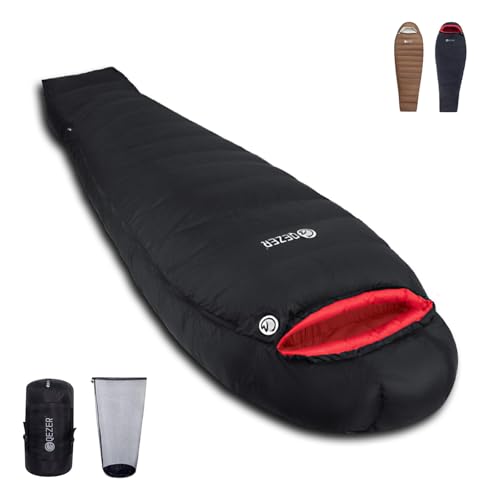
This bag emphasizes a balanced mix of warmth and portability. It uses 650 fill power down and features a windshield design at the zipper to block convection, plus a saddle-shaped neck to improve insulation around the head and neck. The inner and outer 400T nylon fabrics help guard against moisture. Recommended for backpackers who want a warmth-focused option that’s lighter and easier to carry than heavier winter bags.
Who it’s best for: budget-conscious travelers who still need solid cold-weather performance. Why selected: strong warmth retention for its weight class; better for those who prioritize compact packing. Caution: the neck and foot space are designed for general warmth, but taller users may want to verify length vs. torso.”
QEZER Down Mummy Sleeping Bag (600 Fill)
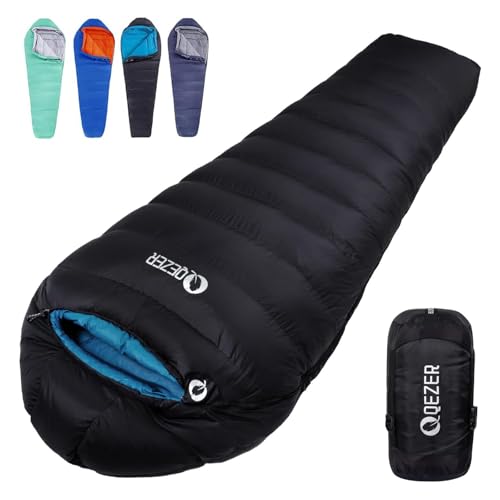
This model highlights a wide trapezoidal foot box and a compact pack size for its weight class. It uses 600 fill power down and offers a conservative temperature range suitable for winter camping and snow outings. The outer 400T nylon helps resist tearing. It’s a practical pick for family trips where multiple users may need the same bag on different nights.
Who it’s best for: families or groups needing versatile, roomy warmth with compact storage. Why selected: the oversized foot area reduces claustrophobia and improves comfort. Caution: while compact, it’s not the lightest option in extreme trekking scenarios.
Naturehike 0 Degree RDS Down Mummy Sleeping Bag (Second Variant)

This Naturehike model emphasizes RDS-certified down and a three-dimensional wind barrier to minimize cold spots. It includes a neck collar for warmth and an internal pocket for essentials. The ISO comfort rating is around 39°F with a lower limit near 30°F, targeting users who expect reliable warmth in damp, chilly nights while keeping weight moderate.
Who it’s best for: backpackers who want traceable down and a compact, warmth-focused design. Why selected: consistent RDS-down sourcing and wind-barrier features. Caution: performance varies by temperature rating across SP variants; verify the exact spec for your climate and season.
Kelty Supernova 0 Degree Down Sleeping Bag

The Kelty Supernova combines a roomier shape with 550 fill power down, offering backcountry performance while accommodating a broader range of body types and sleep positions. It supports vehicle-camping and backcountry trips with a design that allows two bags to zip together for a 2P setup. Recycled shell fabrics align with sustainability goals.
Who it’s best for: campers needing a roomy bag that still packs well and can double as a 2P option. Why selected: the roomier cut and compatibility with a dual-bag setup. Caution: lower fill power means less warmth-to-weight efficiency than higher fill options in extreme conditions.
Buying Guide: What To Consider When Choosing A 0 Degree Down Bag
Is the temperature rating truly 0°F? Look at comfort vs extreme ratings to assess real-world warmth. ISO comfort and limit temperatures show how warm a bag feels and what temps it can withstand while you sleep.
Down quality matters. RDS certification ensures traceability and ethical sourcing. Higher fill power (650 FP, 700 FP) generally provides better warmth-to-weight ratios but may come at a higher price.
Bag shape and neck warmth are crucial for 0-degree use. U-neck collars and wind blocks reduce heat loss around the neck and zipper drafts. A snug fit reduces convective heat loss but may affect mobility; consider your preferred sleeping position.
Weight and packability matter for backpackers. Look at fill weight and storage size to balance warmth with portability. Decide whether you need a compact bag for long treks or a roomier cut for comfort in car camping.
Durability features and fabric. Nylon shells with reinforced seams resist tearing; inner linings influence feel against the skin. If you camp in damp or wet environments, moisture resistance becomes a practical factor.
Frequently Asked Questions
- What does 0°F sleeping bag rating mean?
It indicates the bag’s limit temperature—the coldest conditions where the bag should keep you warm under typical conditions. Comfort temperatures are higher and more relevant for regular use. - Is down better than synthetic for cold weather?
Down generally offers higher warmth-to-weight efficiency, especially with high fill power and RDS certification. Synthetic is more affordable and retains some warmth when wet. - Should I buy a 0 degree bag for 20°F nights?
Yes, if you expect temperatures near or below freezing. Consider layering and wind protection in your camping setup for added warmth. - How important is neck warmth in a 0-degree bag?
Very important. A good neck collar and wind barrier reduce cold air drafts and help maximize heat retention. - Are 0 degree bags suitable for hikers on longer trips?
Yes, but weigh the warmth-to-weight ratio. Some ultralight options balance warmth with low weight for extended treks.