The best 1 person survival kits provide a compact, ready-to-go solution for staying fed, hydrated, warm, and safe during the first 72 hours after a disaster. These kits are ideal for single-person households, hikers, students, and travelers who want quick access to essentials without carrying bulky gear. The top options below emphasize packaged food, water, shelter, first aid, and signaling gear. Each selection suits different needs—from basic portability to enhanced gear sets. Use the quick comparison table to identify which kit aligns with your risk profile and daily routine.
| Product | Best For | Why It Stands Out |
|---|---|---|
| Blue Seventy-Two Emergency Backpack (Blue Coolers) | Everyday carry, apartment or small space | Comprehensive starter kit with 72-hour supplies in a grab-and-go backpack |
| Blue Seventy-Two Pro Series Red Deluxe | Those wanting premium extras | Includes larger backpack, canteen cup, and playing cards for extended preparedness |
| Ready America The Survival Box (1-Person) | Compact, transportable go-bag | 5-year shelf-life items in a compact format for quick grab-and-go |
| Ready America 72 Hour Deluxe Emergency Kit (1-Person) | Essential supplies with built-in redundancy | Food, water, lighting, and shelter with a Portable Go-Bag |
| QuakeHOLD Evacuation Essentials Plus Kit | Desk-side safety and quick access | Compact, desk-friendly kit with long-shelf-life rations |
Blue Seventy-Two Emergency Backpack (Blue Coolers)
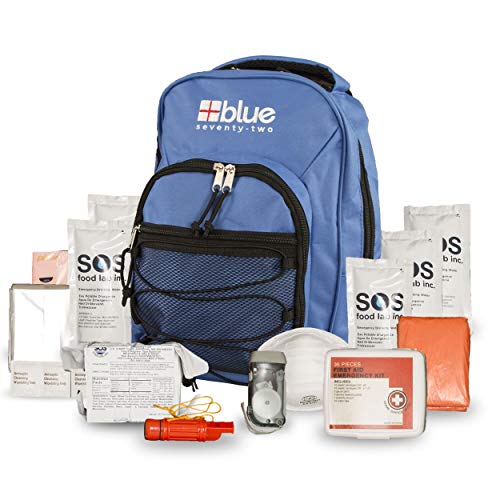
Best for: individuals seeking a ready-to-go, all-in-one 72-hour kit in a compact backpack. This kit includes 2,400 calories of food bars, five water pouches, a 36-piece first aid kit, emergency blanket, rain poncho, a crank flashlight, and more. The package adheres to Red Cross recommendations for the essentials of food, water, and shelter. Choose this if you want a dependable baseline setup in a grab-and-go pack that’s easy to store in a closet or car trunk, and you don’t mind a fully stocked basic kit.
Why selected: It combines a balanced mix of survival staples with practical components in an accessible backpack, making it a solid starter for households prioritizing portability. Better for: quick access and straightforward use in natural disasters or outages. Caution: The included water pouches and food have long shelf lives, but verify rotation plans to maintain freshness over time.
Blue Seventy-Two Pro Series Red Deluxe 72 Hour Kit

Best for: buyers who want additional premium gear alongside the standard 72-hour supply. This kit adds a larger tactical backpack, a canteen cup, and playing cards, expanding usability beyond basic survival. It’s a better fit for individuals who value extra gear for comfort and morale during a disaster. Choose this if you want a more robust carry setup without relocating to a multi-person system. Caution: The enhanced gear adds bulk and weight; ensure your storage space accommodates the larger backpack.
Ready America The Survival Box (1-Person)

Best for: individuals who want a compact, expandable option suitable for quick transport. The Survival Box emphasizes portable packing and provides enough water for three days. It’s well-suited for apartment dwellers and students who need a lightweight, space-efficient kit. Selected for: its simple design and ease of storage in small living spaces. Caution: It may be more basic on some safety items, so supplementing with an extra first-aid item or compass might help in extreme scenarios.
Ready America 72 Hour Deluxe Emergency Kit (1-Person)

Best for: travelers and vehicle-use households needing a complete one-person go-bag with redundancy. This kit includes a 2,400-calorie food bar, six water pouches, a BPA-free 32-ounce water bottle, a hand-crank LED headlamp, an emergency poncho, and a survival blanket. Choose this if you want robust lighting and shelter in one compact package. Caution: The kit covers essentials for 72 hours, but you may want to add more tools if you’re in a remote area or with special medical needs.
QuakeHOLD! Evacuation Essentials Plus Kit

Best for: workplace desks, offices, or small teams needing a compact, easy-to-deploy kit. This kit features five-year food and water rations with velcro backing to attach to desks and a quick-access design. It’s particularly suitable for offices or shared spaces where small but reliable emergency readiness matters. Choose this if you want a fixed, accessible option that can be deployed quickly. Caution: It’s more limited in scope for personal shelter and may require additional personal items for longer outages.
Buying Guide
What should you consider when choosing a 1-person survival kit? Start with three core questions: What is my storage space? How mobile does the kit need to be? What climates or hazards am I preparing for?
- Storage space and portability: If you have limited storage, prefer compact backpacks like the standard Blue Seventy-Two kit. If you want more gear, a larger red deluxe backpack may be suitable.
- Food and water reliability: Look for 2,400 calories across emergency bars and multiple water pouches with long shelf life. Ensure packaging is leak-proof and easy to access.
- Lighting and shelter: A crank flashlight or hand-crank headlamp provides independence from batteries. A poncho and a survival blanket help with weather protection.
- First aid and signaling: A 36-piece first aid kit and a whistle/compass combo improve safety and navigation in an emergency.
- Long-term readiness: Some kits advertise five-year shelf life. Consider rotating supplies to avoid past-due items and to maintain readiness.
Frequently Asked Questions
- What is a 72-hour survival kit designed for? It provides essential food, water, shelter, and basic medical supplies to help you survive the first three days after a disaster.
- What should I store with a one-person kit? A compact kit should include a water supply, non-perishable food, a light source, a shelter item (poncho or blanket), basic first aid, and a signaling device.
- Are these kits suitable for cars or offices? Yes, many are designed for both car trunk storage and desk-side placement, with some options including a Velcro-compatible backing for desks.
- How often should I rotate supplies? Rotate food and water pouches at least every year and verify packaging integrity and shelf life during routine checks.
- Can I customize a kit? Some kits allow adding items like extra batteries, medications, or a compact multi-tool to better fit personal needs.
- What makes a kit best for me? Consider your typical environment (home, car, office), climate, potential hazards, and how easily you can grab the kit during an emergency.