Whether you’re off the grid, heading to a remote campsite, or simply prepping an emergency kit, a 12-volt radio is a reliable companion for weather alerts, entertainment, and practical charging options. This guide highlights five top options that balance portability, durability, and essential features. Each pick targets specific buyer needs—compact portability, weather-ready reliability, GMRS communication, or multi-power flexibility—so you can choose the best fit for your camping style.
Buyer snapshot: the top five products below are selected for ease of use, clear reception, and practical power options. A quick summary table helps compare key points at a glance.
| Product | |||
|---|---|---|---|
| Makita RM02 12V Max Radio | Cordless with 4.0Ah battery; up to 30 hours | DIY campers who already use Makita tools | Battery not included |
| Weather Radios Portable AM FM NOAA Alert (Mesqool) | Solar charging; battery backup; hand crank | Bug-out kits and off-grid shelters requiring alerts | Complex feature set may need setup |
| Mesqool Emergency Weather Radio NOAA Alert | Solar charging; hand crank; battery backup | Survival kits and remote camps | Similar use-case as other Mesqool model |
| QYT KT-8900 25W GMRS Mobile Radio | GMRS two-way radio with NOAA scan/alert | Off-road or group camping needing radio comms | Requires licensing for GMRS channels |
| PRUNUS J161/J-135 Type Radios | Battery, solar, USB-C; portable options | Compact, budget-friendly emergency radios | Reception may vary by region |
Makita RM02 12V Max Radio

Best for: Campers who already own Makita 12V tools and want a battery-powered radio that uses existing tool batteries to avoid carrying extra packs. The RM02 delivers rich stereo with two front-facing speakers and long run-time when paired with a compatible BL1041B 4.0Ah battery. It appeals to tradespeople and DIY enthusiasts who value seamless integration with their tool ecosystem. Limitations include the need for a separate battery, which can affect total payload for light backpacking trips.
Weather Radios Portable AM FM NOAA Alert Mesqool
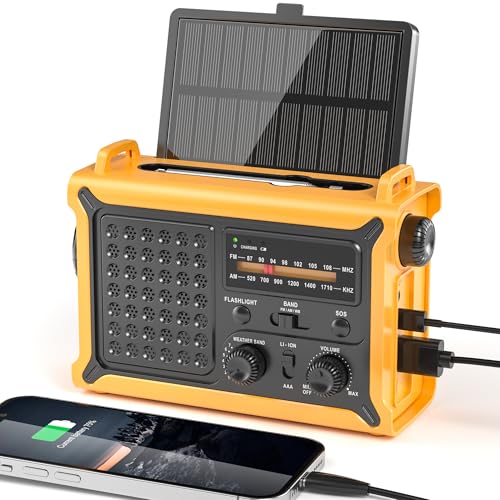
Best for: Off-grid campers and emergency kits where self-contained power and NOAA alerts are paramount. This model emphasizes reliable NOAA/AM/FM reception, a sizable solar panel, and a high-efficiency hand crank for rapid recharging in storms or outages. A potential caveat is setup complexity and the larger footprint compared to pocket radios, which may impact portability for minimalist hikers.
Mesqool Emergency Weather Radio NOAA Alert

Best for: Home bases and camping groups needing a dependable backup communication device with multiple power options. Its design supports solar charging and manual cranking for power in emergencies. Better for stationary use or car-camp setups than for ultralight backpacking, where weight and multiple features may be overkill.
QYT KT-8900 25W GMRS Mobile Radio
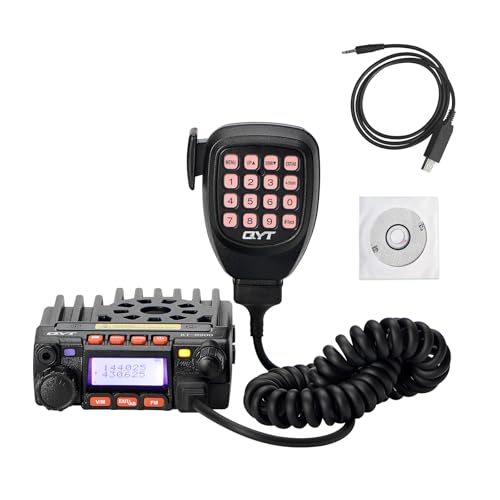
Best for: Groups that require reliable on-site communication while off-roading or camping in areas with limited cellular coverage. The KT-8900 provides GMRS channels and NOAA weather scanning, helping parties stay coordinated during outdoor activities. Choose this if you need long-range, license-supported two-way radio communication. Avoid this if you don’t plan to operate on GMRS frequencies or cannot obtain a license in your region.
PRUNUS J161 NOAA Weather Radio AM FM

Best for: Compact, budget-conscious buyers who want essential NOAA weather alerts and multiple power options. The J161/J-135 line is designed for portability with battery, solar, or USB-C charging. A limitation is that some alert notifications may not be automatic in all scenarios, so it’s best paired with a broader emergency kit for comprehensive protection.
Pyle Marine Bluetooth Stereo Radio PLMRB29B

Best for: Boat or water-adjacent camping where a 12V in-dash marine radio is desirable for music, Bluetooth streaming, and hands-free calling. The PLMRB29B provides robust power handling and integrated features suitable for on-water use. Limitations include the need for a 12V power source within a vehicle or boat electrical system and potential weatherproofing considerations on exposed decks.
BAIJIALI Solar-Powered Portable Radio

Best for: Outdoor enthusiasts who want a compact device with solar charging and multiple reception bands (AM/FM/SW). The built-in 2000mAh battery and 5W speaker offer practical listening in sunny conditions and during emergencies. A potential limitation is performance in low-light conditions, where solar charging may not be as effective.
PRUNUS J-135 AM FM Portable Radio
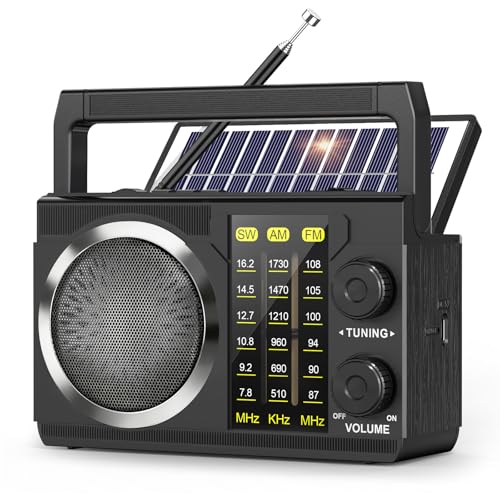
Best for: Seniors or light travelers seeking a simple, multi-power radio with Bluetooth and USB-C charging. The J-135 family emphasizes ease of use with a large knob and multiple power options. Limitation includes not all models providing automatic NOAA alerts, so users should verify alert capabilities before relying solely on this device.
Buying Guide: Key Considerations For Selecting a 12 Volt Camping Radio
- Power Options: Consider whether you want battery-only, solar, hand-crank, USB-C, or a combination. Solar and crank options are ideal for off-grid reliability.
- Reception Scope: NOAA weather alerts are essential for storm readiness. AM/FM reception helps with local updates and music, while SW bands expand outside broadcasts in some regions.
- Portability: If you’re backpacking, prioritize compact, lightweight units. For car camps or fixed sites, larger units with longer run times can be more forgiving.
- Durability and Weather Readiness: Look for rugged housings and weather-sealing if you expect rain, dust, or rough travel.
- Two-Way Communications: GMRS-capable radios provide on-site talk-through for groups. Licensing may be required; verify local regulations.
- Ease Of Use: Large controls, clear displays, and straightforward power switching help in emergencies or with limited hands.
- Accessory Ecosystem: Compatibility with existing devices, USB charging for phones, and Bluetooth for streaming can influence your overall setup.
Frequently Asked Questions
- What is the main benefit of a 12V camping radio? – It provides weather updates, music, and emergency alerts while using vehicle or battery power, reducing dependence on public outlets.
- Do I need a license for GMRS radios? – GMRS radios may require a license in some regions; check local regulations before use.
- Is solar charging effective for radios on cloudy days? – Solar charging works best in bright sunlight but can still top up the battery in diffused light; battery management remains important.
- Can these radios replace a dedicated emergency radio? – They can cover essential weather alerts and power options, but consider a dedicated NOAA device for advanced alert features if you rely on rapid notifications.
- Which radio is best for group camping? – A model with GMRS and NOAA alert features, like the QYT KT-8900, supports group communication and weather alerts.
- Are all the listed products compatible with 12V vehicle power? – Most options are designed for 12V or battery power; check the product’s power input specifications to confirm compatibility with your vehicle or campsite setup.