Answering the common buyer question: which sleeping bags are truly capable in three seasons while remaining lightweight and easy to carry? This guide highlights five practical options suited for backpackers, campers, families, and travelers who want reliable warmth, compact packing, and weather resistance. Each choice is explained with who it’s best for, why it stands out, and a potential limitation to consider.
| Product | Best For | Key Benefit |
|---|---|---|
| SOULOUT 3-4 Season Sleeping Bag | Casual backpackers and weekend hikers | Water-resistant shell with soft interior |
| BORULL 3 Season Sleeping Bag | Tall or wide sleepers | Extra width and solid warmth |
| Atarashi 3-4 Season Sleeping Bag | Backpackers needing space and warmth | Semi-rectangular shape with hood |
| oaskys 3 Season Sleeping Bag (two listings) | Budget-conscious campers | Weather-resistant, double-filled for warmth |
| CORE 50 Degree Sleeping Bag | Indoor/outdoor versatile use | Lightweight and quick-dry fill |
The products below are ranked for practical affordability, thermal performance for three-season use, and portability. Each entry includes who it’s best for, how it achieves warmth, and a practical caution to help you choose confidently.
SOULOUT 3-4 Season Sleeping Bag

Best for casual hikers and campers who want weather resilience with a soft interior. The outer shell is water resistant to keep you dry in light rain or dew, while the interior offers skin-friendly comfort for restful sleep. High-loft insulation helps maintain warmth across cool nights typical of spring and fall, and even lighter summer conditions.
- Water-resistant outer shell helps you stay dry in unpredictable weather.
- Soft interior provides a smooth, cozy feel against the skin.
- Thick insulation targets all-season warmth while staying portable.
Caution: The bag’s warmth level is designed for mild three-season use; extreme cold conditions may require additional insulation.
BORULL 3 Season Sleeping Bag

Best for tall or wide sleepers who need extra space without sacrificing warmth. This bag measures 87″ x 34″, offering room to wiggle, which is especially beneficial for side sleepers or those who value movement without feeling cramped.
- Extra width helps prevent a cramped night’s sleep.
- 300GSM whole-piece fill provides warmth across 40°F to 65°F with a low-temperature limit near 30°F.
- One-piece construction minimizes shifting fill and simplifies care.
Caution: The maximum width is designed for comfort; very tall or broad individuals might still prefer larger cut options.
Atarashi 3-4 Season Sleeping Bag

Best for backpackers who want space, warmth, and a compact pack. The bag features a 33″ by 87″ size with a 12oz/yd² polyester insulation and 400GSM fill, providing warmth across a broad 32°F to 77°F range. A half-circle hood and draft collar aid temperature regulation.
- Semi-rectangular shape for generous elbow and knee room.
- Water-repellent 290T nylon shell helps shrug off moisture.
- Integrated stash pocket adds small-essentials storage.
Caution: Heavier weight at around 4.2 lb may be less ideal for ultralight backpackers seeking ultra-compact options.
oaskys 3 Season Sleeping Bag (Two Listings)

Best for budget-conscious campers who still want reliable three-season performance. These bags use double-filled technology and a 210T outer fabric that is waterproof and breathable, with a half-circle hood and adjustable drawstring to trap heat.
- Double-filled design aims to balance warmth and moisture management.
- Weather-resistant outer fabric supports light rain and damp nights.
- Separated zipper design provides airflow control and foot flexibility.
Caution: Fabric and fill are economical; not designed for extreme cold or harsh alpine conditions.
oaskys 3 Season Sleeping Bag (Alternate Listing)
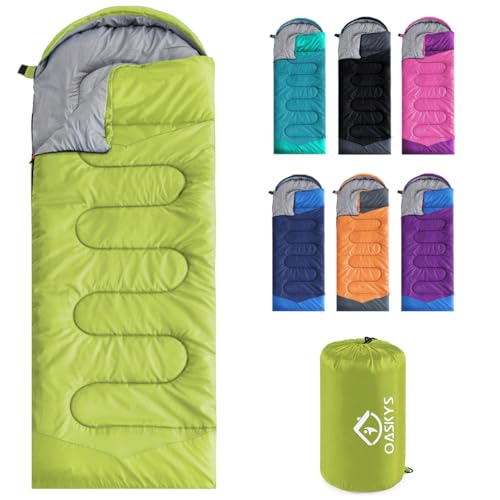
Best for users who want consistent three-season performance with similar weather resistance and an easy-to-pack design. This listing mirrors the same features as the other oaskys option, including a flexible bottom zipper and hood design for warmth retention.
- Dual listing provides options for different colorways or minor design tweaks.
- Weather resistance and breathability support comfortable use in varied climates.
- Compact packability suitable for hikers and travelers.
Caution: Similar to the other oaskys model, avoid relying on these for severe winter expeditions without supplemental insulation.
CORE 50 Degree Sleeping Bag
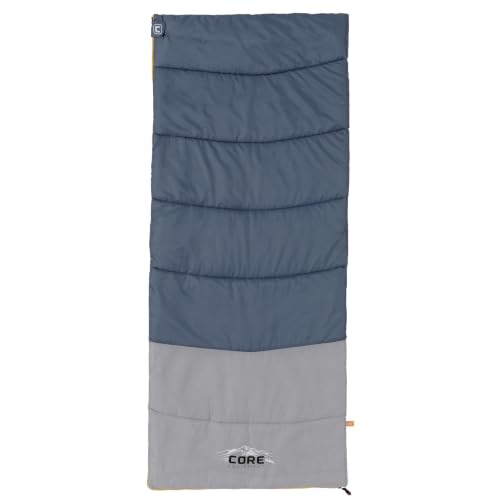
Best for versatile indoor-outdoor use where a lightweight, quick-drying option is preferred. The bag targets 50°F to 70°F comfort, making it suitable for mild three-season conditions and indoors-to-outdoor transitions.
- Lightweight design with durable, soft lining for repeated use.
- Plush hollow-fiber fill provides warmth and loft while remaining quick-drying.
- Simple construction offers easy maintenance and long-lasting use.
Caution: Temperature range centers on mild evenings; you may need additional insulation for consistently cooler nights.
Buying Guide
What to consider when choosing a 3-season lightweight sleeping bag:
- Warmth rating and intended climate: Match the temperature range to your typical camping season and nightly lows.
- Size and fit: If you’re tall or broader, seek extra width or a semi-rectangular cut for comfort.
- Weight and pack size: Prioritize a low-weight bag with a compact compression sack for backpacks.
- Weather resistance: Look for water-repellent outer shells and draft protection, especially for shoulder seasons.
- Durability and care: One-piece or robust stitching reduces shifting fill; machine-washable designs simplify cleaning.
- Hood design and draft control: A hood and draft collar improve warmth in cooler nights.
FAQ
- What is a three-season sleeping bag best for? It is designed for spring, summer cool nights, and fall conditions, balancing warmth and portability.
- Should I choose a wider bag? Yes, if you are a side sleeper or prefer extra space to move; otherwise a standard cut can save weight.
- Are there bags suitable for indoor use? Yes, several options offer comfort for indoor camping or sleepovers.
- What’s the difference between a semi-rectangular and a mummy bag? Semi-rectangular provides more room to move, while mummy shapes aim for tighter heat retention.
- Can these bags handle damp nights? Many include water-resistant shells, but always consider a ground tarp and clip-on hood features for extra protection.
- Is a separate compression sack necessary? A compression sack helps reduce bulk, but a storage sack is fine for occasional use.