When you need reliable power with a dedicated 30A RV outlet, prioritize generators designed for campgrounds and outdoor use. This guide highlights five 30A-capable models well-suited for camping, tailgating, and backup power, with clear reasons for each pick. It’s ideal for buyers seeking clean power for sensitive devices, long runtimes, and easy portability.
Summary table of selected products:
| Product | Best For | Key Benefit | Limitations |
|---|---|---|---|
| Westinghouse 4650 Peak Watt Portable Generator | RV users, campers | Tri-outlet setup incl. TT-30R 30A | Heavy for ultra-light travelers |
| PowerSmart 3600-Watt Portable Inverter Generator | Quiet camping, small gear | Inverter power, compact | Lower running watts |
| EFURDEN 4300 Watts Portable Inverter Generator | General camping, home use | RV-ready 30A, EPA compliant | Moderate weight |
| Westinghouse 6500 Watt Dual Fuel | Backup power, larger rigs | Gas/Propane dual fuel | Heavier, larger footprint |
| ERAYAK 4500W Dual-Fuel Portable Inverter | RVers, emergency backup | Dual fuel, compact | Mid-range output |
Westinghouse 4650 Peak Watt Portable Generator
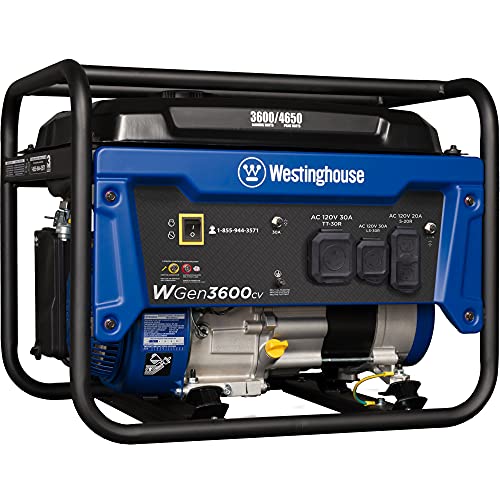
Best for RV use and campers who need dedicated 30A RV power alongside standard household outlets. This model runs on gas, provides 3600 running watts and 4650 peak watts, and includes a TT-30R 30A RV outlet, plus two 120V duplex outlets with rubber covers for safety. A CO sensor adds a safety layer for enclosed campsites. The kit includes oil, funnel, tool kit, and manual for quick setup out of the box. Its dual 5–20R and TT-30R outlets make it versatile for appliances and RV hookups.
Who it’s best for: RV owners and campers who need a robust, all-in-one generator with a dedicated 30A RV connection. Why chosen: strong peak/run watts, multiple outlets, and safety features align with typical camping power needs. Limitation: heavier unit, which may be less ideal for extended treks or backpack-style camping.
PowerSmart 3600-Watt Portable Inverter Generator

This option emphasizes quiet operation and clean power, making it ideal for sensitive electronics, camping, and small workshop needs. It delivers up to 3600 starting watts and 3200 running watts with advanced inverter technology that ensures less than 3% total harmonic distortion. The 1.3-gallon tank offers solid runtime, often up to around 8 hours at moderate loads, which helps reduce fuel stops on extended trips. It includes a 30A RV-ready outlet and standard 120V outlets for versatility.
Who it’s best for: campers and light-duty users needing quiet, stable power for laptops, CPAP devices, or small appliances. Why chosen: clean sine wave power, RV compatibility, and relatively compact design. Limitation: lower continuous output compared to larger models, so avoid heavy air conditioners or high-draw tools at once.
EFURDEN 4300 Watts Portable Inverter Generator
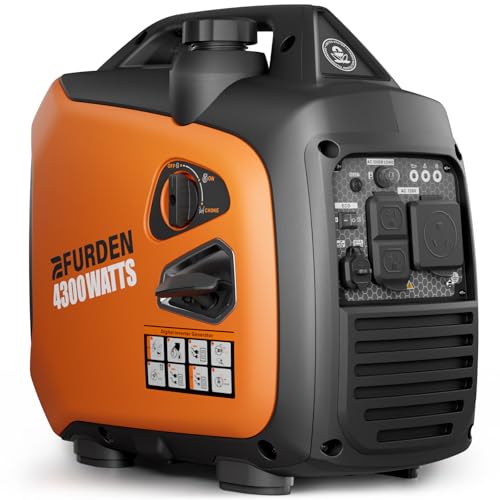
Best for campers who want a balance of RV-ready outlets and portability. It offers 4300 peak watts and 3300 running watts with a THD below 2%, supporting sensitive electronics like laptops and drones. The 120V 30A RV port, plus two 120V 20A outlets and USB/C ports, cover a broad range of devices. The inclusion of a compact frame and relatively light weight helps with transport to campsites. A potential limitation is runtime that depends on load and fuel capacity, which is typical for inverter units of this class.
Who it’s best for: campers needing reliable, clean power with RV compatibility without the bulk of larger models. Why chosen: dual-outlet versatility and clean electricity. Limitation: not as long-running as larger 6500W-class models on continuous loads.
Westinghouse 6500 Watt Dual Fuel Portable Generator
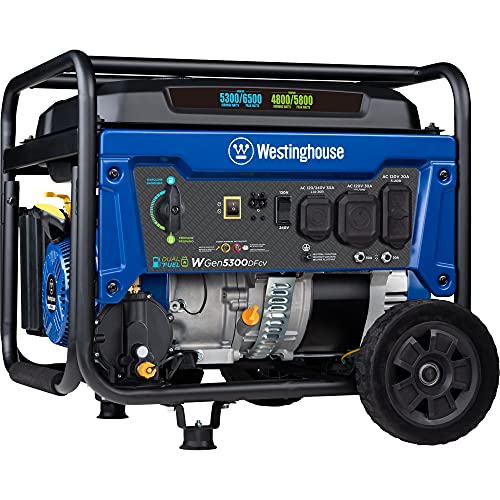
Best for backup power and larger RVs that require more capacity. This dual-fuel unit runs on gasoline or propane, with 5300 running watts and 6500 peak watts (gasoline) or 4800/5800 (propane). It includes a 4.7-gallon fuel tank and up to around 14.5 hours of runtime at a suitable load. Outlets include 5–20R duplex, TT-30R RV, and L14-30R transfer switch-ready receptacle. Safety is enhanced by rubber-covered outlets and a CO sensor, while the plug-and-play kit supports quick setup. Limitation: heavier and less portable than compact inverter models.
Who it’s best for: homeowners and campers needing long outages or larger trailer setups. Why chosen: versatile fuel options and strong runtime. Limitation: bulkier size can limit mobility and storage in tight campsites.
Oxseryn 4400-Watts Inverter Generator
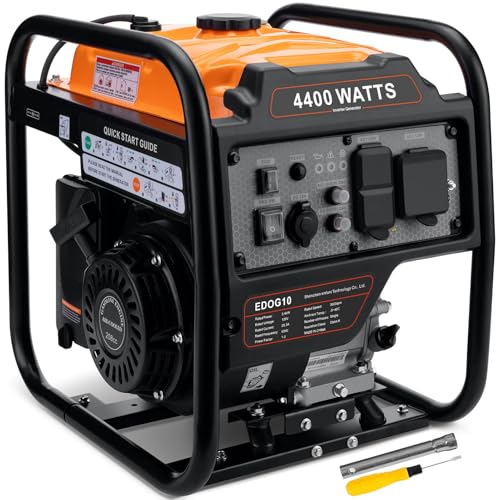
Best for emergency home backup and RV use with compact design. It delivers 4400 peak watts and 3400 running watts, featuring two 120V outlets and a 30A RV port. The 14-hour runtime at 25% load offers solid endurance for overnight camping. Inverter technology and ECO mode provide stable power with efficiency, while EPA compliance ensures regulatory alignment. A limitation is that higher loads may require fuel planning due to the relatively modest tank size.
Who it’s best for: campers who want a balance of portability, efficiency, and RV readiness with dual 120V outlets plus a dedicated RV port. Why chosen: good mix of power and fuel efficiency, suited for smaller rigs and mid-range campsites. Limitation: not ideal for heavy appliances like large air conditioners on high loads.
Buying Guide
What to consider when shopping for a 30A camping generator
- Power needs:estimate running watts for essential devices and appliances. Choose a model with a running wattage comfortably above your peak load.
- RV readiness:look for a dedicated 30A TT-30R RV outlet plus standard 120V outlets for flexible campground use.
- Fuel type:gasoline dual-fuel units offer flexibility, but propane can be cleaner and longer-lasting in some scenarios.
- Portability vs. capacity:inverter generators are quieter and safer for electronics but may be lighter on sustained power compared to larger payload units.
- Runtime and fuel capacity:larger tanks provide longer outages; consider runtime at typical campground loads to minimize refueling stops.
- Safety features:CO sensors, rubber outlet covers, and low-oil shutdown help prevent hazards in camp settings.
- Portability accessories:wheel kits, handles, and included tool kits ease transport and setup.
Practical considerations for campers
- Park rules often restrict generator noise and fuel storage. Check campground policies before purchasing.
- Think about storage space at your campsite and within your vehicle. A compact inverter might suit smaller setups better.
- Plan for parallel operation if you anticipate higher loads. Some models support parallel kits for additional power.
FAQ
- Q: Do 30A generators work with all RVs? A: Most RVs with a 30A shore power connection can connect to a TT-30R outlet on compatible generators, but verify the outlet type and amperage compatibility first.
- Q: What does THD mean in inverter generators? A: THD stands for total harmonic distortion; lower THD indicates cleaner power suitable for sensitive electronics.
- Q: Are dual-fuel generators better for camping? A: Dual-fuel options offer flexibility in fuel availability and can broaden runtime, but weight and maintenance should be considered.
- Q: Is inverter power safer for electronics? A: Yes, inverter generators produce a stable sine wave with low THD, reducing voltage spikes that could damage sensitive devices.
- Q: How do I choose between a compact inverter and a larger, dual-fuel unit? A: Consider portability, noise, and typical loads. For minimal disturbance and laptop use, an inverter is ideal; for high-power appliances or backup, a larger dual-fuel unit provides more headroom.
- Q: Do these generators include wheels or a kit? A: Some models ship with wheels, handles, or tool kits; check product pages for included accessories.