Finding the right 6mm prusik cord helps ensure reliable knots, safe progressions, and dependable backups in outdoor settings. This guide selects five practical 6mm cords, highlighting who each product suits best, plus quick cautions to consider. Ideal for climbers, arborists, rescue professionals, and outdoor enthusiasts, these cords cover common tasks like prusik loops, lanyards, and friction-based self-rescue. Read on to compare construction quality, knot-ability, and abrasion resistance to pick the best match for your needs.
| Product | What It’s Best For | Key Benefit | Notable Limitation |
|---|---|---|---|
| Outdoor recreation, prusik loops, lanyards | High abrasion resistance; sturdy sheath | May be less flexible for very small knots | |
| Climbing, arborist, rescue prep | Pre-sewn loop with heat shrink; safer and easier | Fixed length may limit specialized setups | |
| General outdoor uses; prusik loops | Flexible; easy to tie knots | Similar to other cords; check diameter compatibility | |
| Arborist, outdoor climbing, rescue | Aramid core with high breaking load | Heavier construction; may feel stiffer in knotting | |
| Climbing and outdoor use | Pre-sewn loop with heat shrink; secure | Limited to 12 inch loop length |
GM CLIMBING 6mm Double Braid Accessory Cord

Best for: outdoor enthusiasts and climbers needing a versatile prusik cord for loops, lanyards, or ice thread setups. This 6mm double braid design emphasizes abrasion resistance and a sturdy sheath, supporting long-term use in rugged environments. The cord’s supple handling supports knot-typing, making it suitable for beginners and seasoned users alike. Caution: its slightly stiffer sheath may require a bit more effort when threading tight knots in confined spaces.
GM CLIMBING 6mm Prusik Cord Pre-Sewn 12in Prusik Loop

Best for: climbers and rescue workers who want a ready-to-use prusik loop with added safety from heat-shrink over sewn stitching. It works well with rope diameters in the 8–11mm range and is praised for abrasion resistance and strong, lasting performance. Choose this if you prefer a pre-sewn loop over a raw cord for quicker setup. Limitation: fixed 12-inch length may constrain some longer-pull configurations.
GM CLIMBING 6mm Accessory Cord Rope Double Braid CE/UIAA
Best for: outdoor tasks like building prusik loops, lanyards, and climbing aids where abrasion resistance matters. Its double-braid construction offers a firm feel and reliable knot performance. Caution: as with other double-braid cords, it may be slightly less flexible than single-braid options in very tight knots.
NewDoar 6mm Prusik Cord Pre-Sewn 12KN/2700lb

Best for: arborists and mountaineers needing high breaking load in a compact 6mm cord. The aramid core plus polyester outer thread contributes to excellent strength and durability for demanding applications. Caution: the aramid-based core can be stiffer, potentially requiring more effort to tie certain knots and adjust in cold conditions.
GM CLIMBING 6mm Prusik Cord Pre-Sewn 12in Prusik Loop
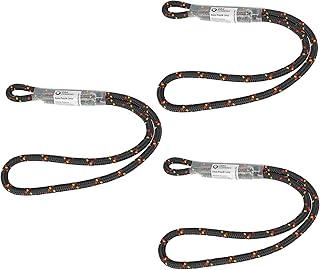
Best for: outdoor enthusiasts needing a ready-to-use prusik loop with proven abrasion resistance and simple knot-tying. The 12-inch loop length is well-suited for standard climbing setups, self-rescue rigging, and practice. Caution: fixed loop length may not fit all rope diameters or atypical rescue configurations.
Buying Guide
Key factors to consider when choosing a 6mm prusik cord:
- Durability vs. flexibility: Double-braid cords offer abrasion resistance and security, while aramid cores provide high strength but can feel stiffer.
- Pre-sewn vs. raw cord: Pre-sewn loops speed up setups and reduce knot failure risk, but limit adjustability.
- Rope compatibility: Ensure your main rope diameter matches the prusik cord’s recommended range (often around 8–11 mm for 6 mm loops).
- End treatments: Heat shrink or stitching can improve safety at the loop ends by reducing unraveling risk.
- Weight and packability: Lighter cords with compact loops are preferable for long approaches or minimalist packs.
Ask practical questions to guide selection: Will you rely on prusik as a primary belay or as a backup? Do you need a quick-deploy loop or a versatile knot-friendly cord? How important is abrasion resistance in your terrain? These considerations help match cord construction and length to your typical climbing scenario.
Frequently Asked Questions
- What is a 6mm prusik cord best used for? It is commonly used for prusik loops, lanyards, friction-based self-rescue, and as an accessory cord in climbing and arborist tasks.
- Are pre-sewn prusik loops safer than raw cords? Pre-sewn loops with heat shrink can provide stronger, more uniform loops and reduce knot slippage under load.
- Can 6mm cords handle heavy loads? When paired with appropriate rope diameters, 6mm cords with aramid cores or high-strength fibers can support demanding applications, but always follow product specifications.
- How do I choose between double braid and single braid? Double braid often offers greater abrasion resistance and durability; single braid may be more flexible for tight knots.
- What length should I choose for prusik loops? Common loop lengths are around 12 inches for quick setups, but adjust based on your rope diameter and intended use.
- Is aramid-based fiber suitable for cold environments? Aramid fibers provide high strength but can become stiffer in cold conditions, affecting knot work; consider temperature effects for winter use.