Finding the right sleeping mat for rugged outdoor use means prioritizing durability, packability, and comfort. The top picks below are tailored for campers, hikers, and outdoor workers seeking reliable foam or inflatable options that align with military-grade or expedition-grade standards. Each product is evaluated for who benefits most, why it stands out, and any notable limitations.
The following table highlights five strong options and who they’re best for. This quick guide helps compare core features at a glance.
| Product | Best For | Key Benefit |
|---|---|---|
| Military Outdoor Clothing New Never Issued US GI OD Sleeping Mats | Budget-conscious buyers needing genuine surplus | Genuine US military issued surplus, easy roll-out |
| Military Issue Therm-A-Rest Self Inflating Sleep Mat | Backcountry travelers who want quick self-inflation | Self-inflating, durable nylon construction |
| HiiPeak Sleeping Pad | Premium comfort seekers and side sleepers | 3″ thick, built-in pillow, ergonomic hexagon cells |
| FUN PAC Camping Sleeping Pad | Lightweight hikers needing compact setup | Self-inflating with built-in pillow, compact for packing |
| OGERY Sleeping Pad | Lightweight, easy-to-carry inflatable option | 6″ thickness with built-in foot pump |
Military Outdoor Clothing US GI OD Sleeping Mats

This genuine US military issued surplus foam mat offers a simple, reliable option for campers who want a straightforward sleep surface. It’s best for budget-conscious buyers and those who value proven field gear. The mat is noted for its roll-out convenience and a drawstring closure when rolled, aiding quick packing. A potential limitation is its foam design, which may be less cushioned than thicker air-enabled mats in very rocky terrain.
Military Issue Therm-A-Rest Self Inflating Sleep Mat

This mat uses self-inflating technology, eliminating the need for an external pump. It’s a solid choice for travelers who want quick setup and reliable insulation, made with thick weatherproof nylon. It’s best for campers who prioritize ease of inflation and a rugged, ready-to-use surface. The main caveat is that self-inflating mats can be heavier and bulkier than ultralight foam options, impacting packing space for minimalist trips.
HiiPeak Ultralight Sleeping Pad With Pillow
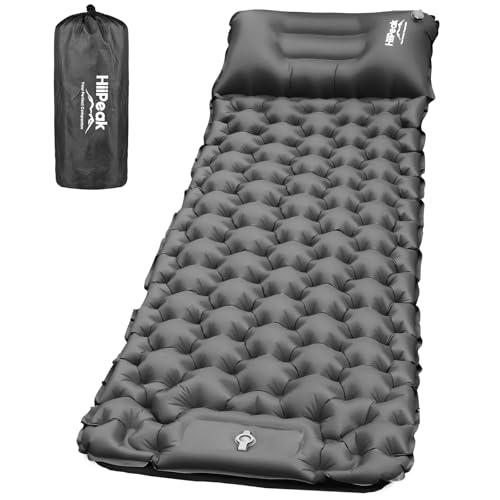
HiiPeak focuses on comfort and support with 3″ thick air cells and a built-in pillow. The hexagon design aims to minimize pressure points, supporting back and neck alignment whether sleeping on the back or side. The mat uses a dual-material outer shell for durability and weather resistance. It’s best for campers who want a more ergonomic, higher-comfort inflatable option and are willing to trade off some weight for comfort. A limitation could be that air-based mats require careful care to avoid punctures.
FUN PAC Camping Sleeping Pad With Pillow

FUN PAC offers an ultralight self-inflating pad with a built-in pillow and a 30–60 second inflation time. Its egg-shaped cells and dual-layer valve are designed to minimize air leaks and maximize comfort on uneven ground. Best for hikers and travelers who value fast setup, compact packing, and a pillow-in-one design. A potential drawback is that even with its compact form, taller users may prefer a longer or wider model for full-body support.
Rothco Foam Sleeping Pad With Ties

Rothco’s foam pad emphasizes bare-bones comfort and easy transport, with ties for rolling and carrying. It is well-suited for campers who prefer a simple, rugged sleeping surface and easier packing options without inflation concerns. The main limitation is that foam pads are typically thicker and heavier than some ultralight inflatables, which may impact backpacking efficiency on long trips.
OGERY 6-Inch Ultralight Sleeping Pad

OGERY highlights a 6″ thick inflatable pad with built-in pillow and a foot pump for easy setup. Its double-layer air valves help prevent leaks, and the weight includes a compact carry footprint, making it appealing for backpackers prioritizing comfort and portability. A caution is that inflation requires some time if done without an electric pump, though the built-in pump aids quick setup. It’s best for travelers who want a balance of thickness, comfort, and packability.
Buying Guide: Key Considerations For Choosing Army-Grade Sleeping Mats
What should you ask before buying? Consider these practical questions to match mats to your outdoor needs.
- What type of sleeping surface do you prefer—foam or inflatable? Foam pads are durable and simple, while inflatables offer customizable comfort and higher insulation when paired with appropriate R-values.
- How important is weight and packability? Ultralight options are ideal for long treks, but they may sacrifice some comfort or durability compared to thicker mats.
- Will you be sleeping on uneven terrain or rocky ground? Look for thicker mats with robust outer materials and good puncture resistance.
- Do you need built-in pillows or integrated pumps? Built-in pillows improve head and neck support, and built-in pumps simplify setup, but add to weight and cost.
- What climate conditions will you encounter? Dense insulation and moisture resistance are essential in cold, damp environments; consider the material and construction for durability in wet or rocky conditions.
How To Choose By Scenario
For minimalist carry, a compact inflatable with built-in pump may be best. For extended trips in rough campsites, a durable foam pad or thicker inflatable with reinforced outer shell is advantageous. If you sleep on your back or side, prioritize pads with ergonomic support and built-in pillows. Consider the ease of roll-up or packing features for quick setup at the end of a long day.
FAQ
- Q: Which sleeping mat is best for back sleepers? A: Mats with integrated pillows and thicker profiles tend to support the neck and spine better for back sleepers.
- Q: Are self-inflating mats more durable than foam mats? A: Self-inflating mats offer ease of inflation and often better comfort, but durability depends on construction and materials.
- Q: Do inflatable mats require maintenance? A: Yes, inspect for punctures and leaks; avoid sharp objects and store properly to prevent damage.
- Q: Which mat is lightest for backpacking? A: Ultralight inflatable mats and certain foam pads are designed for lighter carry, but check the exact weight specifications for each model.
- Q: Can these mats be used in cold weather? A: Many inflatable mats provide insulation, but the effective warmth depends on material, thickness, and sleeping surface beneath the mat.
- Q: Are these mats suitable for children or elderly users? A: Some mats with built-in pumps and wide surfaces are easier for children and older individuals to use, but always check weight, height, and portability.