Looking for an army-grade modular sleeping bag system that can adapt to different climates and activities? This guide highlights five viable options built for reliability in rugged outdoor environments. Each product appeals to different buyers: military enthusiasts and survivalists needing multi-layer versatility, campers seeking cold-weather gear, and outdoor professionals requiring durable, modular configurations. Below you’ll find concise product insights, who each bag is best for, and practical trade-offs to consider.
| Product | Best For | Key Benefit |
|---|---|---|
| MT Army Military Modular Sleeping Bags System (OD) | Extreme cold and modular use | All-season layering with Bivy cover |
| Military Modular Sleeping System with Center Zipper | Fast entry and versatile configurations | Central zipper for quick access |
| MT Army Military Modular Sleeping Bags System (OCP) | Wet or varied climates | OCP color option and moisture resistance |
| USGI Gear Military Sleeping Bag System | 4-piece modular versatility | Includes bivy and compression sack |
| MT Modular Sleep System 4-Piece | Front-zip design and space savings | Vacuum compression sack |
MT Army Modular Sleeping Bags System with Bivy Cover (All-Season)

The MT Bivy Cover uses a three-layer laminated fabric combination to deliver waterproof, breathable, and wind-resistant performance with fully sealed seams. The outer nylon surface adds abrasion resistance. This system includes an outer patrol/recon bag with high-loft filling, a heat-treated seam for moisture resistance, and a Velcro-secured top cover. It is designed for a comfortable range around 5-15°C, with lower limits down to -1°C. The intermediate bag uses Polarguard HV insulation for enhanced loft and compression resistance. Together, they provide versatile warmth for extended outdoor excursions. Best for military enthusiasts or survivalists who need a robust, all-season solution that can adapt to temperature shifts. Caution: the high loft and multiple layers may require careful packing for compact carry when not in use.
MT Army Military Modular Sleeping Bags System (OD) with Bivy Cover

This OD-colored modular system mirrors the all-season design with a water-repellent outer shell and a three-layer build. The patrol bag uses a high-loft nylon ripstop fill for warmth and compression resistance, while heat-treated seams enhance water and moisture resistance. The intermediate bag features Polarguard HV insulation for reliable warmth even when damp. A head Velcro feature allows quick opening or closing of the top cover. Best for field operations or tactical training where a rugged, color-matched system matters. Limitation: data suggests similar specifications across color variants; actual thermal performance may depend on layering and external conditions.
USGI Gear Military Sleeping Bag System – 4-Piece Modular Kit
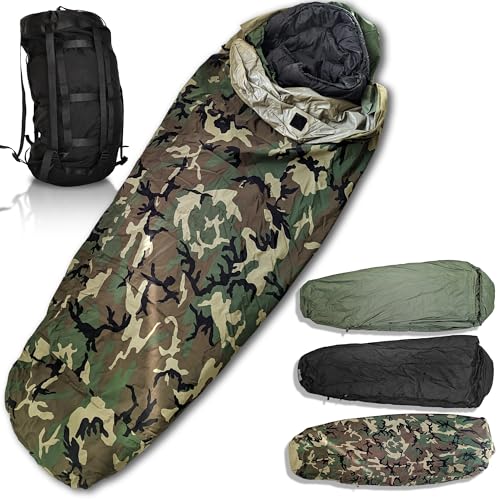
The complete four-piece modular system includes a Patrol Bag, Intermediate Cold Weather Bag, waterproof Bivy Cover, and a compression sack. This setup is designed to protect against a wide temperature range, with a waterproof bivy and DWR-treated fabric for water repellency. The design emphasizes durability with 210T ripstop and robust YKK zippers. Best for outdoor professionals who require a versatile system capable of weather protection and rapid deployment. The kit’s all-weather emphasis can simplify packing, but the four-piece configuration may be bulkier than simpler alternatives.
MT Modular Sleep System – 4-Piece With Front-Zip and Vacuum Sack
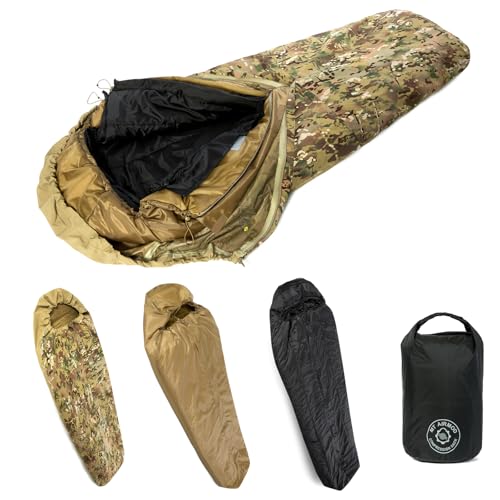
This MT four-piece system features a front-zip design for faster entry and easier access in tactical or emergency scenarios. The vacuum compression sack reduces storage volume by a significant margin, improving carry efficiency. The set includes a Patrol Bag, Intermediate Cold Weather Bag, Waterproof Bivy Cover, and a compression bag. Best for those who prioritize quick entry and space-saving storage in the field. Caution: a front-zip design may alter ventilation control compared to traditional side-entry configurations in some extreme conditions.
Buying Guide
What should you consider when choosing an army modular sleeping bag system?
- Temperature range: Look for clear comfort and limit temperatures for the layering system. All-season use benefits from a well-documented comfort range and compatibility between bags.
- Modularity: Decide if you need a two-, three-, or four-piece setup. More pieces offer broader climate adaptability but increase weight and packing volume.
- Protection from moisture: A waterproof bivy cover and DWR-treated shells are essential for damp or wet environments. Confirm seam construction and fabric treatments.
- Durability and materials: Ripstop fabrics, heavy-duty zippers (like YKK), and high-loft insulation improve longevity in rough use. Consider how materials handle abrasion, tearing, and abrasion resistance.
- Entry design: Center or front-zip configurations impact user accessibility and ventilation. Choose based on your preferred entry and emergency egress needs.
- Storage and portability: Vacuum compression sacks or standard stuff sacks affect how compactly the system packs for transport. Evaluate weight and size.
- Color and camouflage: For field use, color options (OD, woodland, or OCP) can matter for concealment or identification in military environments.
Frequently Asked Questions
- What is a modular sleeping system? A modular system combines multiple sleeping bags and a bivy cover that can be used separately or together to tailor warmth and protection for varying conditions.
- Which option is best for extreme cold? Systems with a dedicated intermediate or cold-weather bag plus a durable bivy cover are designed to maximize warmth in low temperatures. Layering flexibility is key.
- Are center-zip designs easier to use? Yes, center or front-zip configurations typically allow faster entry and can improve ventilation during rapid egress in emergencies.
- Is a vacuum compression sack necessary? It helps reduce bulk and facilitates easier transport, but it can add cost and complexity compared to standard bags.
- What maintenance is needed for these bags? Keep shells dry, inspect seams, and ensure zippers operate smoothly. Store uncompressed in a cool, dry place to preserve insulation loft.
- Can these be used for civilian camping? Yes, they are suitable for outdoor use beyond military contexts, especially when you need adaptable warmth and weather protection.