Answering the need for quick, reliable shelter, these automatic tents set up in minutes and are ideal for family trips, solo adventures, or group camping. The top picks target different campers: some prioritize capacity and internal height, others emphasize weather resistance and portability. This guide helps you compare options, identify who each tent suits best, and choose the right automatic tent for your next outdoor stay.
Quick Reference: Chosen Products
| Product | Brand | Capacity | Best For |
|---|---|---|---|
| HINSTANT 6 Person Instant Tent | HINSTANT | 6 | Family camping with quick setup |
| Mimajor 2-3 Person Camping Tent | Mimajor | 2-3 | Compact trips, easy setup, versatile use |
| FanttikOutdoor Zeta C6 Pro Camping Tent | FanttikOutdoor | 6 | Windy, rain-ready family camping |
| HINSTANT 4/6/8/10 Person Instant Tent | HINSTANT | 4-10 | Varied group sizes, rapid setup |
| Londtren Pop Up Tent | Londtren | 4 | Spacious 4-person comfort, quick deploy |
HINSTANT 6 Person Instant Tent

Best for: Families needing quick shelter and generous interior height. This tent uses a pre-attached pole system to set up in about 60 seconds, with sturdy galvanized metal poles and a high-strength spring mechanism to withstand repeated use. The 10′ x 9′ interior space fits a king-size air mattress for comfortable sleeping and ample gear storage. It weighs around 17.4 pounds and includes an expandable carry bag.
Why selected: The combination of fast setup, roomy interior, and reinforced frame makes it suitable for first-time campers and families who value simplicity and speed when arriving at a site.
Caution: While designed for weather protection, always verify stakes and guylines in gusty conditions to maintain stability.
Mimajor 2-3 Person Camping Tent
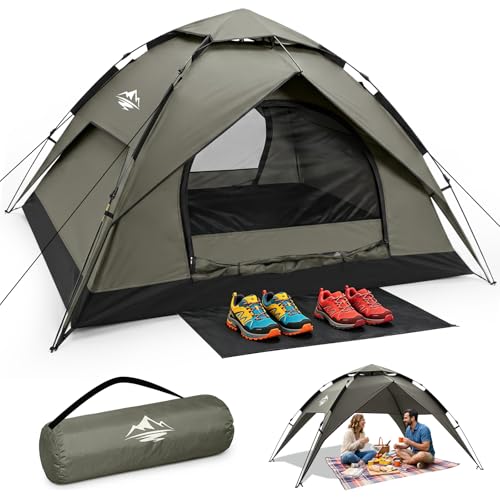
Best for: Solo campers or couples who want a compact, weather-ready setup with flexible use. The tent features an automatic hydraulic system that deploys in about 40 seconds, with a detachable rainfly and inner tent for versatile use as a rain shelter or standalone sunshade.
Why selected: The dual-layer design and fast deployment offer practical versatility for weekend trips or variable weather, while maintaining a compact footprint for easy transport.
Caution: The setup sequence relies on fully extending legs; incomplete extension can hinder proper locking, so follow the expansion steps carefully.
FanttikOutdoor Zeta C6 Pro Camping Tent

Best for: Families seeking robust weather resistance with strong wind performance. The tent sets up in under 60 seconds due to pre-installed poles, and it features a tub-style drainage design, mesh ventilation on all sides, and withstands winds up to 35 mph.
Why selected: The integrated drainage and multi-side ventilation provide comfort in varied climates, making it a reliable option for unpredictable summer storms or breezy campsites.
Caution: The ventilation design relies on window openings; remember to close screens during rain to prevent moisture entry if weather shifts.
HINSTANT 4/6/8/10 Person Instant Tent

Best for: Groups with variable headcount or family crews needing a scalable shelter. This tent family line offers quick setup in about 60 seconds with pre-attached poles and rugged metal components designed to withstand frequent use.
Why selected: The expanded capacity and consistent quick setup make it a flexible option for multi-night trips or larger gatherings while keeping transport compact with a foldable bag.
Caution: Higher-capacity tents can be heavier; check your vehicle and campsite space before purchase to ensure easy transport and placement.
Londtren Pop Up Tent

Best for: Campers who want a spacious, easy setup option for a small family or group. The 4-person tent offers a 9.2 x 6.6 feet interior with a center height around 4.3 feet and includes multiple doors and mesh panels for airflow.
Why selected: The big interior relative to footprint and the instant pop-up design makes it a practical choice for quick setups at campgrounds with limited time to pitch tents.
Caution: Mesh doors and windows improve airflow but require some care in heavy rain to avoid wind-driven moisture entering the shelter.
Buying Guide
What to prioritize in an automatic camping tent
- Setup speed and reliability: Look for pre-attached or hydraulic systems that deploy with minimal effort and less risk of misalignment.
- Capacity and interior height: Match the tent size to your group and preferred sleep arrangements; higher ceilings improve headroom and comfort.
- Weather protection: Check fabric rating (waterproof PU or similar), taped seams, rainflies, and floor protection to keep interiors dry.
- Ventilation and mosquito protection: Mesh panels and breathable fabrics help reduce condensation while keeping bugs out.
- Portability and storage: Consider fold size, packed weight, and carry bag design for easy transport and storage.
How to choose for different camping scenarios
- Family trips with kids: Prioritize larger capacity, robust wind resistance, and simple setup to reduce campsite stress.
- Backpacking or car camping: Favor lighter models with compact packed dimensions and quick deployment without compromising shelter quality.
- Seasonal use and weather variability: Favor tents with strong waterproofing, double-layer designs, and reliable anchoring systems for rain and wind.
Ease of use vs. durability
Automatic tents streamline pitching, but ensure the framework and materials align with your campsite conditions. Durable poles, high-quality fabrics, and reinforced seams contribute to long-term performance across multiple trips.
Frequently Asked Questions
- How fast do automatic tents typically set up? Many models deploy in 40–60 seconds with pre-attached poles and hydraulic mechanisms.
- Are these tents suitable for windy conditions? Look for tents with sturdy stakes, guylines, and wind-resistant fabrics; some models are rated to withstand winds up to 35 mph.
- Can these tents accommodate a full-size mattress? Some 6-person models leave enough interior height for a king-size air mattress, while 4-person designs may fit standard sleeping arrangements with less space for gear.
- What is the best way to store an automatic tent when not in use? Use the expandable carry bag, keep poles dry, and pack away in a cool, dry area to prevent material degradation.
- Do these tents require tools for setup? Most listed models utilize a tool-free setup with automatic or pre-installed components.
- Are there any ongoing maintenance tips for longevity? Clean fabrics after use, dry thoroughly before packing, inspect seams and zippers, and treat waterproof coatings as needed over time.