If you want a reliable backpack emergency kit for earthquakes, these five options stand out for American buyers seeking ready-to-go, multi-day survival gear. They target different types of buyers—from solo preppers to small households—while offering essential food, water, warmth, and first aid supplies. This article compares each kit’s strengths, best-use scenarios, and potential limitations to help you pick the right pack for your needs.
Summary table of selected products:
- Best for: 1 person needing compact readiness
- Best for: Small household or travel-ready kit
- Best budget option: Individual preparedness with core essentials
- Best for organization: Medical bag with modular pockets
- Best all-in-one kit: 1-person comprehensive 72-hour coverage
Ready America 70280 Emergency 2-Person Backpack

This two-person kit covers 72 hours with food and water for two people, plus shelter and warmth. It includes two emergency food bars totaling 4800 calories and twelve sealed water pouches for hydration. It also provides two ponchos and two survival blankets for rain, wind, or cold conditions, along with a 33-piece first aid kit, dust masks, and nitrile gloves. Best for couples or households preparing a shared go-bag for earthquakes, outages, and evacuations. A limitation is the kit’s shared capacity; if you’re solo, you may underutilize the extra supplies. Opt for this if you need ready-made companionship-ready disaster coverage in one pack.
Ready America 70285 Deluxe 2-Person Backpack

This deluxe two-person kit expands on the basics with six 4.225-ounce water pouches, two 2,400-calorie emergency food bars, water purification tablets, and a 32-ounce BPA-free bottle. It emphasizes food security, hydration, and personal protection. Best for households that want a more robust water treatment option and clear, labeled supplies for quick access during outages, evacuations, or earthquakes. A potential limitation is heavier packaging due to extra water and purification items, which may affect backpack weight for long carries. Choose this if you want more redundancy and water treatment capability.
Ready America 70180 72 Hour Kit, 1-Person

This one-person kit focuses on essential survival gear for a 72-hour window. It includes a 2400-calorie food bar, six sealed water pouches, an emergency blanket, a poncho, and a 18-piece first aid kit with nitrile gloves. Best for solo preppers needing a compact, lightweight option for apartments, cars, or backpacks. A caution is the lighter water supply compared to two-person kits; ensure you have a plan to supplement hydration if needed. Pick this if you want a lean, portable go-bag for a single occupant.
Trunab Emergency Medical Backpack Empty
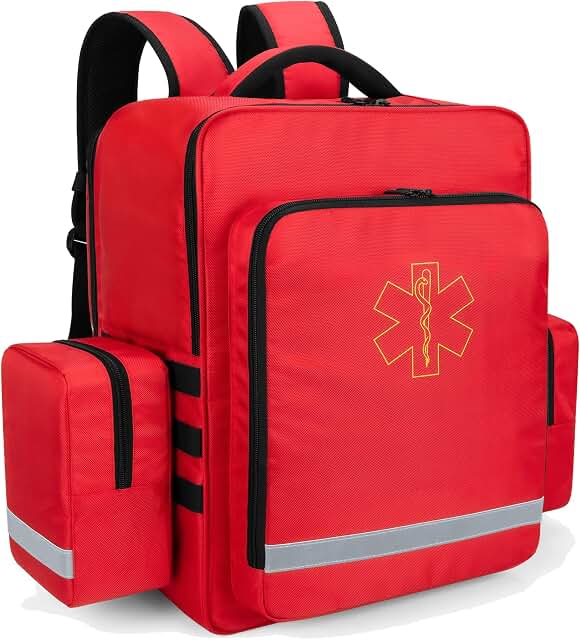
This is an empty, modular MOLLE-style medical backpack designed for customization. It offers reinforced nylon construction, four grid compartments with a transparent inner pocket, two detachable side pockets, and a front compartment with elastic slots. It also features a reinforced foam handle and padded straps for comfort. Best for users who want to build a personalized first-aid-focused earthquake kit or add a medical emphasis to an existing go-bag. A limitation is that it’s empty—buyers must curate their own medical and emergency supplies. Choose this if you prefer tailor-made medicress and organization.
Ready America 72 Hour Deluxe 1-Person Kit

This 72-hour, one-person kit provides essential food, water, shelter, and light sources. It includes a 2,400-calorie emergency food bar, six emergency drinking water pouches, a BPA-free 32-ounce water bottle, a hand-crank LED headlamp, an emergency poncho, a survival blanket, and waterproof matches. Best for solo dwellings or cars where compact, all-in-one readiness is desired. A potential limitation is the fixed, all-in-one design that may not suit buyers who want more medical gear or specific items. Choose this if you want a compact, complete solo kit with built-in lighting and warmth.
Buying Guide: Key Considerations for Earthquake Backpack Kits
- : Decide whether you need a solo kit, a two-person set, or a modular system to cover a family. Larger kits typically include more food and water but add weight.
- : Look for 72-hour coverage with durable shelter options (ponchos, thermal blankets), hydration (water pouches or bottles), and energy (calorie-dense food bars).
- : A sufficient first aid kit and protective gear helps with debris and minor injuries. Consider whether you prefer a dedicated medical bag or a general kit with medical supplies.
- : Water pouches are common, but consider purification options if you expect extended outages or uncertain water sources.
- : Bags should be easy to carry, with sturdy zippers, comfortable straps, and organized compartments for quick access during stress.
- : If you expect changing needs, a modular bag or empty option (like the Trunab medical backpack) lets you tailor gear over time.
- : Look for tough materials, reinforced handles, and abrasion resistance for rugged use and long-term storage.
Choosing by Scenario
- For couples or households wanting shared gear: a two-person kit that includes water, food, and a shelter system offers balanced coverage during multi-day outages.
- For solo preppers prioritizing light weight: a compact one-person kit with essential food, water, and warmth may be ideal.
- For medical professionals or organizers: a customizable medical backpack supports easy transport and quick access to supplies.
- For budget-conscious buyers: look for kits that emphasize core needs—food, water, shelter, and basic first aid—without extra frills.
Quick Reference: Feature vs. Use Case
- Ready America 70280: Best for couples who want a ready-to-go two-person solution with shelter and protection essentials.
- Ready America 70285 Deluxe: Best for households desiring added water treatment and more hydration options.
- Ready America 70180: Best for solo prep with a compact footprint and essential protection for 72 hours.
- Trunab Medical Backpack: Best for customized medical-focused kits or when you want modular organization for med supplies.
- Ready America 72 Hour Deluxe: Best all-in-one solo option with lighting and warmth for immediate emergencies.
FAQ
- What should a basic earthquake backpack include? It should include enough water and food for 72 hours, a weather-appropriate shelter item, a basic first aid kit, warmth, a light source, and a means of signaling or communication if possible.
- Is a two-person kit better than a solo kit? It depends on your household. A two-person kit can cover partners or family members, reducing the need for multiple packs, but it adds weight and cost.
- Should I customize my kit? Yes. A customizable setup allows you to tailor medical supplies, tools, or specialty items to your health needs and environment.
- How often should I check or replace items? Inspect bags and contents annually, replacing perishable foods, water pouches, and battery-powered items as needed to ensure readiness.
- Where should I store an earthquake backpack? Store in an accessible location near exits, in a dry, cool place away from direct sunlight to prolong shelf life.
- Do these kits work for other disasters? Yes. Most of these kits are designed for earthquakes but also cover power outages, floods, and wildfires during the critical first 72 hours.