Answering the need for compact, versatile backpacks, these daypacks balance lightweight design with useful capacity. The top picks here suit travelers, hikers, commuters and casual adventures alike. Best for: travelers who want a spare bag, hikers who value packability, and daily commuters who need a reliable daypack without bulk.
| Product | Capacity | Best For |
|---|---|---|
| WATERFLY Small Lightweight Packable Backpack | 20L | Travelers needing ultra-light carry and foldability |
| 4Monster Hiking Daypack | 16L | Lightweight everyday use and short trips |
| MIYCOO Backpack | 35L | Day trips with wet/dry separation |
| Osprey Ultralight Collapsible Stuff Pack | 18L | Expandable luggage and on-demand extra bag |
| SKYSPER Small Hiking Backpack | 20L | Safer day hikes with anti-theft and visibility features |
WATERFLY Small Lightweight Packable Backpack 20L

The WATERFLY 20L packable daypack emphasizes ultra-lightweight travel with foldable convenience. Weighing about 10.2 ounces, it folds to a compact size and unfolds to a 20L main compartment with multiple pockets. This model suits travelers and ultralight hikers who value space savings in suitcases or backpacks.
Best for: travelers and minimalist hikers who need a lightweight spare bag that folds into a pocket when not in use. Why selected: strong foldable design and durable SBS zippers support smooth opening and packing versatility.
Limitation: fabric is recycled nylon; while durable, it may not match heavier-duty packs in rugged terrain. Only 20L capacity may limit gear for longer excursions.
4Monster Hiking Daypack 16L
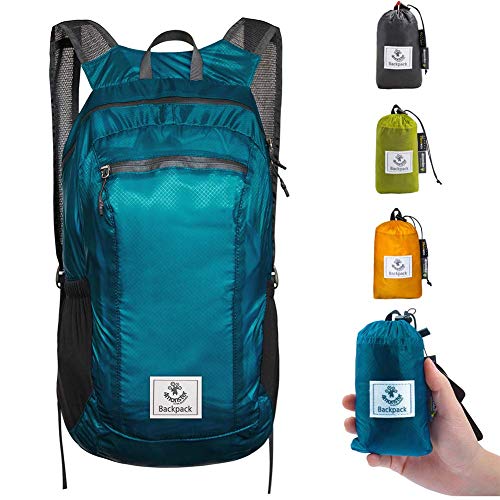
This ultralight 16L bag weighs roughly 4 ounces and folds into a wallet-sized pouch for easy carry. It’s designed for quick trips, workouts, and light day hikes where extra bag space is a convenience rather than a necessity. Water-resistant nylon and durable zippers help protect essentials in mild weather.
Best for: travelers who want a compact spare bag or hikers who need a lightweight add-on. Why selected: exceptional portability and practical folding form factor.
Caution: not ideal for carrying heavy gear or extended multi-day trips due to its minimalist capacity and lightweight construction.
MIYCOO Backpack Ultra Lightweight 35L

The MIYCOO 35L packable backpack blends lightness with a larger capacity and wet-dry separation. It folds into a compact inner pocket and unfolds to a roomy 35L with three compartments, including a wet pocket. IPX4-rated waterproof exterior helps shield contents during light rain, while reinforced stress points enhance durability for daily travel and outdoor use.
Best for: day hikers or travelers who want more packing space without adding bulk. Why selected: larger capacity with practical compartments and wet/dry separation.
Limitation: heavier than the smallest ultra-light packs, which may affect compact carry in ultra-light itineraries.
Osprey Ultralight Collapsible Stuff Pack 18L

This ultralight, bluesign-approved day pack expands luggage capacity on demand. Its 18L capacity is ideal for day trips, and the pack folds into a compact form for easy storage in a suitcase. The design emphasizes organization with multiple pockets and reinforced fabrics for extended use.
Best for: travelers needing an on-demand extra bag that won’t weigh down luggage. Why selected: collapsible design and travel-friendly materials that support both day trips and additional baggage on return.
Limitation: 0.329 lbs weight is light, but the compact frame may offer less internal organization than larger packs for complex gear sets.
SKYSPER Small Hiking Backpack 20L

The SKYSPER 20L daypack emphasizes water resistance and a lightweight profile. Constructed with high-density fabrics and reinforced stress points, it offers ergonomic support and breathable back padding. It also adds reflective elements for visibility and an anti-theft zipper for essential items.
Best for: hikers and urban explorers who value safety features and durability in a compact package. Why selected: strong emphasis on safety, visibility, and long-term comfort in a 20L design.
Limitation: feature-rich design may be more than needed for very short trips or light travel, adding unnecessary weight for some users.
Buying Guide: Key Considerations When Choosing a Daypack
- Capacity needs: Daily commuting typically requires 12–20L, while casual hikes may need 20–35L for extra layers or water. Consider whether you need a dedicated wet pocket or separate compartments for organization.
- Weight and packability: If you travel with limited space, prioritize ultralight materials and packs that fold into a pocket. For longer days, choose larger capacities with sturdy zippers and reinforced seams.
- Material and weather resistance: Look for water-resistant fabrics and durable zippers. IPX ratings or rain covers are beneficial for unpredictable weather.
- Comfort and fit: Padded back panels, contoured shoulder straps, and chest or waist buckles help distribute weight and reduce fatigue on longer wear times.
- Durability and construction: Double stitching, reinforced stress points, and reliable zippers indicate longevity for outdoor use and frequent travel.
- Security features: Anti-theft zippers, lockable compartments, and reflective elements enhance safety during night trips or crowded environments.
- Compatibility with luggage: Collapsible packs from brands like Osprey can serve as reserve luggage, while simple daypacks fit inside larger suitcases for easy access on arrival.
Frequently Asked Questions
- What size daypack is best for a day hike? Answer: A 20–25L pack is a versatile range for most day hikes, accommodating water, snacks, a light jacket, and emergency gear.
- Are packable backpacks durable enough for frequent travel? Answer: Yes, many packable backpacks use ripstop nylon or high-density fabrics and reinforced seams, making them suitable for occasional or frequent travel when treated carefully.
- Should I choose a water-resistant or waterproof backpack? Answer: Water-resistant fabrics protect contents from light rain and splashes; waterproof packs are better for heavy rain or immersion protection.
- What features improve comfort on long days? Answer: Ergonomic back panels, breathable mesh, padded straps, and chest/waist straps help distribute weight and reduce fatigue.
- Is a larger daypack always better? Answer: Not necessarily. A larger bag adds weight and bulk; choose capacity based on your typical gear and the duration of use.
- Do collapsible packs affect organization? Answer: Some collapsible packs offer fewer internal compartments but still provide essential pockets; prioritize models with a reliable layout that matches your gear.