Find the right internal-frame backpack for your next trek or travel stint. This guide highlights five durable options, detailing who each bag is best for and why it stands out. Ideal buyers include weekend hikers, multi-day campers, and travelers who carry larger gear. Below you’ll see a quick comparison and then in-depth looks at each choice, followed by a practical buying guide and FAQs to help compare features such as capacity, adjustability, and access points.
| Product | Capacity | Best For |
|---|---|---|
| IX INOXTO 85L Internal Frame Backpack | 85L | Long trips, large equipment, laptop carry |
| TETON Sports 65L Explorer Internal Frame Backpack | 65L | Versatile adventures, adjustable fit |
| SOG Barrage 64.3L Internal Frame Backpack | 64.3L | Rugged, military-style support |
| Ubon 60L Internal Frame Backpack | 60L | Budget-friendly capacity with solid storage |
| Amazon Basics Internal Frame 75L Backpack | 75L | High-capacity, entry-level price |
IX INOXTO 85L Internal Frame Backpack

Best for: travelers needing maximum capacity and organized space. This 85L internal-frame pack supports a 15.6″ laptop in its main compartment and features a bottom section with direct access to the main area. It includes multiple pockets, compression belts, and a rain-resistant build. The backpack weighs about 3.4 lbs, aiding long-haul journeys without drastically increasing load. The design prioritizes breathable mesh padding and a ventilated back to improve airflow during extended wear.
Caution: The large capacity may encourage overpacking. Consider this option if you regularly carry bulky gear or plan multi-day trips with substantial equipment.
TETON Sports 65L Explorer Internal Frame Backpack
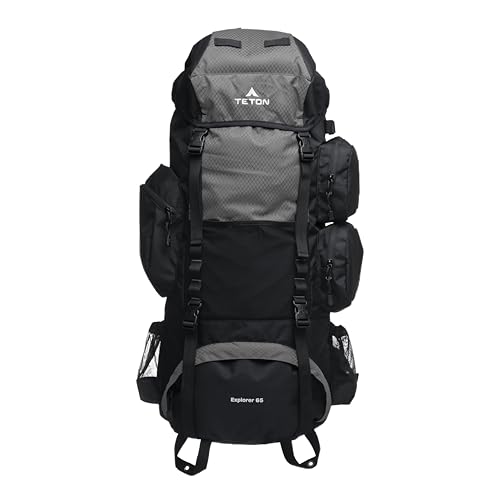
Best for: hikers who want a balanced, adjustable fit and durable materials. The Explorer series offers multi-position torso adjustment to fit a range of heights and an open-cell foam lumbar pad for comfort. Available in 65L, 75L, or 85L sizes, it supports customizable load distribution and airflow. It’s designed for beginners or experienced backpackers seeking reliable daily use and long-haul comfort.
Limitation: While feature-rich, the pack could be bulkier for short, quick trips where a lighter pack is preferred.
SOG Barrage Internal Frame Backpack, 64.3L

Best for: those seeking tactical styling with practical capacity and stability. The Barrage features an internal frame, a yoke-style shoulder system, and a padded waist belt to manage heavier loads. MOLLE webbing allows attachment of optional accessories, and hydration pocket access is provided through tubing ports. This makes it ideal for multi-day expeditions or military-style training scenarios where gear adaptability matters.
Limitation: The tactical design and extra features may feel excessive for casual hikers or light travelers.
Ubon 60L Internal Frame Backpack

Best for: budget-conscious trekkers needing solid capacity and back support. The Ubon 60L uses a rigid internal frame to separate load distribution from the back, aided by padding and adjustable shoulder straps. It includes extensive storage with a sleeping pad compartment and multiple pockets, plus reinforced zippers and sturdy stitching for longer trips. The back-height adjustment helps adapt the pack to different body frames.
Limitation: Construction materials may be less premium than higher-priced options, which could affect long-term wear for daily use.
Amazon Basics Internal Frame 75L Backpack

Best for: shoppers seeking a high-capacity, straightforward pack at a practical price. The 75L capacity supports extensive gear and sleeping arrangements. It includes organized storage pockets and a large sleeping-bag compartment with multi-directional compression straps to manage bulk and reduce movement. Comfortable wear is aided by adjustable straps, padded shoulders, and an open-cell foam lumbar pad with airflow channels.
Limitation: May lack some premium features found on higher-end models; check for fit and torso length compatibility if you’re taller or shorter than average.
Buying Guide
What capacity is right for you?
Choose 50–60L for weekend trips, 60–70L for 2–4 day excursions, and 75L+ for extended trips with more gear. Internal-frame designs help stabilize loads, but higher capacity means heavier packs when empty.
How important is torso adjustment?
Backpack comfort hinges on torso length compatibility. Look for multi-position torso adjustments to better fit medium and tall users and to distribute weight across the hips rather than the shoulders.
What access and organization matter?
Consider a separate bottom compartment for sleeping bags or shoes, multiple pockets, hydration compatibility, and easy-to-access main compartments. A rain cover is valuable for wet climates.
Material and build quality considerations
Durable fabrics (e.g., 600D nylon or ripstop polyester) and sturdy zippers (such as YKK) extend pack life. Reinforced stitching at straps and load-bearing areas helps when carrying heavy loads over rough terrain.
Should you prioritize features or simplicity?
Feature-rich packs (MOLLE, hydration ports, multiple access points) suit adventurous or tactical use. Simpler designs may offer better comfort and fewer problems for casual hikers and shorter trips.
Quick comparison at a glance
- Best for maximum capacity: IX INOXTO 85L
- Best adjustable fit: TETON Sports Explorer
- Best for rugged, tactical use: SOG Barrage
- Best budget-friendly option: Ubon 60L
- Best overall value: Amazon Basics 75L
FAQ
- What is an internal frame backpack?
An internal frame backpack has a frame inside the pack that helps distribute weight away from the back and onto the hips, improving stability on uneven terrain.
- How do I choose the right capacity?
Estimate your gear, clothing, and planned activities. Short trips may need 40–60L, while longer trips benefit from 60–85L or more.
- Are rain covers essential?
Rain covers protect your gear from moisture and dust, and some packs include them as a standard feature.
- Is torso adjustment necessary for comfort?
Yes. Proper torso length alignment reduces shoulder strain and improves load transfer to the hips.
- What maintenance helps with longevity?
Clean zippers, inspect seams periodically, and store packs dry. Replacing worn straps or clips promptly preserves performance.