The best backpacking self-inflating sleeping pads balance comfort, weight, and packed size for hikers and campers. This guide highlights five top options suited for different sleepers and setups, from ultralight hikers to car campers. Each product is evaluated for who it’s best for, why it was selected, and a practical limitation to consider. Use the table below to compare core specs at a glance.
| Product | Type | Best For | Key Strength |
|---|---|---|---|
| FUN PAC Camping Sleeping Pad | Self-inflating mat with built-in pillow | Lightweight hikers seeking built-in comfort | 30-60 seconds inflate time; integrated pillow |
| Gear Doctors Oxylus | Self-inflating with 4.3 R-value insulation | Moderate cold-weather camping | Balanced warmth and portability |
| OGERY Sleeping Pad | 6″ thickness with built-in pillow | Side sleepers needing extra height | 6″ thick with foot pump |
| Clostnature Self-Inflating Pad | Memory-foam core self-inflating pad | Backpackers wanting memory-foam comfort | High-density foam for pressure relief |
| OGERY Self-Inflating Pad (Hybrid Foam) | Foam-and-air hybrid with foot pump | All-season versatility | 3″ memory foam plus self-inflation |
FUN PAC Camping Sleeping Pad With Pillow

The FUN PAC pad is an ultralight, self-inflating sleeping pad with a built-in pillow. Its egg-shaped air cells provide back and neck support, helping align the spine whether you sleep on your back or side. The 78 by 27 by 8-inch size targets solo campers who want ample surface area without added bulk. A notable feature is the built-in foot pump, which inflates in about 30 to 60 seconds and deflates in one second, reducing setup time after a long day outdoors. The two-layer valve design minimizes air leaks for reliable inflation.
Best for: hikers and backpackers who prioritize compact carry and quick setup, especially when a separate pillow adds unnecessary gear. The integrated pillow is a convenient all-in-one solution for light trips or quick pitches at the campsite.
Limitation: While roomy, the pad may still feel firm for true side sleepers who prefer extra loft or a memory-foam layer—consider a model with more contouring if you need heavier cushioning.
Gear Doctors Oxylus 4.3 R-Value Self-Inflating Pad
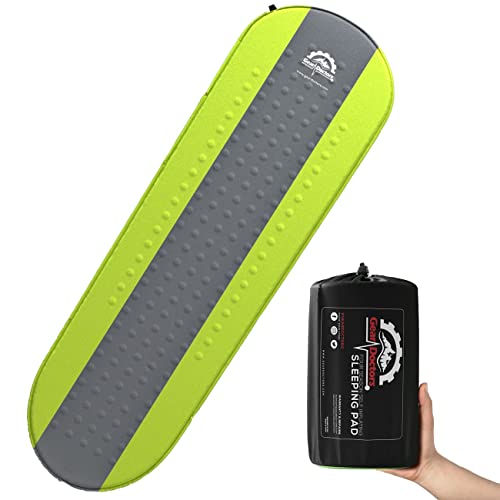
The Oxylus pad emphasizes a balanced approach: a self-inflating foam core with a compact packed size and a 72-inch by 20-inch sleeping area when deployed. It weighs about 35.2 ounces and inflates to a thick profile that supports multiple sleeping styles. Its insulation and foam core are designed for comfort during longer trips, with a user-friendly setup process.
Best for: campers who want a robust, all-around pad that stays comfortable across varied terrains and weather. The 4.3 R-value supports cooler nights without needing additional blankets.
Limitation: Slightly heavier than ultralight options, which may be a trade-off for warmth and support. Pack weight is still manageable for many backpackers, but not ideal for the strict ultralight crowd.
OGERY Sleeping Pad With Built-in Pillow

This OGERY pad features a 6-inch thickness for enhanced loft and pressure relief. The built-in pillow contributes to head and neck comfort, reducing the need to carry an extra pillow. It inflates via a built-in foot pump, while dual-layer air valves help minimize leaks and speed up the setup process. Its lightweight design (about 2.4 pounds) and compact packing size make it a versatile option for various outdoor adventures.
Best for: side sleepers and anyone who values extra height and a quick, tool-free setup. The thicker profile helps maintain comfort on uneven ground.
Limitation: The thicker structure may be bulkier to carry for ultra-light hikers; evaluate overall pack weight against other ultralight choices when planning long treks.
Clostnature Self-Inflating Pad With Memory Foam

The Clostnature pad stands out for its memory-foam core, which provides contouring support and minimizes pressure points. It self-inflates to a comfortable height and uses a 210T polyester shell to resist wear and water exposure. It features a commendable R-value of up to 4, helping retain warmth in colder conditions. The rolled pack size is compact, and it ships with compression straps and a storage bag for easy transport.
Best for: campers who want memory-foam comfort in a self-inflating format and don’t mind a bit more weight for warmth and support. Excellent for adults and older kids on longer trips.
Limitation: Memory-foam cores can take longer to recover after compression, so expect a bit more break-in time between uses compared with purely air-filled pads.
Gear Doctors Ether Ultralight Pad

The Ether ultralight pad focuses on portability without sacrificing support. It folds down to a compact size yet inflates to a broad surface with ErgoCushion contours. It supports heavy riders and includes a detachable foot pump sack and leak-prevention features. The 20D TPU-coated shell adds durability for rugged camping, hiking, and travel. It combines lightweight design with a reliable comfort profile for quick setups.
Best for: travelers who prioritize minimal weight with dependable support and a simple inflation routine. It also serves well for quick car-camper setups and multi-activity trips.
Limitation: While light, it may feel firmer initially for side sleepers until the foam or air adapts; consider a model with a thicker profile if you sleep heavily on your side.
Memory Foam Camping Sleeping Pad (QGB)

The QGB model uses a new generation memory foam combination to deliver cloud-like comfort with even weight distribution. It folds compactly to a small footprint and inflates quickly by combining self-inflation with a foot pump to fine-tune firmness. It comes with a foldable design that reduces storage space, making it suitable for backpacking or guest use in a mobile setup. It claims a strong resilience against compression with a practical ASTM compression set tolerance.
Best for: campers who want memory-foam comfort with a compact fold and quick inflation, especially for multi-day trips where comfort matters as much as portability.
Limitation: Some users may prefer air-only pads for maximum adjustability and weight savings on ultra-light trips.
Buying Guide: Key Considerations for Backpacking Self-Inflating Pads
- Weight vs. warmth: Higher R-values provide more warmth in cold conditions but may add weight. Choose based on sleeping climate and trip duration.
- Thickness and support: Thicker models tend to offer better cushioning but are bulkier. Side sleepers should look for 4″ or more if possible.
- Inflation method: Built-in pumps save setup time but may add weight. Consider external pumps only if you require ultra-light options.
- Materials and durability: Look for durable shells (nylon or polyester) with water resistance and abrasion resistance for longer life.
- Packability: Compare folded size and weight to ensure it fits your pack’s volume and your travel style.
- Containment and leaks: Dual-layer valves and anti-leak designs help maintain pressure and reduce frustrations on the trail.
- Repairability: Some models offer replaceable parts or lifetime guarantees—assessing warranty can add long-term value.
Frequently Asked Questions
- What is self-inflating padding?
It uses open-cell foam inside to draw in air, then you add a final inflation with a built-in pump or your breath. - Do I need a separate pillow with these pads?
Some pads include an integrated pillow; others require a separate one depending on your comfort needs. - Which pad is best for cold nights?
Pads with higher R-values (4.0 or higher) provide better insulation for cold ground. - Are memory-foam pads heavier than air-filled pads?
Yes, memory-foam options add weight but offer contouring support and pressure relief. - How long do these pads typically last?
Durability depends on usage, conditions, and care. Look for durable shells and warranties for longevity. - Can these pads be used for car camping?
Yes, many are compact enough for car camping and guest bedding, offering quick setup and extra comfort.