Looking for a battery-powered coffee maker that works off-grid and at the campsite? This guide highlights five portable, cordless brewers built for camping, RV trips, and outdoor adventures. Each option targets a different type of traveler—from pod lovers to grinder enthusiasts—so you can pick the right fit for your off-grid mornings. A quick buyer’s table follows to compare core specs at a glance.
| Product | Best For | Power |
|---|---|---|
| BougeRV Coffee Maker | Group trips and shared outdoor coffee | Removable 8Ah battery or AC power |
| SENIX Portable Coffee Maker | Car/RV camping with ground coffee or pods | 5000mAh battery + AC/DC power |
| Byutrcfuy Ryobi 18V Battery Model | Single-serve convenience on-the-go | Ryobi 18V batteries (up to 4) |
| Byutrcfuy Dewalt 20V MAX Model | Professional-grade cordless brewing | Dewalt 20V MAX batteries (up to 4) |
| Taingwei 20V Dewalt Compatible | Compact, all-in-one brewing and grinder | 20V battery compatibility |
BougeRV Coffee Maker With 18V Battery

The BougeRV option is designed for outdoor sharing. It includes a removable 8Ah (144Wh) battery and supports K cup pods, ground coffee, or coffee powder. Expect a brew time of 6–8 minutes per cup, and the system can run cordlessly or plugged in via AC power. This model is best for campers who want a simple, pod-friendly solution with the flexibility of external battery power for groups or longer trips. A potential limitation is the battery’s effect on overall weight for ultralight backpacking.
SENIX Portable Coffee Maker

The SENIX brewer focuses on versatility with a built-in 5000mAh battery that heats cold water to optimal brewing temperatures and can produce up to four cups without power. It supports both ground coffee and ESE pods, and offers dual AC/DC power for home use and off-grid adventures. It’s ideal for hikers and job-site workers who need hot coffee anywhere, though heating efficiency can vary with ambient temperature and water quality.
Byutrcfuy Ryobi 18V Battery Coffee Maker

This model leverages Ryobi 18V batteries and offers a simple one-click operation. It heats water to optimal brewing temperatures and supports multiple cups with compatible batteries. It’s a solid choice for DIY enthusiasts who already own Ryobi tools and want to consolidate gear. A limitation is the need to supply your own batteries, which adds setup planning and weight for transport.
Byutrcfuy Dewalt 20V MAX Model
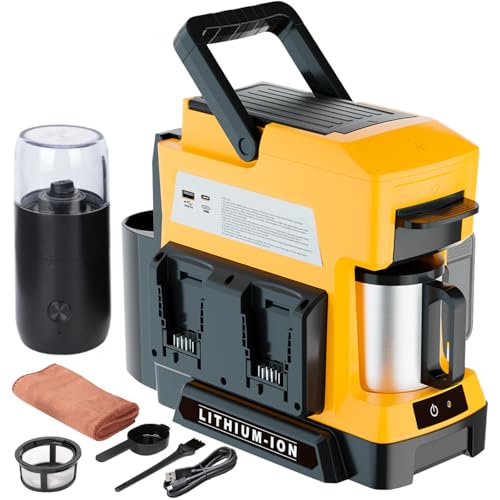
The Dewalt 20V MAX version mirrors heavy-duty cordless series capabilities with compatibility to 20V MAX batteries and a similar three-brewing options approach. It suits campers who own DeWalt tools and want a reliable, robust solution. Its caveat is the battery requirement: users must carry the right DeWalt batteries, which may affect portability for lighter trips.
Taingwei Portable Dewalt 20V Coffee Maker
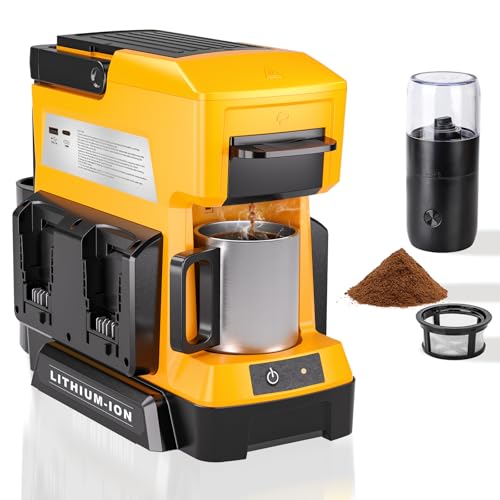
The Taingwei unit combines a 20V battery system with an all-in-one design that includes a built-in grinder. It’s well-suited for campers who want fresh-ground flavor without extra gadgets. It’s important to note that batteries are typically not included, so you’ll need to plan battery purchases separately. This model is best for travelers who value grinder versatility in a compact footprint.
DOFQQG Travel Electric Kettle with Dripper

The DOFQQG kit emphasizes portability with a collapsible kettle and a paperless dripper. It’s ideal for campers who want a compact, minimal setup and are open to pour-over coffee styles. A potential drawback is the need to manually pour water and manage temp as this setup doesn’t feature a full self-heating brewer. It’s best for those who prioritize ultra-light travel gear and simplicity.
Buying Guide: How to Choose Your Battery-Operated Camp Coffee Maker
- Power source and duration: Consider whether you want a removable battery, built-in battery, or the option to hot-plug into AC. For longer trips, a larger capacity (mAh or Wh) typically means more brewing cycles between charges.
- Brewing options: Pod compatibility offers convenience, while grinders and ground coffee options provide customization. Decide if you prefer ESE pods, K cups, or whole beans.
- Weight and portability: Ultralight backpackers prioritize compact, lighter devices; vehicle campers may accept larger, more feature-rich models.
- Battery compatibility: Some models rely on specific battery brands (Ryobi, DeWalt, etc.). If you own compatible tools, choosing that ecosystem can simplify transport and charging.
- Water heating rate: Faster heating means quicker coffee. Note that cold-water start models may take longer but offer greater versatility in off-grid scenarios.
- Maintenance and durability: Removable parts, reusable filters, and simple cleaning routines reduce hassle on the trail and improve longevity in rugged environments.
Practical tips for off-grid coffee
- Plan brew times around battery charging cycles to maximize the number of cups per charge.
- Carry a compact, reusable filter to minimize waste and reduce the need for paper filters in the field.
- Weigh the trade-off between built-in grinder options and faster brew speed if you prioritize speed over flavor customization.
FAQ
- Can these battery-powered coffee makers work without batteries? Some models offer AC power as an alternative. Always check if batteries are required or optional.
- Are these safe for car power outlets? Many include DC or car-adapter compatibility, but verify your vehicle’s outlet specifications and wattage.
- Which is best for pod lovers? Models explicitly supporting K cups or ESE pods provide the easiest field experience with minimal cleanup.
- Do any support both pods and ground coffee? Yes, several listed models support pods and ground coffee or provide a grinder for custom brews.
- Is a built-in grinder necessary? A grinder adds flavor depth but increases weight and maintenance; choose based on your taste preferences and trip length.
- Which is best for groups? A model with a larger battery and higher cup yield per cycle is ideal for sharing at campsites or remote job sites.