The article identifies the top bike packing frame bags that balance durability, capacity, and ease of use for a variety of cyclists. This guide helps solo riders, weekend explorers, and commuting cyclists choose the right bag for their frame size and riding style. Below is a quick buying table and five solid options with practical comparisons.
| Product | Estimated Capacity | Best For | Notable Feature |
|---|---|---|---|
| Rhinowalk Front Frame Bag | 2.4L | Lightweight touring and daily rides | YKK waterproof zipper; 3 internal pockets |
| WOTOW Triangle Bag | 2L | Under-seat storage and urban rides | Reflective panels; durable 600D Oxford |
| ROCKBROS Frame Bag (2.9L) | 2.9L | Spacious everyday and light touring | 4-buckle stability |
| Moosetreks Full Frame Bag (14L) | 14L | Longer trips and bikepacking | 3 sizes; waterproof ripstop with TPU |
| NDakter Frame Bag + Tools | 2L | Compact, tool-ready packs | Integrated 16-in-1 tool kit |
Rhinowalk Front Frame Bag

Best for lightweight riders seeking compact storage on the top tube. This bag uses a multi-layer nylon construction with a waterproof surface, a tear-resistant middle layer, and a waterproof bottom. It offers two zipper pockets: a shallow side pocket for essentials like a phone or ID, and a larger side pocket for tools and a top elastic strap to secure items such as an air pump. The YKK waterproof zipper and large pullers support easy access in damp conditions. Suitable for most mountain and road bikes with under-top-tube mounting.
Who it’s best for: riders who want a slim, weatherproof pouch for daily rides or short tours without adding bulk. This bag is a solid choice for riders who value a dedicated air-pump mount and organized interior pockets.
Limitations: the overall capacity is modest, so it may not replace larger frame bags on multi-day trips. Measure your frame to ensure a proper fit given the under-top-tube placement.
WOTOW Triangle Bag
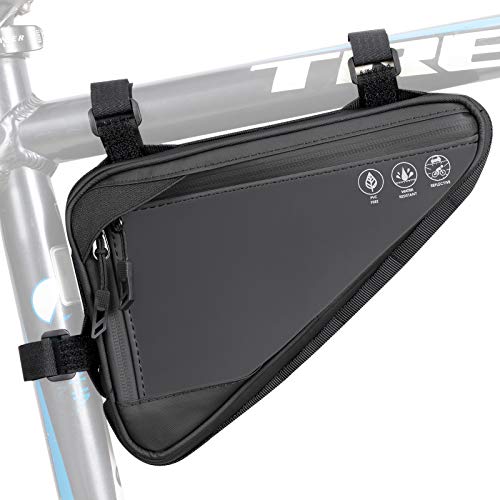
Best for riders who want water resistance and visible safety features. Made from 600D Oxford with a PU coating, this bag is designed to be water-resistant and durable. It features an upgraded seam-sealed zipper and multiple straps for secure under-seat or handlebar mounting. A large reflective area on both sides enhances visibility during night rides. It is versatile enough for mountain, road, and commuting bikes.
Who it’s best for: urban riders who ride in rain or low-light conditions and need reliable reflectivity plus a secure fit under the seat or near the handlebars.
Limitations: while water-resistant, it is not fully waterproof in heavy downpours; consider additional rain protection on prolonged exposure to rain.
ROCKBROS Frame Bag (2.9L)

Best for riders who want a roomy frame bag with solid stability. The 2.9L capacity holds water bags, phones, sunglasses, and other essentials. It weighs about 129g, making it light, and attaches securely with a four-buckle design to prevent movement on rough terrain. The bag’s compact edge design helps minimize contact with the frame’s water bottle area.
Who it’s best for: cyclists seeking a larger, stable bag that remains unobtrusive and easy to install on most mountain or road bikes.
Limitations: users with very small frames should verify clearance to avoid interference with fork or bottle cage areas.
Moosetreks Full Frame Bag (14L)

Best for long rides and bikepacking with substantial storage needs. This bag comes in three sizes and has a near-custom fit that helps maximize frame coverage. It uses ripstop nylon laminated with thermoplastic polyurethane for durability and water resistance. The bag features two zipper compartments with a removable internal divider, making it easy to organize gear, tools, and batteries for ebikes or standard bikes.
Who it’s best for: riders planning extended trips or carrying larger gear such as batteries or controllers that require a larger, organized space. It’s a strong choice when you need a substantial, weather-tolerant solution.
Limitations: the larger size may not fit smaller frames; proper sizing and frame measurements are essential before purchase.
Moosetreks Mountain/Trail Frame Bag (Large)
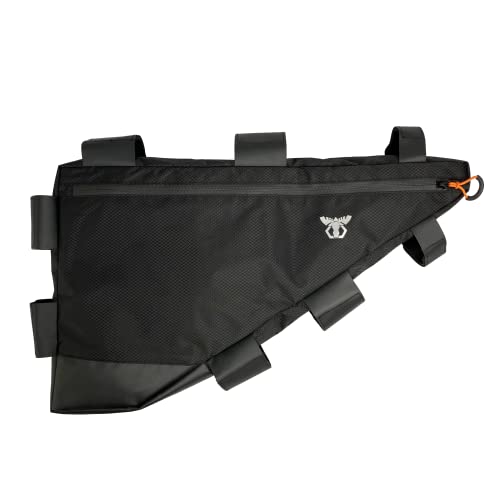
Best for trail and mountain bikes with a need for extra space without a bulky silhouette. The bag comes in multiple sizes and uses a robust construction with water resistance. Velcro straps secure the bag to the frame, and it’s designed to hold essentials and small electronic gear while withstanding rugged terrain on trail rides.
Who it’s best for: riders who frequently navigate uneven, rocky routes and require durable protection and accessible storage on the bike frame.
ROCKBROS Front Frame Bag for Phone
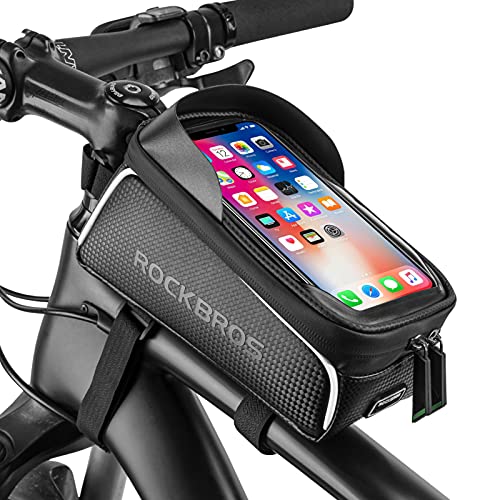
Best for riders who want quick access to a smartphone and essential items during rides. This bag offers a large interior that can hold a phone, small pump, repair kits, keys, and more. The high-sensitivity TPU window supports touchscreen use, while hidden earphone holes, reflective tapes, and dual zipper pulls enhance usability and safety. The design fits most frames with strap-based mounting.
Who it’s best for: cyclists who rely on navigation maps and quick device access mid-ride and want a safe, touch-friendly display window.
NDakter Bike Bag (2L) with Tools

Best for riders who want a compact frame bag paired with a built-in tool set. It provides about 2L of space and includes a 16-in-1 multi-tool kit for quick on-road repairs. The bag uses full water-resistant fabric with high-frequency welded zippers for weather protection. It installs easily with three Velcro straps and is suitable for most mountain and commuter bikes. Note that the triangle bag is designed for right-angle frame brackets.
Who it’s best for: cyclists who value an all-in-one solution and want a ready-to-access toolkit while riding.
Buying Guide
What capacity do you need?
Choose capacity based on planned trips. Short rides can use 2L or less; longer trips may benefit from 4–14L depending on gear needs. Consider how much space your tools, phone, and spare parts require.
What mounting style fits your bike?
Most frame bags use Velcro straps or buckle systems. Ensure there’s enough clearance for water bottle cages, brake hoses, and headset clearance. For some frames, under-top-tube or under-seat mounting works best to avoid frame interference.
How weatherproof should it be?
Water-resistant fabric with sealed or welded zippers is common. For heavy rain, select fully waterproof or use additional rain covers to guard against extended exposure.
Is organization important?
Look for inner dividers, pockets, and dedicated spaces for air pumps, tubes, or tools. Several bags include removable dividers to adapt to gear configuration.
Will it be used for night riding?
Reflective panels and high-visibility materials improve safety. Consider bags with reflective accents and bright, visible stitching for day-to-night riding.
Quick Tips
- Check frame measurements before buying; sizes vary between brands and models.
- Match bag shape to frame geometry to reduce drag and friction with moving parts.
- Prioritize quick-release or simple installation if you frequently switch bikes.
Frequently Asked Questions
- What is a frame bag best used for? – A frame bag stores essential gear within easy reach and helps balance weight for stable handling during rides.
- What should I consider for frame bag compatibility? – Measure top, down, and seat tubes; ensure your bag fits without obstructing cables or water bottles.
- Are waterproof frame bags worth it? – Waterproof or water-resistant bags protect contents during rain and damp conditions, which is important for long rides.
- Can frame bags hold electronics? – Yes, many frame bags provide compartments for phones, batteries, and small repair tools, but check internal dimensions.
- Do all frame bags fit all bikes? – No; fit varies by frame size, geometry, and mounting points. Always compare with your bike’s measurements.
- How do I install a frame bag quickly? – Most bags use Velcro straps or buckles; follow the manufacturer’s sizing guide and tighten straps securely to prevent movement.