If you’re moving a jon boat, you want a trailer setup that makes loading, alignment, and transport simple. This guide showcases five trailer options that pair well with jon boats, from sturdy dolly movers to galvanized guide-ons. Ideal buyers include weekend anglers, boat owners with tight storage space, and anyone seeking smoother loading on uneven surfaces. The table below highlights each option’s key strengths to help you compare at a glance.
| Product | Best For | Key Benefit |
|---|---|---|
| VEVOR Boat Trailer Dolly | Move-heavy boats around a yard or dock | High load capacity with adjustable length and large pneumatic tires |
| JY PERFORMANCE Boat Trailer Guide-ons (40/48″) | Precise centering for various trailers | Adjustable height for different boat sizes and clear visibility |
| Josmimic Boat Trailer Guide-ons | Centering lightweight to mid-size boats | Rust-resistant galvanized steel with reflective piping |
| vidaXL Boat Trailer | Simple, portable moving of kayaks and small boats | Easy assembly and sturdy build with large wheels and handle |
| ECOTRIC Boat Trailer Guide Rails | Stable loading for center alignment | Marine-grade carpet and galvanized hardware for durability |
VEVOR Boat Trailer Dolly

Best for buyers needing a heavy-duty dolly to move heavier boats around a yard or dock. The VEVOR dolly supports up to 420 lbs and offers adjustable length settings (87.8, 98, 108.2 inches) to fit different boat lengths. Its 15.7-inch pneumatic tires provide smoother rides across grass, sand, and pavement, while the 41.3-inch widened wheelbase improves stability on slopes. Choose this if you frequently reposition a heavier jon boat or small motorboat and want reliable wheel traction.
Limitations: Bolts are stored within the pipes, so check assembly hardware before use. The dolly’s weight and size may require extra storage space when not in use.
JY PERFORMANCE Boat Trailer Guide-ons (40/48)
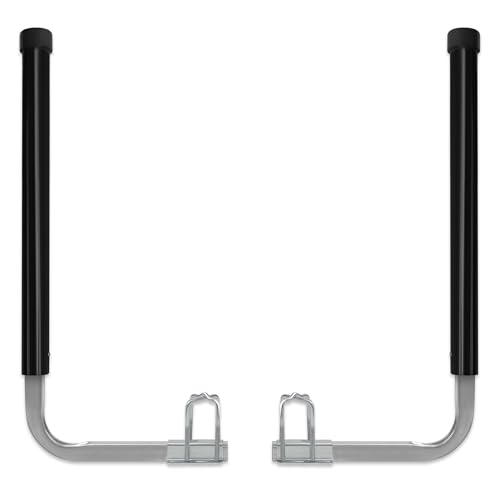
Best for boaters who need precise alignment during loading and unloading. These guide-ons are made from rustproof electro-galvanized steel with high-visibility black PVC pipes, improving visibility and alignment at the trailer tongue. The adjustable height between 40 and 48 inches accommodates variable boat sizes and trailer configurations, helping prevent misalignment during docking. Suitable for ski boats, fishing boats, sailboats, and jon boats.
Caution: Ensure the height setting matches your boat’s beam to avoid contact with hull or guide-on during entry.
Josmimic Boat Trailer Guide-ons

Best for users prioritizing corrosion resistance and high visibility. Josmimic guide-ons are galvanized with a powder-coated finish to resist rust and surface scratches, making them suitable for outdoor use in varied weather. The white PVC pipes with reflective tape provide clear boat positioning cues, aiding safe center loading of bass, ski, center-console, and jon boats. They work well on galvanized bunks and roller trailers.
Caution: Check compatibility with your trailer’s beam width and ensure reflective tape remains clean for maximum visibility in low light.
vidaXL Boat Trailer

Choose this for straightforward assembly and transport. The vidaXL trailer emphasizes simple, durable construction with large wheels and a handle, plus included pneumatic tires to ease pulling. It is well suited for moving smaller boats, kayaks, and light motorboats, making it a practical option for casual anglers or storage-efficient setups.
Limitation: While easy to assemble, this model may be less ideal for heavier jon boats or frequent long-distance towing compared with dedicated heavy-duty options.
ECOTRIC Boat Trailer Guide Rails

Best for centered loading and durable marine use. ECOTRIC guide rails feature galvanized steel construction with marine-grade carpet and adjustable width, enabling easy alignment for boats on high-beam, box, or C-channel trailers. The carpeted bunk guides reduce hull friction and improve control when docking or loading in rough surfaces.
Limitation: Installation may require more effort, and compatibility with non-standard bunk layouts should be verified before purchase.
Buying Guide: How to Choose the Right Boat Trailer Accessory
- Boat size compatibility: Match your jon boat length, beam, and weight to the trailer or accessory’s rated capacity and adjustment range.
- Terrain and storage: For grass, sand, or uneven surfaces, prioritize large pneumatic tires and widened wheelbases for stability.
- Corrosion resistance: If you boat in saltwater or humid environments, select galvanized steel or powder-coated components to reduce rust.
- Visibility and alignment: High-visibility PVC pipes and reflective tape help with precise guiding, especially in dim light.
- Ease of assembly and maintenance: Look for straightforward installation, clear hardware storage, and components that are easy to clean and inspect.
- Buy-to-use balance: Consider whether you need a tow-ready trailer, or a dedicated guide-on or dolly to assist loading and unloading.
Frequently Asked Questions
- What should I consider when selecting guide-ons for a jon boat? Important factors include compatibility with your trailer, adjustable height, corrosion resistance, and visibility cues to help center the boat during docking.
- Are galvanized steel guide-ons better than painted ones? Yes, galvanized steel offers superior rust resistance in outdoor and marine environments, though solid coatings should be periodically checked for wear.
- Can a trailer dolly move a jon boat safely on grass? Yes, with adequate load capacity, a dolly with large pneumatic tires provides better traction and stability on soft ground.
- Is installation of trailer accessories a DIY task? Many accessories are designed for home installation, but always follow manufacturer instructions and verify compatibility with your trailer model.
- What maintenance is required for trailer guide-ons? Regularly inspect for rust, worn fasteners, and damaged PVC pipes; clean reflective elements to maintain visibility in low light.
- When should I replace trailer components? Replace any part showing excessive rust, bending, or loss of structural integrity to avoid loading misalignment or safety risks.