Direct answer: for cold-weather expeditions, choose a rugged, military-style sleeping bag system that combines insulation, weather resistance, and modular access. The five products below are selected for durability, warmth, and field versatility. They suit tactical personnel, outdoor enthusiasts, and travelers requiring reliable protection in arctic or subarctic conditions. This guide compares features, best-use scenarios, and practical trade-offs to help you pick the right bag setup.
Summary table of selected products
| Product | Best For | Key Feature |
|---|---|---|
| MT British Army Pattern 1958 Style Sleeping Bag | All-Terrain Winter Missions | Classic pattern with waterproof shell and warm lining |
| MT Modular Sleep System – 4-Piece | Modular versatility | Front-zip quick access with vacuum compression sack |
| MT Army Military Modular Sleeping Bags System | All-season readiness | Multi-layered design with bivy cover |
| Arctic Lemmings Envelope Sleeping Bag (Three Seasons) | Three-season comfort | Envelope hooded design with warmth |
| 3-4 Season Sleeping Bag by SOULOUT | Lightweight warmth | Water-resistant shell and high-loft insulation |
MT British Army Pattern 1958 Style Sleeping Bag

This product reproduces a classic British Army design designed for harsh environments. It features waterproof and windproof outer shell with an insulated lining, offering reliable protection in rain, snow, and cold. The compact fold and included compression sack support easy transport during field operations or outdoor trips.
Best for: users needing a proven, rugged arctic-leaning sleeping bag with a traditional silhouette. Why selected: its enduring pattern and weather-sealed shell address demanding cold-weather conditions. Caution: bulk and weight may be higher than compact, lightweight options.
MT Modular Sleep System – 4-Piece
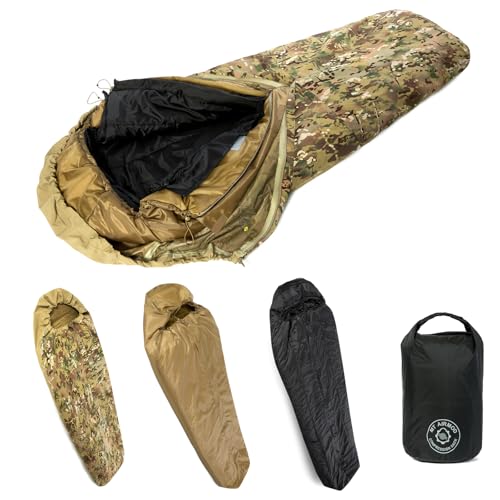
This 4-piece modular system includes a Patrol Bag, Intermediate Cold Weather Bag, waterproof bivy cover, and a vacuum compression sack. The centerline front zipper is designed for faster entry and exit, improved ventilation control, and easier emergency egress in tactical scenarios. The vacuum sack reduces volume by about two-thirds and keeps contents dry with a waterproof 70D TPU shell.
Best for: field personnel or outdoor travelers who value modularity and rapid access. Why selected: the full package supports multi-season use and compact transport. Caution: setup may be more complex than single-bag systems for casual campers.
MT Army Military Modular Sleeping Bags System

Designed for all-season performance, this MT system uses a bivy cover, multiple nylon layers, and high-grade filling to offer warmth down to near-freezing temperatures when combined with the patrol bag. It emphasizes wind and moisture resistance via heat-treated seams and a heavy-duty zipper. The temperature guidance suggests comfortable ranges around 5-15°C with potential use down to -30°C when paired as designed.
Best for: campers who need a robust, layered setup for varying climates. Why selected: it provides a flexible approach to temperature management with a bivy cover for harsh environments. Caution: data indicates varying fit across body sizes; verify dimensions before purchase.
US Military Modular System Green Patrol Sleeping Bag
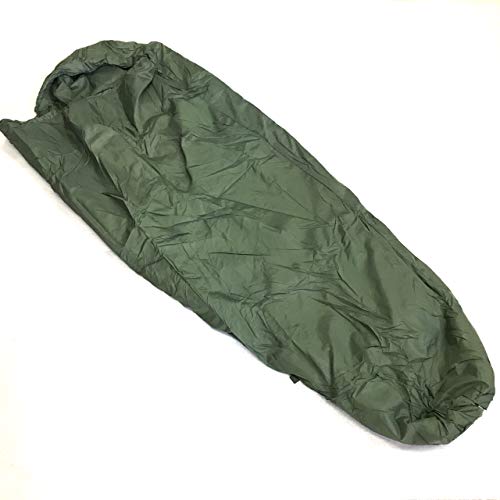
This green patrol sleeping bag offers long dimensions and a rugged profile suitable for extended outdoor stays or patrols. It emphasizes a durable build and a wide context of use. The product data notes the long length to accommodate taller individuals and a wide body for comfort during cold-weather bivouac.
Best for: taller or broader users needing extra length and space. Why selected: compatibility with a bivy setup and persistent warmth in cold environments. Caution: exact insulation rating is not specified; plan for layering in extreme cold.
MT Army Military Modular Sleeping Bags System, OCP

Another MT modular option in OCP camouflage, this system mirrors the bivy-cover approach with a multi-layer construction. It emphasizes waterproofing, wind resistance, and temperature guidance designed for transitional seasons and extreme conditions when used with the correct component bags.
Best for: users who prefer the operational look and layering flexibility of the OCP pattern. Why selected: consistent MT design language and integrated bivy assistance. Caution: like other modular systems, weight can be substantial for backpacking purists.
SOULOUT 3-4 Season Sleeping Bag

This 3-4 season bag aims at adults and kids with a lightweight, water-resistant shell and high-loft insulation. It is suitable for spring, fall, and cool summer nights, offering a balanced warmth-to-weight ratio for general outdoor use. The hooded design adds extra warmth retention.
Best for: families or casual campers seeking versatile warmth without highly specialized gear. Why selected: combines practical all-season warmth with a portable design. Caution: not a dedicated arctic or extreme-cold setup; rely on layering in severe conditions.
Buying Guide: Key Considerations for Arctic- and Military-Style Sleeping Bags
- Temperature rating vs. actual warmth: Look for clear guidance on comfortable temperature ranges and how layering affects performance, especially if you’ll be in arctic conditions.
- System vs. single bag: Decide if a modular system (bivy, multiple bags) meets your needs or if a single bag with solid insulation suffices for your trips.
- Shell material and waterproofing: A waterproof or water-resistant outer layer plus a breathable interior helps prevent moisture buildup and cold spots.
- Entry and access: Front-zip designs can improve ventilation and quick egress in emergencies; consider ease of use in cold or gloved conditions.
- Portability and weight: Modular systems may be heavier; weigh transport needs against warmth and versatility for your use case.
- Size and fit: Ensure length and girth accommodate your torso and shoulder width for maximum warmth without constriction.
- Durability and field repair: Look for reinforced zippers, robust stitching, and a bivy cover to extend life in rugged environments.
Frequently Asked Questions
- What makes a sleeping bag suitable for arctic conditions?
Look for high-loft insulation, a windproof and waterproof shell, and a design that minimizes heat loss through seams. - Are modular sleep systems worth the extra weight?
For cold-weather patrols or extended expeditions, the ability to adapt with a bivy and multiple bags can be advantageous. - How important is a hood in winter bags?
A hood helps seal in head warmth and reduces heat loss, which is crucial in freezing conditions. - Should I choose a military-style bag or a civilian bag for camping?
Military-style bags often prioritize durability, weather resistance, and modularity, which appeals to harsh environments; civilian bags may be lighter and simpler for casual use. - What should I consider when selecting bag size?
Ensure adequate length and width for comfort; a bag that’s too tight can reduce insulation effectiveness and warmth. - Can I rely on a bivy cover alone for cold nights?
A bivy adds moisture control and wind protection, but it should be paired with proper insulation for sustained cold-weather warmth.