The BTU rating of a gas grill helps indicate its potential heat output and searing capability. When selecting a grill, buyers should consider total BTU, burner layout, cooking area, and heat distribution to match their cooking style and space. This guide highlights five popular models and explains how their BTU values relate to performance, maintenance, and practicality for backyard gatherings. A quick comparison table below summarizes each option to help readers quickly assess suitability.
| Product | Brand | Total BTU | |
|---|---|---|---|
| EUHOME 4-Burner Propane Gas BBQ Grill | EUHOME | 46,500 | High-heat with side burner |
| Endark Propane Gas Grill 3-Burner | Endark | 26,000 | Portable design with thermometer |
| Electactic G41 Pro BBQ Grill | Electactic | 42,000 | Four main burners + side burner |
| Captiva Designs 4-Burner Grill | Captiva Designs | 42,000 | Porcelain-enameled cast iron grates |
| Bestfire 3-Burner Tabletop Grill | BESTFIRE | 30,000 | Portable with compact footprint |
EUHOME 4-Burner Propane Gas BBQ Grill
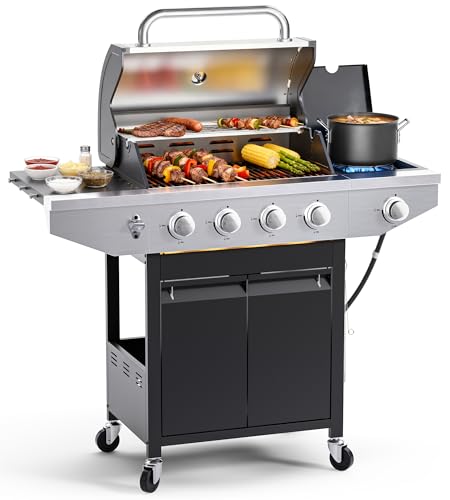
- Total BTU of 46,500 including an 8,500 BTU side burner for sauces or sides
- Main grilling area plus warming rack to handle large gatherings
- Enameled cast iron grates for durable searing and easier cleaning
The EUHOME model combines a high heat output with a broad cooking surface, making it suitable for weekend cookouts and larger groups. The front-to-back heat distribution benefits from heavy-duty grates that retain heat and promote sear marks. The side burner adds flexibility for sauces, sides, and side dishes, enabling cooks to stay organized without juggling multiple grills.
Endark Propane Gas Grill 3-Burner

- Total 26,000 BTU with independent burner controls
- High-precision lid thermometer for accurate temperature monitoring
- Portable design with wheels and easy assembly for outdoor use
Endark emphasizes portability and precise heat management. The lid thermometer helps maintain ideal temperatures during slow roasting or fast searing, while independent burner controls let cooks tailor heat across zones. This makes it a convenient option for patios, balconies, or mobile setups without sacrificing cooking control.
Electactic G41 Pro BBQ Grill

- Four main burners plus a side burner for a total of 42,000 BTU
- Stainless steel construction with cast iron grill grates
- Independent knob controls for precise heat management
Electactic’s G41 Pro balances robust grilling power with durable materials. The combination of stainless steel construction and cast iron grates provides reliable heat retention and durable searing. The separate side burner expands versatility for sauces and sides, making it a practical option for larger gatherings or weekend barbecues.
Captiva Designs 4-Burner Grill

- 42,000 BTU with porcelain-enameled cast iron grates
- 545 sq.in. total cooking area with a warm rack
- Large grease management and pull-out tray for easy cleaning
Captiva Designs focuses on a large cooking footprint and durable grates that promote even heat distribution. The combination of porcelain-enameled cast iron enhances heat retention and searing, while the broad cooking area supports multi-item meals. A practical pull-out grease tray simplifies maintenance and helps keep the grill looking new after weekend cookouts.
Bestfire 3-Burner Tabletop Grill

- Total 30,000 BTU with three independent burners
- Compact 24″ footprint with detachable legs for portability
- Stainless steel knobs and a built-in thermometer for control
Bestfire delivers a compact, travel-friendly option without sacrificing heat capability. The three independent burners enable multi-zone cooking, and the ergonomic design supports quick setup and breakdown for camping, RV trips, or patio use. Its robust construction and simple ignition provide reliable performance in a portable package.
Buying Guide: Key Purchase Considerations And Comparisons
Choosing the right BTU level depends on how you plan to cook and how often you entertain. Here are essential factors to consider:
- Cooking area vs. BTU: A larger cooking area with a high BTU rating isn’t always better if heat distribution is uneven. Look for grills with multiple burners and quality heat distribution hardware like flame tamers and well-spaced grids.
- Fuel type and efficiency: Most models use propane. Consider fuel efficiency, fuel tank capacity, and ease of replacing tanks. A higher BTU grill isn’t necessarily faster if it wastes fuel or burns unevenly.
- Durability and materials: Stainless steel construction and enamel-coated grates resist corrosion and wear. Cast iron grates retain heat well but require seasoning and maintenance.
- Maintenance features: Grease trays, push-button ignitions, and accessible components reduce upkeep time. Easy-clean features help keep performance consistent over time.
- Portability vs. fixed setup: Tabletop and compact grills excel in mobility, while larger freestanding grills suit backyards. Decide what fits your space and how often you move the grill.
- Temperature control: Look for models with precise knobs, integrated thermometers, and zone cooking to manage searing, roasting, and warming simultaneously.
- Ease of assembly: Some models require extensive assembly; others offer tool-free or simple setups. Consider how much time you’re willing to invest before grilling season.
For users prioritizing high heat for quick searing and party-style cooking, models like EUHOME and Captiva Designs provide broad cooking areas with strong BTU outputs. If portability and quick setup are essential, Endark and Bestfire offer compact, travel-friendly options with reliable temperature management. Electactic’s configuration emphasizes even distribution across four burners plus a side burner, suitable for family gatherings and long cooks. Buyers should balance raw BTU numbers with cooking area, heat distribution, and maintenance needs to select the best fit for their outdoor kitchen.