When powering a camper, a reliable battery shutoff switch is essential to prevent battery drain, protect electrical systems, and simplify maintenance. The top picks below are suited to different needs—compact setups, rugged marine use, or high-conductivity versatility. Best for travelers who want quick isolation, best for heavy-duty marine use, and best for those needing a built-in voltmeter or extra safety features.
Summary of chosen products:
| Product | Best For | Key Benefit |
|---|---|---|
| Joinfworld Top Post Battery Disconnect Switch | General camper, cars, RVs, boats | High current capability; simple negative-side installation |
| GOGONFLY Battery Disconnect Switch | Rugged, weather-prone setups | Waterproof housing and strong protection features |
| Gioyonil Battery Disconnect Switch Master | Wide DC 12–48V systems | All‑purpose, heavy-duty ABS with solid compatibility |
| Nilight 90015A Battery Switch | Standard 12–48V installations | Multiple bolt sets and robust construction |
| AWBLIN Upgrade Battery Disconnect Switch With Voltmeter | Camper setups needing real-time voltage readout | Integrated LED voltmeter for monitoring |
Below are the five best matches for the keyword “camper battery shut off switch,” chosen for balanced coverage of price, durability, and practicality. Each product section provides who it’s best for and why it stands out, plus a potential limitation to help you compare options.
Joinfworld Top Post Battery Disconnect Switch

This top-post switch provides 250A continuous and up to 1000A cranking capacity, suitable for 12–48V systems. It is wired on the negative battery terminal and includes a negative clamp with a tapered post for easier installation. Best for: campers or small boats where straightforward, reliable isolation is needed. Limitation: higher current needs should verify compatibility with your wiring harness and safety requirements.
GOGONFLY Battery Disconnect Switch

Built for water resistance and durability, this switch uses ABS housing with copper tin plating inner studs and a fully enclosed design. It offers 275A continuous, 455A intermittent, and 1250A cranking ratings across 12–48V systems. Best for: campers who frequently encounter moisture or outdoor exposure. Caution: ensure proper sealing during installation to maximize waterproof performance.
Gioyonil Battery Disconnect Switch Master
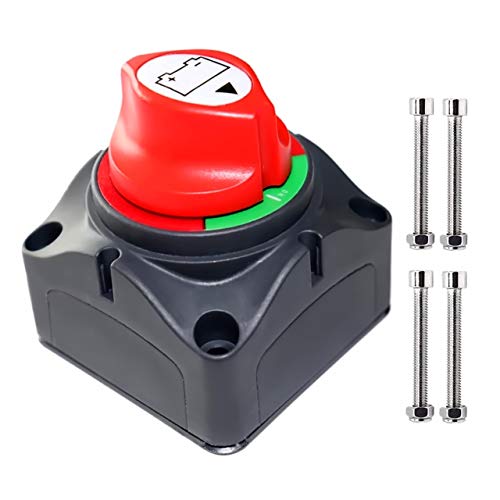
Designed for broad 12–48V DC systems, this switch features a robust ABS housing and tin-plated copper studs with secure nuts. It is suitable for cars, vans, caravans, RVs, boats, campers, and trailers. Best for: campers needing a versatile cut-off that can fit various installations. Limitation: installation depth may require careful planning to fit in tight compartments.
Joinfworld Battery Disconnect Switch Master

This 12V master switch is waterproof and rated for 275A continuous and 1250A cranking. It uses M10 copper studs and a durable ABS shell to protect against short circuits. Best for: campers who need strong protection against battery drain and exposure to the elements. Caution: check panel clearance and stud spacing to ensure a clean fit with existing hardware.
AWBLIN Upgrade Battery Disconnect Switch With Voltmeter
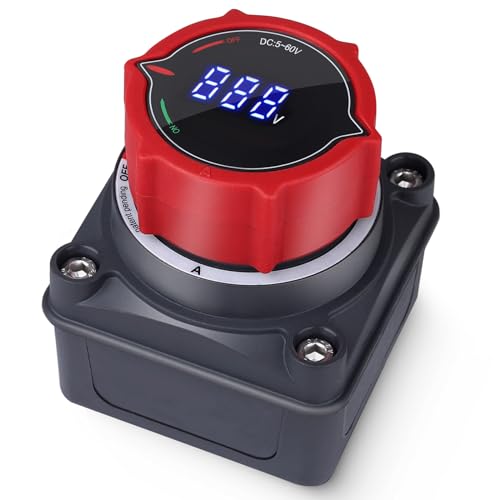
AWBLIN adds a digital voltmeter display, showing real-time voltage while the switch is on. It supports 5–60V systems and provides 250A continuous, 300A for 30 minutes. Best for: campers who want ongoing battery monitoring without a separate meter. Limitation: higher voltage variability may require calibration for precise readings in some setups.
Buying Guide
What should you consider when choosing a camper battery shutoff switch?
Voltage range: Most switches cover 12–48V; verify your system’s voltage to avoid overloading.
Current rating: Choose a switch with a continuous rating that meets or exceeds your battery’s peak draw. Higher cranking ratings help during engine starts.
Installation style: Side post versus top post affects mount space and compatibility with battery trays. Consider negative-side mounts for easier wiring in compact layouts.
Durability: Look for ABS or nylon housings, copper studs, and weatherproof designs for outdoor campers or boats.
Monitoring features: If you want real-time battery data, select a model with an integrated voltmeter. This helps prevent unexpected failures during trips.
Safety and maintenance: Ensure the switch isolates the electrical system effectively and supports safe servicing during maintenance windows.
How do I install a camper battery shutoff switch?
Turn off the vehicle or power system. Disconnect the negative battery terminal. Mount the switch in a secure, accessible location. Connect the negative contact or stud as recommended by the manufacturer. Reconnect the battery and test the switch by turning it off and on to verify power isolation.
What are common limitations to watch for?
Installation clearance, wiring compatibility, and environmental exposure can affect performance. Some switches require additional hardware for bolts or mounting plates. Always verify if the unit supports your specific vehicle or vessel configuration.
Can a voltmeter-equipped switch replace a standalone meter?
In many cases, yes. A voltmeter built into the switch provides continuous voltage readings without an extra device. However, for complex electrical systems, a dedicated voltmeter or battery monitor may still be beneficial for deeper analysis.
Are these switches safe for marine applications?
Yes, many models use sealed housings and corrosion-resistant studs to withstand marine environments. Check the IP rating and ensure the unit is rated for the specific conditions you’ll encounter on the water.
What if I need a higher current rating?
If your system demands more than 300–275A, consider models with higher DC continuous and cranking ratings, and confirm compatibility with your battery bank and cabling to prevent overheating or arcing.