Answering the common buyer question: these RV gas hot water heaters deliver on-demand hot water for camping and full-time travel. They’re best for busy RV families, frequent campers, and off-grid adventurers who want quick showers, kitchen cleanup, and dependable hot water—without heavy storage tanks. The following picks prioritize reliability, high-altitude performance, and ease of installation. A quick summary table helps compare options at a glance.
| Product | Brand | Best For | Key Benefit |
|---|---|---|---|
| Orbek RV Tankless Water Heater | Orbek | Busy RV families | 60,000 BTU, high-altitude capability |
| APUS RV Tankless Water Heater (Black Door) | APUS | All-RV installations | 3.9 GPM, CSA certified |
| APUS RV Tankless Water Heater (White Door) | APUS | All-RV installations | Same 3.9 GPM with different door option |
| Xenjum RV Tankless Water Heater | Xenjum | Off-grid & travel trailers | 65,000 BTU, dual outlets |
| Silvbott RV Tankless Water Heater | Silvbott | All-season RV use | 65,000 BTU, compact 15″x15″ fit |
Orbek RV Tankless Water Heater
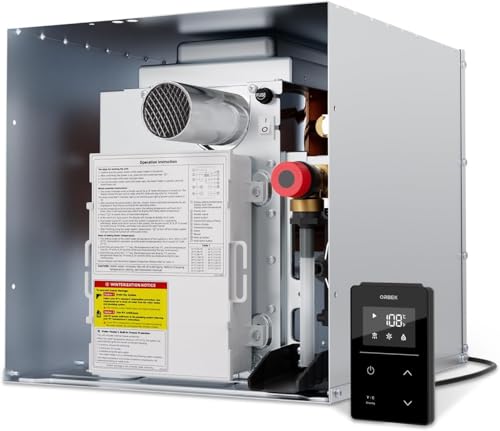
Best for: Busy RV families needing consistent hot water on demand. This model delivers 60,000 BTU of output and activates the burner only when hot water is requested, conserving propane. It uses oxygen-free copper heat exchangers and brushless DC fans for high-altitude reliability. The inclusion of a remote control adds convenience for inside and outside use.
Why selected: It’s designed to replace traditional RV electric and tankless heaters with a compact footprint and flexible installation options. Its staged combustion helps avoid cold spots and scalding while saving propane during travel.
Caution: Installation requires specific cutouts and may need compatible mounting space. Compatibility with other tankless brands is noted, but ensure your RV’s electrical and venting setup matches installation needs.
APUS RV Tankless Water Heater (Black Door)

Best for: RV families seeking high output without waiting for hot water. It delivers 68,000 BTU and 3.9 GPM, ensuring showers, dishes, and cleanup stay warm. Compact design fits typical RV spaces, and the 12V power connection aligns with common camper setups.
Why selected: The unit emphasizes quick installation and a high-altitude-ready design, maintaining reliable performance up to 9,800 feet. The option to replace older 6/10/12-gallon heaters makes it a versatile upgrade.
Caution: Some installations may require precise cutouts and ventilation; verify your RV’s electrical capacity and water line fittings before purchasing.
APUS RV Tankless Water Heater (White Door)

Best for: RV owners who prefer a white-door appearance or need a matching interior aesthetic. It shares the same 68,000 BTU and 3.9 GPM output as the black-door version, with identical high-altitude readiness.
Why selected: The white-door variant provides a uniform look for some RV interiors while maintaining the same performance and installation approach as the black-door model.
Caution: Differences are cosmetic; ensure the door color matches your RV cabinet design to avoid visual mismatch.
Xenjum RV Tankless Water Heater

Best for: Off-grid travelers and full-time RVers who need dual outlets for hot water distribution throughout the vehicle. It provides up to 65,000 BTU and 3.9 GPM, with a remote for temperature control and an emphasis on high-altitude compatibility.
Why selected: The dual outlets and external control design facilitate hot water delivery to multiple zones, such as bathroom and kitchen, or exterior use for washing pets or gear.
Caution: In some setups, the exterior outlet plumbing requires careful sealing and ventilation to prevent leaks or condensation.
Silvbott RV Tankless Water Heater

Best for: RV families needing rapid hot water with a compact install size. This model uses a 65,000 BTU burner to deliver up to 2.3 GPM, suitable for showers and daily use without a storage tank. It advertises quiet operation for camp comfort.
Why selected: The 15″x15″ door opening and CSA certification indicate a design focused on standard RV cutouts and safety standards, making it a straightforward upgrade for many campers.
Caution: Flow rate tops out around 2.3 GPM, which may feel limiting for very high-demand showers or multiple simultaneous uses.
Buying Guide: Key Considerations For Selecting RV Tankless Hot Water Heaters
- Hot Water Demand: Assess your typical usage—showering, dishes, and outdoor activities. If you require multiple outlets, consider models with dual outlets or higher GPM (gallons per minute).
- BTU Output: Higher BTU improves water delivery speed and performance at higher elevations. For mountainous travel, pick models rated for 60,000–65,000 BTU or higher.
- Altitude Performance: Choose units explicitly rated for high altitude to avoid loss of efficiency and cold water challenges.
- Gas vs. Electric Options: Most camper heaters are propane-powered with 12V DC ignition; some offer optional electric heating. Match to your camping style and available power sources.
- Installation Space: Check cutout dimensions (typically 15″x15″) and mounting depth. Ensure sufficient ventilation and clearance around the heater box.
- Door Style and Aesthetics: Some models offer black or white door options to fit interior design; this is cosmetic but may matter for fit and finish inside cabinets.
- Remote and Controls: A remote control adds convenience for temperature management away from the unit. Verify compatibility with your RV’s control systems.
- Maintenance and Durability: Porcelain-lined tanks (for tank models) resist corrosion but require anode rods for longevity. Tankless units reduce standby heat loss but require proper venting and periodic checks.
Frequently Asked Questions
- Do these RV tankless heaters work at high elevations? Yes, several models are labeled high-altitude ready and designed to operate up to around 9,800 feet.
- Can I replace an older tank heater with a tankless model? Many units are designed as replacements or upgrades and fit common 15″ x 15″ cutouts, but check mounting compatibility.
- What is the typical water flow rate for these heaters? Most top models deliver around 3.9 GPM, with some tankless options producing up to 2.3–3.9 GPM, depending on pressure and temperature.
- Is propane the only fuel type used? Propane is standard for most RV tankless heaters, with some models offering optional electric support where available.
- Do I need professional installation? While some installations are straightforward, many units require venting, gas line connections, and electrical wiring—consult a professional if unsure.
- Are dual-outlet heaters worth it? Dual outlets simplify hot water delivery to multiple zones, which is helpful for larger families and full-time RV use.