If you’re outfitting a camper van for off-grid living or travel, you need reliable, efficient solar panels that fit your space and power needs. This guide highlights five top options, detailing who each is best for, and how they compare. The selections cover compact roof setups for tight Vans, portable kits for flexible use, and larger multi-panel systems for bigger power needs. Whether you’re a weekend warrior or full-timer, these picks help you choose the right balance of efficiency, durability, and installability.
| Product | Best For | Key Benefit |
|---|---|---|
| ECO-WORTHY 200W Kit | Medium-Van Upgrades | High efficiency, durable framing |
| Renogy Adventurer 200W Kit | Compact RVs & Campers | Clean mount and robust protection |
| Renogy 200W N-Type 16BB | Limited Space Vans | Smaller, lighter, high efficiency |
| Callsun 200W x2 (400W) | Higher Power Vans & Tiny Homes | Bifacial design increases output |
| Renogy 400W Premium Kit | Full-Time Off-Grid Vans | Comprehensive kit with MPPT controller |
ECO-WORTHY 200 Watts Solar Panel Kit
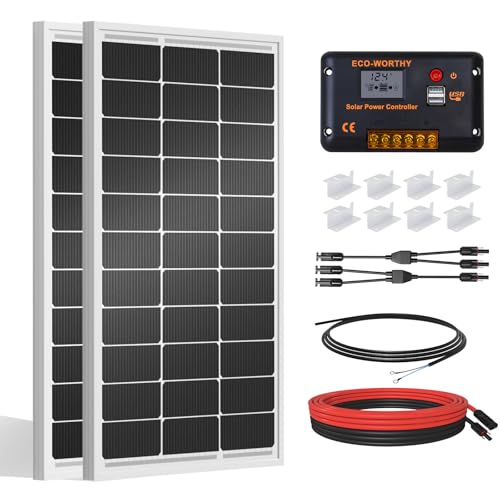
Best for medium van setups where space allows a dedicated 200W panel. This kit uses high-efficiency monocrystalline cells and includes a 30A PWM charge controller. It’s designed for RVs, campers, and other off-grid applications. The panel features a corrosion-resistant aluminum frame and a rugged IP65 junction box for weather resistance. Expect an approximate daily output around 800Wh under four hours of peak sun. Consider this kit if you want a straightforward, all-in-one solution with solid durability for longer trips. A potential limitation is PWM efficiency compared with MPPT in very hot or shaded conditions.
Best for: Home base RVs or campers needing reliable, mid-sized solar power without complex setup.
What to know: 35.2 x 23.1 x 1.37 inches footprint; good wind and snow load ratings; suitable for steady daily use in sunny climates.
Renogy Adventurer 200W Kit
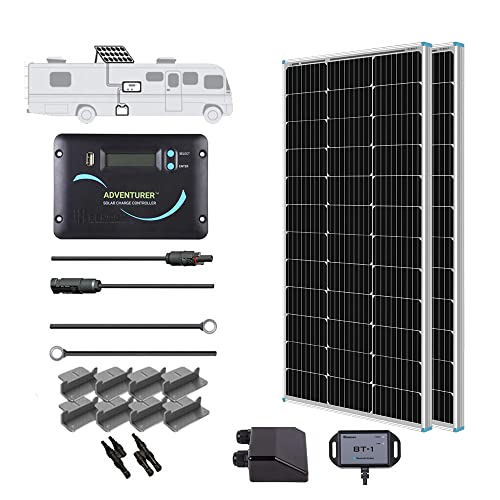
Best for compact RVs and campers that need a tidy, aesthetically clean installation. This kit delivers about 800Wh daily under ideal sun, with 22% efficient cells and a corrosion-resistant frame. It includes a 30A Adventurer-Li PWM controller designed for clean mounting on RV or camper walls. It provides robust protection against overcharging, overload, short-circuit, and reverse polarity. For tighter spaces, choose this kit for a balance of performance and installability. A limitation is PWM control, which may be less efficient than MPPT in fluctuating sunlight.
Best for: Those prioritizing simple installation and a tidy, wall-mounted setup on a small RV or camper.
What to know: Durable aluminum frame; suitable for decades of outdoor use with proper mounting.
Renogy 200W N-Type 16BB Panel

Best for space-constrained vans needing high efficiency. This 200W N-Type panel uses 16BB busbars and 25% efficiency for strong energy conversion, even in warmer conditions. Its lighter, smaller footprint makes it suitable for Class B vans where roof space is at a premium. The design supports 12V and 24V systems and works with various battery technologies, offering installation flexibility. A caveat is that the 200W size may require multi-panel configurations for higher power needs.
Best for: Vans with tight roof space seeking maximum efficiency per square foot.
What to know: Compatible with lithium, AGM, and deep-cycle batteries; robust frame for outdoor use.
Callsun N-Type 400W Twin 200W Panels

Best for higher power vans or two-panel parallel setups that resist shading. This two-panel configuration employs N-Type 16BB cells with bifacial technology, capturing light from the front and rear for up to 30% more energy under optimal conditions. The twin-module parallel design improves shading tolerance by up to 50%, an advantage in partially shaded roofs. It suits larger camper vans, tiny homes on wheels, or any scenario needing more daily energy. A limitation is the need for compatible mounting and wiring to realize the bifacial gain.
Best for: Vans that can accommodate two 200W panels and want higher daily output with shading resilience.
What to know: Includes anti-shade technology for reliable power under partial shade.
Renogy 400W Premium Kit

Best for full-time off-grid vans needing a complete system. This premium kit bundles four 100W panels with a 40A MPPT charge controller, Bluetooth module, fuse kit, mounting brackets, and adapter cables. It promises high generation with 22.5% efficiency and includes a long warranty for panel material and workmanship. The integrated MPPT controller and pre-wired components simplify installation for steady, high-output solar power. Consider this kit if you require a scalable solution and can support a larger roof footprint. A limitation is the higher upfront complexity and space requirements.
Best for: Full-time van dwellers who want a robust, scalable solar power system with advanced control.
Buying Guide: Key Purchase Considerations
- Roof space and weight: Calculate available roof area and weight capacity to choose the right number and size of panels.
- System voltage: Decide between 12V and 24V systems based on battery type and planned load.
- Controller type: PWM controllers are simple and affordable; MPPT controllers improve efficiency in variable sun but cost more.
- Durability: Look for corrosion-resistant frames, IP-rated enclosures, and tested mounting hardware for road conditions.
- Power needs: Estimate daily energy needs in watt-hours and match to expected panel output under typical sun exposure.
- Expandability: If you plan future upgrades, choose kits that support additional panels and MPPT controllers.
- Installation ease: Pre-wired kits with mounting hardware and clear instructions save setup time.
Frequently Asked Questions
- What size solar kit do I need for a camper van? – It depends on daily energy use and sun exposure. Start with a calculator that estimates watt-hours per day and match to panel output and battery capacity.
- 12V or 24V system—what’s better for vans? – 12V works with most RV appliances and lead-acid batteries; 24V is more efficient for larger setups and some lithium systems, but may require compatible components.
- Do I need an MPPT controller? – MPPT controllers yield higher efficiency, especially in fluctuating light or higher temperatures, but cost more than PWM.
- Can bifacial panels work on a van roof? – Bifacial gains occur when there is reflective surface behind the panels; on a van roof, gains may be limited unless reflective materials are used.
- Is portable solar an option for vans? – Portable panels offer flexibility for shade-free charging at campsites but may require more setup time and space.
- How long do solar panels last on a vehicle? – Quality panels are designed for decades of outdoor use with proper mounting and maintenance.