When you’re camping, reliable phone charging is essential for safety, navigation, and communication. The top picks below are ideal for different outdoor needs: big-capacity power banks for multi-day trips, solar-driven chargers for off-grid adventures, and models with built-in cables to minimize gear. This guide helps you choose the right charger based on capacity, charging speed, and portability. It also notes practical limits like air travel restrictions for high-capacity packs and the importance of solar charging in varying sunlight.
| Product | Best For | Capacity | Charging Type |
|---|---|---|---|
| MaiVoz 56,800mAh | Long trips, multiple devices | 56,800mAh | PD 22.5W, USB-A & USB-C |
| OHOVIV 50,000mAh | Heavy use, three-device charging | 50,000mAh | USB-C 22.5W, USB-A |
| BLAVOR 20,000mAh Solar | Lightweight, solar-ready | 20,000mAh | Solar + USB-C 20W |
| BLASOUL 49,800mAh | Built-in cables, family trips | 49,800mAh | PD 22.5W, 4 cables |
| Luvknit 49,800mAh | Flexible charging options | 49,800mAh | USB-C In/Out, USB-A, solar option |
MaiVoz 56,800mAh Portable Charger

The MaiVoz 56,800mAh power bank is designed for multi-day camping trips and can charge up to three devices at once with two USB-A outputs and a USB-C port. It supports 22.5W PD fast charging for compatible devices and aims to reduce battery anxiety during road trips or emergencies. Best for campers who need a large reserve and the ability to power multiple USB devices without frequent recharges.
Best for: hikers and families on extended trips who carry multiple devices, including phones and tablets. Why selected: high capacity, multi-port charging, and fast PD technology. Caution: large size may reduce portability and it is not allowed on airplanes due to battery capacity.
OHOVIV Portable Charger 50,000mAh

OHOVIV’s 50,000mAh power bank emphasizes high-speed charging with a 22.5W USB-C output and two USB-A ports, allowing three devices to charge at once. It’s positioned for travelers who need fast re-juicing for phones and smaller devices during long outdoor stays. Best for: campers who value rapid top-ups and the ability to run multiple devices in parallel. Limitation: the large capacity adds weight and bulk, which may be a trade-off for ultralight hikers.
BLAVOR Solar Power Bank 20,000mAh
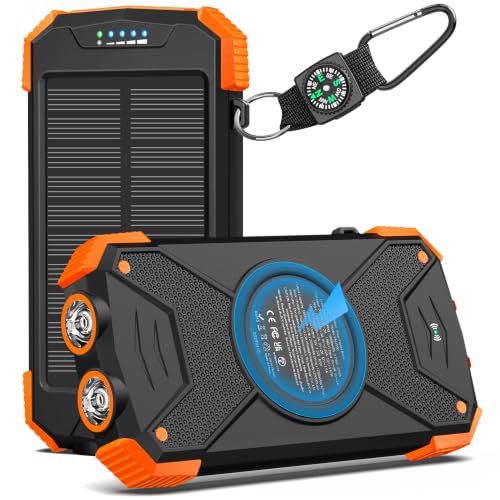
BLAVOR’s Solar Power Bank offers built-in solar charging and wireless charging capabilities, with four built-in cables and support for charging three devices simultaneously. With 20,000mAh, it’s lighter than larger packs and well-suited for short trips or as a backup charger. Best for: campers who want solar charging as a backup option and compact carrying weight. Caution: solar charging speed is weather-dependent and not as fast as USB charging in bright sun.
BLASOUL Solar Power Bank 49,800mAh
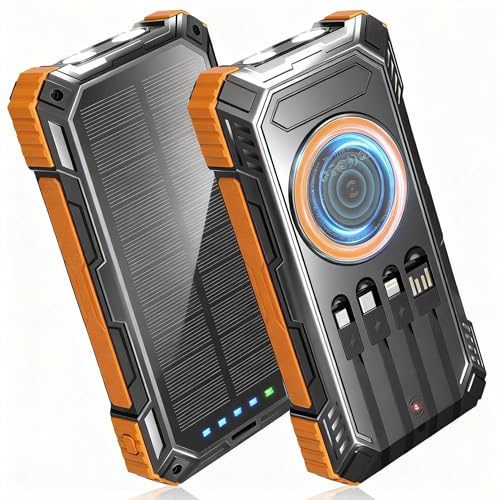
BLASOUL offers a 49,800mAh solar-powered charger with built-in cables and 22.5W PD fast charging. It includes three outputs and one input, enabling simultaneous charging of multiple devices. Best for: groups or families needing built-in cables to minimize gear. Limitation: solar charging depends on sunlight quality, and the battery safety features rely on internal protection circuitry, which is standard but important to monitor during outdoor use.
Luvknit 49,800mAh Solar Charger
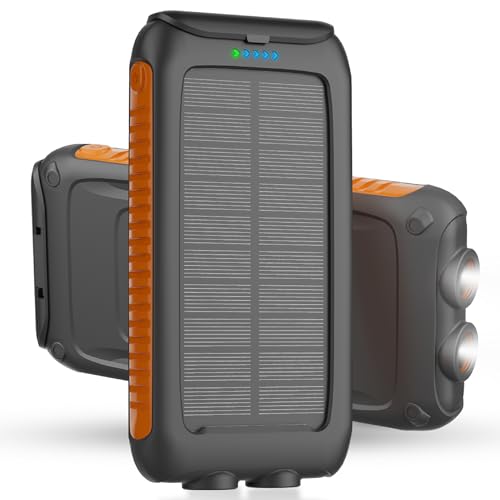
The Luvknit charger combines 49,800mAh capacity with dual charging modes: USB-C in/out and two USB-A ports, plus optional solar charging. It’s a flexible pick for travelers who want to adapt to varying sun and power availability. Best for: campers who prioritize versatility and the option to charge via solar when USB is not convenient. Caution: solar charging speed may be slower, and the built-in cables add weight.
Buying Guide: Key Considerations When Choosing a Camping Charger
- Capacity vs. weight: Higher capacities provide more charges but add bulk. Choose a balance that fits your trip length and carry comfort.
- Charging speed: USB-C PD 22.5W delivers faster top-ups for phones and tablets. Prioritize PD if you have newer devices that support fast charging.
- Port selection: Multi-port banks let you power several devices at once. Look for at least two USB outputs; USB-C is a plus for newer devices.
- Built-in cables: Chargers with integrated cables reduce cable clutter. Check compatibility with your devices (iPhone, Android, USB-C).
- Solar charging: Useful for off-grid camping but weather-dependent. Favor models with solar panels only if you expect long daylight hours and limited USB access.
- Safety and durability: Look for protection features (short-circuit, overvoltage, temperature) and rugged housings for outdoor use.
- Travel considerations: Battery capacity can affect air travel rules. If you fly, plan around allowed limits and airline policies.
Frequently Asked Questions
- How many devices can I charge at once?
Most high-capacity packs offer 2–3 outputs. Check the product specifics for the exact number of USB-A and USB-C ports. - Is solar charging effective for camping?
Solar charging works best in bright sunlight and can supplement USB charging. It’s not as fast as plugging in, but it’s reliable for emergencies or long trips. - Will these chargers work with iPhones and Android devices?
Yes. All listed models support common USB-C and USB-A charging protocols compatible with iPhones, Android phones, tablets, and wearables. - Are large-capacity power banks allowed on planes?
Some 20,000mAh–50,000mAh banks are restricted or require airline approval. Always verify current regulations before travel. - What is PD fast charging, and why does it matter?
PD (Power Delivery) enables higher wattage to compatible devices, reducing fill-up time for phones and tablets during camping. - Do built-in cables affect charging speed?
Built-in cables usually do not slow charging, but cable length and quality may influence charging efficiency slightly.