When you need cheap generators for camping, look for compact, quiet, and fuel-efficient models that deliver stable power for essential gear. This guide highlights five budget-friendly options ideal for campers, tailgaters, and emergency home use. Each pick is evaluated for who it’s best for, why it was chosen, and practical limits to consider. The summary table below helps compare key points at a glance.
Summary Table of Selected Products
| Product | Best For | |||
|---|---|---|---|---|
| Oxseryn Power Equipment 4400 | RV camping and emergency home backup | 3400 | Gasoline | Open-frame design may be louder than ultra-compact units |
| POXURIO 2450-Watt | Quiet camping and basic essentials | 2450 | Gasoline | Lower power ceiling for high-demand devices |
| PowerSmart 3600-Watt | Extended campsite power and RV use | 3200 | Gasoline | Moderate run time at higher loads |
| Aceup Energy 1200W | Ultra-portable backups and light-duty use | 900 | Gasoline | Low power; best for small devices |
| All Power America 2000W | Compact power for essentials | 1800 | Gasoline | Limited runtime at higher loads |
Oxseryn Power Equipment 4400 Watts Inverter Generator

The Oxseryn model offers 4400 peak watts and 3400 running watts, making it a strong choice for RV camping and home backup. It features multiple output options: two 120V AC ports, one 12V DC port, and an RV outlet. An ECO mode supports longer runtimes on a 2-gallon tank, with a fuel gauge for easy monitoring. This unit is best for campers who want more power for appliances and RV gear without sacrificing portability. For sensitive electronics, its clean power helps prevent voltage fluctuations. A potential limitation is its open-frame design, which can be noisier than enclosed models in quiet camping areas.
Who it’s best for: Families or solo campers needing reliable dual-use power and RV compatibility.
POXURIO 2450-Watt Portable Inverter Generator

The POXURIO model focuses on ultra-quiet operation with a decibel range around 59 dB and stable sine-wave output. With 2450 starting watts, it can handle essential devices, sump pumps, and small tools. Its gas-powered nature makes fuel widely available, and the inverter technology ensures clean power safe for electronics. Best for campers who prioritize quiet operation and portability. A consideration is its lower total output, which may limit using high-draw appliances simultaneously.
Who it’s best for: Campers seeking a compact, quiet power source for essential devices.
MARBERO Portable Power Station 88Wh

The MARBERO compact lithium power station provides 88Wh of energy with multiple outputs, including AC, USB, and USB-C. It’s designed for quick charging and emergency use, with solar panel compatibility as an option. This unit is best for light-duty camping where you mainly need to power small devices, phone charging, and compact gadgets. A limitation is its relatively small energy capacity compared to gasoline generators, making it less suitable for longer trips without frequent recharging.
Who it’s best for: Outdoor enthusiasts needing a compact power bank alternative for phones, lights, and small devices.
PowerSmart 3600-Watt Portable Inverter Generator

The PowerSmart unit delivers up to 3600 starting watts and 3200 running watts, powered by a 149cc engine. It features advanced inverter technology to deliver clean sine-wave power with less than 3% THD, making it safer for sensitive electronics. A 1.3-gallon tank supports up to about 8 hours at 25% load, balancing runtime with portability for RV use and longer camping stays. This choice suits campers needing reliable peak power with stability for electronics. The trade-off is longer runtimes can be challenging at higher loads due to fuel capacity.
Who it’s best for: RV users and campers running several appliances simultaneously without frequent refueling.
Aceup Energy 1200W Gas Powered Generator
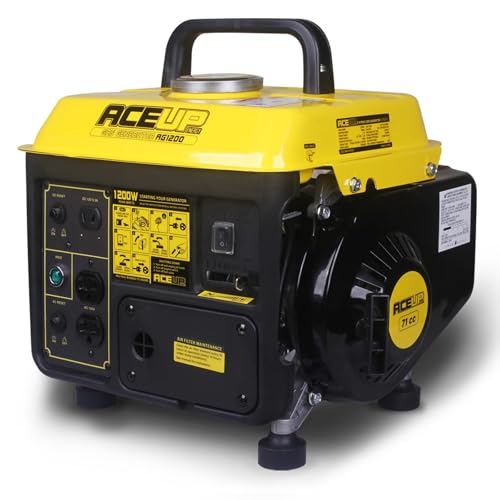
The Aceup Energy generator provides 1200 peak watts and 900 running watts, with a 71cc two-stroke engine. It includes a 120V outlet, overload protection, and a DC output, packaged in a compact 35.3 lb design. It’s best for ultralight carry and small-device powering for camping or backup. A caution is its limited wattage, which is insufficient for high-demand appliances. Consider this for light camping kits or as a supplementary unit.
Who it’s best for: Backpackers or campers needing a very portable backup for essential devices.
Oxseryn 2800-Watts Portable Inverter Generator

The Oxseryn 2800-watt model offers 2000 running watts from a 79.8cc engine, with a 1.1-gallon tank and a fuel indicator. It claims up to 9 hours at 25% load and includes parallel capability for extra power. This unit suits campers who want dependable power with moderate capacity and the option to pair with another unit for higher loads. A potential limitation is moderate run-time when used at higher loads, so plan for efficiency and scheduling of appliances.
Who it’s best for: Campers seeking a balance between portability and stronger output than ultra-light models.
Buying Guide: How To Choose A Budget Camping Generator
- Power needs: List essential devices (lights, fridge, small appliances) and total starting/running watts. Choose a model with a comfortable margin above your peak wattage.
- Fuel type and availability: Gasoline is common and affordable, but diesel and propane options exist. Consider fuel access at your campsite and storage safety.
- Runtime and fuel tank size: Look for longer runtimes at typical loads if you’ll be away from refueling options. Tank capacity often correlates with weight, so balance portability and runtime.
- Noise level: For quiet camping areas, prioritize inverter generators with low decibel output and compact enclosures. ECO modes can extend runtime but may not reduce noise in all models.
- Portability and weight: If you’ll carry the unit on foot or by small vehicle, lighter models with handles or wheels are advantageous.
- Power quality: Inverter technology reduces Total Harmonic Distortion (THD), making power suitable for sensitive electronics like laptops and phones.
- Safety features: Look for automatic shutoff, low-oil alerts, circuit protection, and proper ventilation for indoor or enclosed use.
- Maintenance and reliability: Consider brands with accessible parts, simple recoil starts, and clear fuel indicators to minimize downtime on trips.
Frequently Asked Questions
- What wattage do I need for basic camping? Plan for at least 1800–2000 running watts for essentials like lights, fans, and small devices; add an extra margin for a fridge or TV.
- Are inverter generators worth it for camping? Yes. They deliver stable power with lower THD, are quieter, and more fuel-efficient than standard open-frame units.
- How important is fuel tank size for camping? A larger tank reduces refueling frequency, but heavier units may be harder to transport. Balance capacity with portability needs.
- Can I parallel two generators for more power? Some models support parallel operation to increase available watts. Ensure both units are designed for parallel use and follow safety guidelines.
- What maintenance should I expect? Regular oil checks, air-filter cleaning, and spark plug inspections help preserve performance and longevity in outdoor conditions.
- Is quiet operation always guaranteed? Noise depends on engine size, design, and enclosure. Inverter models with ECO modes typically offer quieter performance than traditional generators.