Finding the right closed-cell sleeping pad can boost comfort, warmth, and packability on camping trips. This guide highlights five reliable options, each suited to different types of campers—from minimalist hikers to car campers seeking extra insulation. The featured pads are durable, affordable, and easy to pack, making them ideal for backcountry overnights or casual campsites. Read on to compare who each pad is best for, and use the buying guide to tailor your choice to climate, weight limits, and setup preferences.
Product Quick Comparison
| Product | Best For | Insulation/Weight | Notes |
|---|---|---|---|
| Therm-a-Rest Z Lite Original Camping and Backpacking Sleeping Pad | Backcountry hikers seeking reliability | R-Value 1.7 | Accordion fold for compact packing |
| Ultralight Foam Sleeping Pad (XPE, Foldable) | Ultra-light backpackers | Insulation 2.1 | Very light; ergonomic raised nodes |
| Foam Camping Pads for Sleeping (IXPE, Aluminum Film) | Budget-conscious travelers | Insulation 2.1 | Backed by reflective aluminum layer |
| Sleeping Pad with 3.15″ Thick Memory Foam (Electric Pump) | Car camping and glamp-style trips | Thick memory foam | USB-C pump and auto-inflate |
| Foam Camping Pads for Hiking (IXPE) | General outdoor use and family trips | IXPE foam | Space-saving peanut/accordion design |
Therm-a-Rest Z Lite Original Camping and Backpacking Sleeping Pad

The Therm-a-Rest Z Lite Original is a lightweight closed-cell foam mat with accordion-style folding for compact packing. Its dimples trap heat, providing extra warmth in cold conditions. Best for budget-conscious hikers who prioritize durability and a compact form factor. Its R-Value of 1.7 offers basic insulation suitable for mild to cool nights on rough ground. A potential limitation is that it may feel firmer than some foam pads for side sleepers.
Ultralight Foam Sleeping Pad (XPE, Foldable)

Designed for ultra-light travelers, this foldable pad uses XPE foam, with an unfolded size of 70.8 x 23.6 x 0.36 inches and a folded size of 23.6 x 5.6 x 4.9 inches. It weighs about 0.7 lbs per pack and features raised nodes for back support. It includes heat-reflective aluminum film for improved warmth. Best for minimalist hikers who need a compact, low-weight solution; consider this if you value nesting durability and easy packing over maximum thickness.
Foam Camping Pads for Sleeping (IXPE, Aluminum Film)

This foldable closed-cell foam pad uses IXPE foam with a back aluminum film for heat reflection, delivering solid insulation (2.1 rating) and ergonomic support across pressure points. It is a strong choice for budget-conscious campers who still want reliable warmth and a compact fold. Best for family trips or general outdoor use where price and compactness take priority; caution: thickness may feel insufficient for very cold nights or side-sleepers who need extra cushion.
Sleeping Pad with 3.15″ Thick Memory Foam (Electric Pump)

This sleeping pad blends memory foam comfort with a built-in USB-C electric pump for automatic inflation and deflation, plus a 4.8″ pillow for neck support. The surface uses 50D stretch-knit fabric with a TPU-coated base to resist ground moisture. Best for car campers or those seeking a self-contained setup, especially in 4-season environments. A limitation is that the pad is heavier than standard closed-cell options, which may affect packability on long backcountry trips.
Foam Camping Pads for Hiking (IXPE, Peanut Shape)
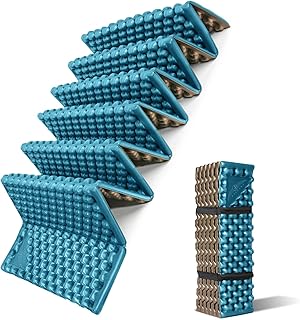
This pad features a peanut-shaped, accordion-style design to save space when packed, using IXPE foam for comfort and closed-cell durability. It is a versatile choice for campers needing a packable pad that still offers solid support. Best for families or casual hikers who value compact storage; caution: may not provide as much insulation in extreme cold as higher-R-value options.
Buying Guide: Closed-Cell Camping Pads
What to look for when choosing
- Insulation: Compare R-values or insulation ratings to match the climate. Higher values are better for cold nights.
- Weight and packability: Ultra-light options are ideal for long treks; folded accordion designs save space.
- Surface feel and thickness: Thicker pads offer more cushion but may be bulkier; consider sleeping style (side, back, belly).
- Durability and protection: Closed-cell foam is generally rugged and resistant to moisture; aluminum film layers add warmth.
- Setup and maintenance: Look for pads with simple folding or nesting designs and optional pumps if convenience matters.
Which pad fits which camper
- Backcountry hikers: Z Lite Original or Ultralight XPE pad for best weight-to-warmth balance.
- Budget travelers: IXPE foam pads with aluminum film provide solid insulation at a lower cost.
- Car campers and weekend warriors: Thicker memory-foam pad with electric pump for comfort and convenience.
- Family or casual campers: Packs small and light IXPE pads that can be shared around a campsite.
Storage and care tips
- Store pads in a dry place; avoid prolonged exposure to direct sunlight to prevent material degradation.
- Keep pads flat or loosely rolled to maintain foam integrity over time.
- Clean with a damp cloth if needed; avoid harsh chemicals that can degrade the foam.
Practical questions
- Are closed-cell pads waterproof? Yes, most closed-cell foam is water-resistant and dries quickly.
- Can I use these pads in extreme cold? Choose higher insulation ratings and consider layering with a foam pad for additional warmth.
- Do these pads provide sleeping comfort for side sleepers? Higher thickness and ergonomic designs improve comfort for side sleepers.
- Which pad is easiest to carry? Ultralight XPE and similar folding pads win for weight and compactness.
FAQ
- What is the best closed-cell pad for beginners? A balance of weight, comfort, and price—such as the Z Lite Original—offers reliable warmth and durability for new campers.
- How do I know which insulation level I need? Consider typical nightly temperatures and ground conditions; higher R-values are better for cold ground.
- Are memory-foam pads necessary for camping? Not necessary; they add comfort but increase weight and price. For most backcountry trips, closed-cell pads suffice.
- Should I choose a pad with an inflatable feature? If you value quick setup, a pad with a pump is convenient; otherwise, classic closed-cell options are simpler and rugged.
- Can these pads double as seat cushions? Many closed-cell pads can function as temporary seating at camp, particularly in the XL or wider designs.
- How should I pack a folded pad? Pack with the folds facing inward to minimize bulk and prevent wear at the folds.