If you’re seeking a Coast Guard flare kit, you want reliable, USCG-approved electronic or pyrotechnic alternatives that meet daytime and nighttime signaling requirements. This guide highlights five kits well-suited for different boaters—ranging from emergency-ready families to commercial skippers. Each option is evaluated for best-uses, strengths, and practical limits to help you pick confidently.
| Product | Best For | Key Benefit | Format |
|---|---|---|---|
| ACR ResQFlare E-Flare Safety Kit | Daytime and nighttime signaling on small boats | Long life, IP67 waterproof, 360° light | Electronic flare kit |
| Sirius Signal C-1003 SOS LED Distress Signal | Families and casual boaters needing simple, durable signaling | USCG-approved, up to 60 hours of signals | Electronic distress signal |
| TEKTITE SOSeFLARE 5 | Boaters seeking a USCG/SOLAS-compliant, replaceable-battery electronic signal | 30+ hours, audible signal, buoyant and waterproof | Electronic distress signal |
| ACR ResQFlare Electronic Distress E-Flare and Flag | Compact, high-visibility nighttime signaling | 6+ miles visibility, includes distress flag | Electronic flare with flag |
| Orion Safety 8905 Flare Kit Plus | Comprehensive emergency kit for roadside and low-light scenarios | Includes first aid and safety equipment | Flare and emergency kit |
ACR ResQFlare E-Flare Safety Kit

The ACR ResQFlare E-Flare Safety Kit combines an electronic distress flare with a distress flag. It is IP67 waterproof and provides 360-degree visibility. It’s designed to serve as a replacement for traditional pyrotechnic flares, meeting USCG nighttime visibility requirements. Best for small to mid-sized boats that need a compact, reusable signaling device with long operational life. A potential limitation is that some users prefer traditional pyrotechnics for certain signaling environments.
Sirius Signal C-1003 SOS LED Distress Signal
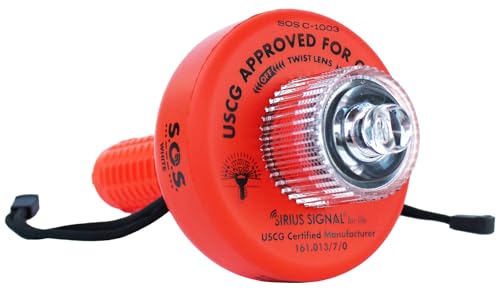
The Sirius Signal C-1003 kit is USCG approved and designed for Day, Night, and Audible distress signaling. It provides up to 60 hours of signal output with batteries included and is notably bright, with visibility up to 10 nautical miles. Best for families and recreational boaters who want a simple, battery-powered electronic beacon. A caution: rely on fresh batteries and follow storage guidelines to preserve performance.
TEKTITE SOSeFLARE 5

TEKTITE SOSeFLARE 5 is a USCG and SOLAS compliant electronic distress signal with a distinct Morse SOS output, an audible signal, and a distress flag for day and night visibility. It features long battery life with user-replaceable CR123 batteries. It’s waterproof and floats upright, making it suitable for boats, jetskis, and other watercraft. Better for: users who want a maintenance-friendly, floating device. Limitation: battery availability and replacement timing can affect readiness in long trips.
ACR ResQFlare Electronic Distress E-Flare and Flag
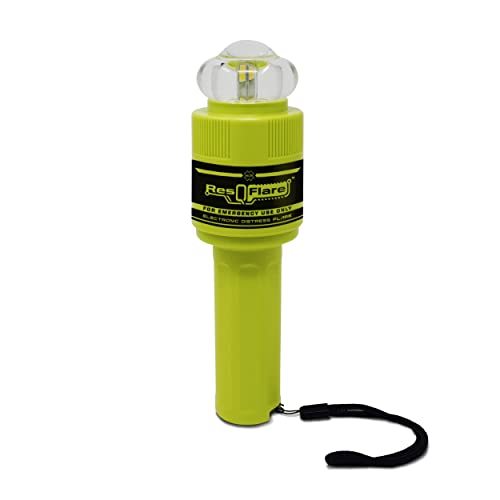
This ACR kit combines ResQFlare technology with an included distress flag, meeting USCG 161.013 nighttime signaling and USCG 160.072 daytime signaling. It is IP67 waterproof, compact, and automatically rights itself when in water. Best for boaters needing a compact, dual-role electronic distress option. Caution: ensure the kit is stored and maintained per guidelines to avoid reduced effectiveness over time.
Orion Safety 8905 Flare Kit Plus

The Orion Safety 8905 Flare Kit Plus offers a complete roadside emergency kit alongside flare signaling for low-light conditions. It provides broader emergency preparedness beyond signaling, including first aid and safety equipment. Best for boaters who want a broader safety kit that combines signaling with essential tools. Limitation: it may be heavier and include non-communication items that aren’t necessary for pure signaling needs.
Buying Guide
- What signaling standard do you need? USCG nighttime and daytime visibility are common requirements; electronic flares meet both with various features.
- What is your boat type and typical usage? Families may prefer simpler, battery-friendly devices; commercial or longer trips may justify longer-life, replaceable-battery units.
- Should the kit include a flag or whistle? Some kits bundle flags and audible elements for daytime signaling, which can be useful in crowded waters.
- Water exposure and buoyancy: IP ratings and floating behavior affect reliability in rough seas and if a device ends up in water.
- Maintenance and replacements: Check battery life, replaceable components, and how long the device remains ready without use.
FAQ
- What does USCG approval mean for these devices? It indicates the device meets U.S. Coast Guard signaling requirements for visibility and performance.
- Are electronic flares interchangeable with traditional pyrotechnic flares? Some kits are designed to replace pyrotechnics, but it depends on the kit’s certification and local regulations.
- How long do electronic distress signals last? Many units offer hours to dozens of hours of continuous signaling on a single charge or set of batteries.
- Do these devices float or stay upright? Several models are designed to float upright and remain visible in water, improving retrieval chances during a distress event.
- Is a distress flag included? Some kits include a distress flag to enhance daytime signaling and identify the signal as a Coast Guard distress message.
- What should I consider for storage and maintenance? Store in a dry, accessible location and check batteries, seals, and replaceable parts per the manufacturer’s guidelines.