Discover compact wood stoves that deliver reliable heat and cooking power without bulk. This guide highlights five practical options for backpackers, hikers, tent campers, and outdoor cooks who want portability, efficiency, and simplicity. Each stove excels in different scenarios—choose based on weight, burn time, and fuel flexibility. The top picks are organized to help you compare best-for, limitations, and why they’re chosen for specific camping styles.
| Product | Best For | Key Advantage | Limitations |
|---|---|---|---|
| Lineslife Wood Burning Camp Stove | Backpackers who want rugged durability | Large combustion chamber for 40–60 minutes burn time | Heavier due to cast iron |
| REDCAMP Stainless Steel Foldable Stove | Lightweight hikers needing quick setup | Foldable design with carry bag | Smaller footprint may limit pot size |
| REDCAMP Wood Burning Folding Stove (Small) | Minimalists and solo campers | Stable stainless grid and cuboid base | Requires dry fuels for best performance |
| Upgraded Wood Stove for Tents | Tent campers prioritizing airtight burn | High airtightness for smoke control | Less compact than ultralight models |
| Kuvik Titanium Wood Stove | Ultralight backpackers | Ultra-low weight with titanium durability | Higher cost, delicate handling |
Note: The above table summarizes core strengths for quick comparisons. Each product page below provides details on materials, burn efficiency, portability, and suitability for different camping styles.
Wood Burning Camp Stove By Lineslife Store
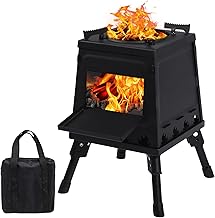
Features: Premium cast iron, rustproof and anti-corrosion construction for long life. A 16-vent design supports efficient burning, with a large combustion chamber capable of roughly 40–60 minutes per fill. Adjustable pot holders accommodate various cookware, and foldable legs enable different setups.
Best for: Backpackers and campers who prioritize rugged durability and longer burn times per load of firewood. Why selected: Cast iron provides steady heat and resilience against rough terrain. Caution: Heavier than many al alternative stoves, which may affect pack weight.
REDCAMP Camping Wood Burning Stove (Stainless Steel)

Features: 430 stainless steel and 304 grill net deliver consistent burn with a robust frame. Foldable with a carry bag; unfolded size about 10.6 x 7.8 x 7.8 inches and fold-down to 1.5 inches for transport. It’s stable and designed to support varied cooking tasks.
Best for: Campers who need a compact, foldable design with a dedicated carry bag for easy transport. Why selected: Strong steel construction supports heavier cookware and reliable performance in rugged environments. Caution: Ensure protective film is removed before use for proper airflow and safety.
REDCAMP Wood Burning Folding Camp Stove (Small)

Features: Stainless steel grid backing plate offers a stable cooking platform. The cuboid design provides reliable support for kitchen utensils, capable of accepting various fuels like leaves and twigs. Lightweight and foldable for backpacking use.
Best for: Solo campers and minimal packs who want a simple, stable stove that accepts diverse fuels. Why selected: Versatile fuel compatibility saved from reliance on canisters. Caution: Fuel choice may affect burn time and heat consistency.
Upgraded Wood Stove For Tent Camping

Features: High airtightness to minimize smoke leakage and promote full combustion. Thick steel construction resists high heat without warping, with a large-capacity firebox for longer burn times. Designed for use in tents and outdoor setups where controlled heat matters.
Best for: Tent campers who want reliable, smokeless performance and steady heat. Why selected: Airtight design reduces smoke exposure and improves efficiency. Caution: Not as compact as ultralight options—pack weight and space should be considered.
Kuvik Titanium Wood Stove

Features: Ultralight titanium construction at only 6.8 oz, collapsible to about 0.2 inches thick. Includes carrying case to prevent soot transfer. Uses natural camp fuels like twigs and bark, eliminating need for canisters. Easy setup by sliding tabs into slots to form a freestanding fire pit.
Best for: Ultra-light backpackers who prioritize weight and compactness. Why selected: Titanium balance of strength and very low weight, with efficient setup. Caution: Higher price and more delicate handling compared to steel stoves.
Buying Guide
What matters most when selecting a compact wood stove:
- Weight and packability: Prioritize models labeled ultralight or collapsible if you carry every gram.
- Burn efficiency: Look for multiple air vents, airtight design, and a large burn chamber for longer sessions.
- Fuel flexibility: Fuels like twigs, leaves, and bark are available in nature; consider models that handle various inputs well.
- Durability: Cast iron and stainless steel offer different durability and heat retention trade-offs; steel stoves may warp under extreme heat but are lighter.
- Portability: Consider included carrying cases and foldable legs or grids to simplify transport.
- Cookware compatibility: Adjustable pot holders and stable grids improve compatibility with diverse pots and pans.
Usage tips: Ensure proper ventilation when using in tents, avoid obstructing airflow, and remove protective films when required to prevent heat buildup on metal surfaces.
Frequently Asked Questions
- What’s the best stove for ultralight backpacking?
Kuvik Titanium Wood Stove offers the lightest weight and a compact form factor, ideal for ultralight travel.
- Are wood stoves safe to use in tents?
Yes, with proper ventilation and correct use; choose models with high airtightness and follow tent manufacturer safety guidelines.
- Can these stoves burn leaves and small sticks?
Most listed stoves are designed to burn small natural fuels; some are optimized for leaves, twigs, and bark for easy fuel sourcing.
- Which stove offers the best balance of weight and burn time?
Stoves with a robust burn chamber and adjustable pots typically strike a good balance; the Lineslife model provides longer burn per fill, though it is heavier.
- Do I need a carry bag for all models?
Many models include carry bags or cases; if not, a lightweight sack can improve portability and keep gear clean.
- Is titanium always better than stainless steel for camping stoves?
Titanium is lighter and corrosion-resistant, but stainless steel can be more affordable and durable under heavier use. The choice depends on weight tolerance and budget.