For parents seeking practical, comfortable options for kids who camp, hike, or simply sleep outdoors, these sleeping bags balance warmth, weight, and weather resistance. The top picks below are best for kids who need reliable warmth in mild to cool conditions, without bulky bulk. Each choice targets different use cases—from all-season versatility to easy packing for short trips—so you can pick the right bag for your child’s adventures.
The following table highlights the five selected products, including who each is best for, key features, and the intended season use:
| Product | Best For | Season Use | Key Benefit |
|---|---|---|---|
| oaskys Camping Sleeping Bag | Active kids & families | 3 seasons | Weather-resistant with double-filled warmth |
| Flantree Sleeping Bags | All-around outdoor beginners | 3-4 seasons | Waterproof shell and synthetic insulation |
| Kids Sleeping Bags by Tuphen (Blue) | School-age campers | 3 seasons | Bright design, two-way zipper, portable pack |
| HTMEYBG Sleeping Bag | Backpacking families | 3 seasons | Nylon shell, lightweight, open-flat versatility |
| SWTMERRY Sleeping Bag | Casual campers & travelers | 3 seasons | Double-filled warmth, easy care |
oaskys Camping Sleeping Bag — 3 Season
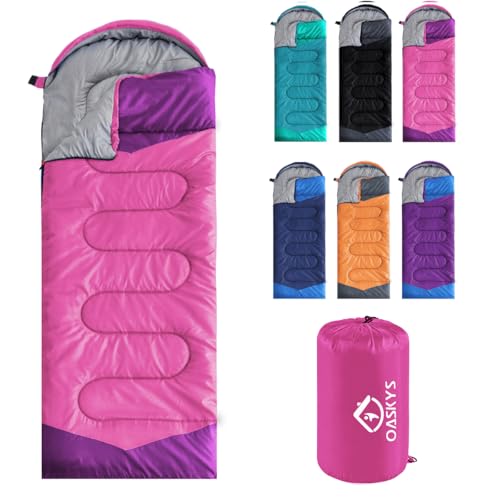
Best for: Active kids and families who need a reliable 3-season option. The bag targets 10–20 degrees Celsius and uses double-filled technology to help shield against dampness, making it a solid choice for spring evenings or cool summer nights. The separated zipper at the bottom offers a breathable foot area when the temperature rises, and the half-circle hood with an adjustable drawstring helps preserve head warmth.
Why chosen: This bag emphasizes warmth retention and weather resistance while remaining lightweight for travel. The outer 210T anti-tearing polyester fabric is waterproof and breathable, with a soft lining for comfort. It’s a practical all-around choice for youth camping and family trips.
Caution: Foot ventilation is adjustable, but in very warm environments the bottom zipper may allow too much airflow if not managed.
Flantree Sleeping Bags for Adults & Kids

Best for: Beginners and families who want a durable, all-around bag. With a 190T ripstop waterproof shell and synthetic insulation, this bag stays warm even when damp and is machine washable for easy care. It’s suited for a range of outdoor activities from camping to hiking, indoors or out.
Why chosen: It balances warmth and protection in varied weather. The bag packs down easily and includes a compact storage bag, supporting travelers who value portability. The warmth range and hood design help preserve core warmth during chilly nights.
Caution: Heavier users or exceptionally cold nights may benefit from layering with extra blankets or selecting a higher temperature-rated bag if needed.
Kids Sleeping Bags by Tuphen (Blue)

Best for: Kids and teens who respond well to bright, engaging colors. The bag is rated for 3 seasons (40℉–77℉ / 4℃–25℃) and features a 2-way zipper that can fully open as a blanket. It uses a waterproof outer shell and a cozy 210T inner fabric with 3D filling for warmth.
Why chosen: It’s designed with a backpack-style carry sack and a compression bag, making it easy for young campers to handle. The two-way zipper and openable design add versatility for varying sleep environments.
Caution: Bright colors may show dirt more quickly; routine cleaning helps maintain the vibrant appearance and fabric integrity.
HTMEYBG Sleeping Bag — 3 Seasons

Best for: Backpacking households seeking a compact, lightweight option. This bag’s 86.6 x 31.5 inches size and 3.3 lb pack weight offer full-day comfort and easy transport for outdoor trips.
Why chosen: The shell is nylon-based, waterproof, and breathable, with a soft 190T pongee lining. The hollow microfiber fill provides warmth while keeping weight down, and the bag can fully open to serve as a blanket for picnics or family lounging.
Caution: The bag’s temperature range is broad, so consider layering or using it with a liner for extended cold nights.
SWTMERRY Sleeping Bag — 3 Seasons
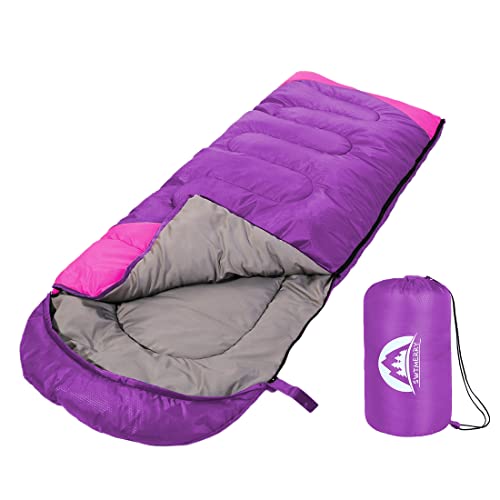
Best for: Casual campers and travelers who want a reliable 3-season option with straightforward care. The bag emphasizes a double-filled design for warmth and is suitable for both indoor and outdoor use.
Why chosen: It combines warmth and portability with a machine-washable design, and includes a travel-friendly carry bag plus a compression sack for easy storage on trips. The purple color option is visually appealing for kids who prefer playful hues.
Caution: As with any down-to-earth bag, avoid exposing to sharp objects or rough handling to maintain the waterproof shell integrity.
Buying Guide: How to Choose the Right Kid Sleeping Bag
What temperature rating should I look for for my child? Choose a bag with a comfortable night temperature that matches your typical camping climate. For mild nights, 50℉–68℉ (10℃–20℃) is common; for cooler nights, aim for 41℉–77℉ (5℃–25℃) with some extra warmth for edge cases. Consider layering options like liners if temperatures may swing.
Is weight or bulk more important? For family car camping, weight is less critical; for backpacking with kids, lighter bags with compact packs offer easier transport. Look at pack weight and packed dimensions to compare how much space the bag will occupy in a backpack.
How important is weather resistance? A waterproof or water-resistant shell helps during dew, light rain, or damp ground. A breathable fabric reduces internal condensation. If you expect wet conditions, prioritize waterproof shells and synthetic insulation for reliable warmth when wet.
What about warmth sources? Synthetic insulation dries quickly and stays warm when damp, while certain fabrics improve heat retention. A hood with adjustable drawstrings helps seal warmth around the head, an important comfort feature for kids.
What features improve usability for kids? Two-way zippers that can double as a blanket, easy-to-pack compression sacks, and bright colors that kids enjoy can influence the decision. A foot vent or bottom zipper can increase comfort on warmer nights.
Frequently Asked Questions
- What is a good temperature range for a kids’ sleeping bag? A typical safe range is 40℉–68℉ (4℃–20℃) for three-season use, with a margin for personal comfort.
- Are synthetic sleeping bags better for kids? Yes, because they perform well when damp and are easier to dry and care for, which is helpful for active children.
- Should I buy a kid-sized bag or an adult bag for a child? A kid-sized bag fits better, is lighter, and accounts for growing children. Some bags are designed to accommodate taller kids in a roomy cut.
- How important is the carry bag? A good carry bag and compression sack simplify packing and transport, especially for travelers and campers who move frequently.
- How do I care for a kids’ sleeping bag? Most can be machine washed on a gentle cycle; air dry thoroughly. Check product care instructions for specific temperatures and drying guidance.
- Can these bags be used indoors? Yes, many are suitable for indoor sleepovers or basement camping, especially during emergencies or practice camping at home.