Need reliable warmth in a wall tent without relying on electrical power alone? This guide highlights five diesel heaters that are well-suited for camping tents, RVs, campers, and other off-grid setups. They offer fast heating, controllable temperature, and safety features for outdoor use. The options below target different needs—from compact portability to higher heat output—so you can pick the best fit for your tent size, climate, and fuel preferences.
| Product | Best For | Key Benefit | Typical Runtime |
|---|---|---|---|
| [ROKKIT 8KW] Diesel Heater (110V/12V) – Version 2026 | Medium to large tents or campers | Fast heat, long runtime, LCD and remote control | Up to 24–36 hours |
| LF Bros 5KW All-in-One Diesel Heater | Smaller tents or garages | Low fuel use, simple 110V option, remote | Up to 24–36 hours |
| Dkenicor 8KW All-in-One Diesel Heater | Medium to large spaces, garages, rvs | Multiple voltages, wide heating area, efficient fuel use | Up to 24 hours |
| [ROKKIT 8KW] Diesel Heater – 2026 Version | Same high-heat needs, spare option | Again, fast heat and strong safety features | Up to 24–36 hours |
| VEVOR 8KW Diesel Heater | High-altitude camping or boats | Automatic altitude adjustment, Bluetooth app | Up to 10–20 hours (varies by use) |
Note: This table highlights typical strengths. Each product page includes installation and operation details that affect real-world runtime, noise, and efficiency. For tent use, consider insulation level, tent size, airflow, and outside temperatures when estimating running time on a full tank.
[ROKKIT 8KW] Diesel Heater (2026 Version)

Best for: Campers needing quick warmth in a wall tent or vehicle. This 8KW diesel heater heats up in about five minutes and uses less than a gallon of fuel per night. The 5 L/1.3 gal tank provides up to 24–36 hours of continuous heat. It combines a large tank with low energy use, making it appropriate for extended camping trips in cooler weather.
Why chosen: It pairs high heat output with efficient fuel use, which is important in a tent where fuel stops for the night are practical. The heater includes an LCD display and a 50-foot remote for convenient control from inside the tent or a nearby shelter. Safety features include overheating protection and constant temperature control, providing a reliable heating experience.
Who it’s best for: Tents or small campers that sit in moderate cold, needing rapid warmth after dusk. Choose this if you want long continuous heat without frequent refueling.
Limitations: As with other diesel heaters, noise at higher fan speeds can be noticeable. Ensure proper ventilation and follow installation guidelines to avoid exhaust concerns.
LF Bros 5KW All-in-One Diesel Heater

Best for: Smaller tents, garages, or vans where space and power are limited. This heater, rated at 5KW, provides a balance of warmth and simplicity with a 5L tank and a remote control. It’s designed for versatility, including 110V operation, which can simplify use in a garage-style tent setup.
Why chosen: The all-in-one design reduces the need for extra parts, and the included remote makes nighttime adjustments easier without leaving your sleeping area. It supports 12V and 24V configurations, broadening its applicability for vehicles and small spaces.
Who it’s best for: Outdoor enthusiasts who want a compact heater that is easy to set up and uses modest fuel for moderate tent sizes or workshop spaces.
Limitations: The 5KW output may be less effective in very large tents or frigid climates; pairing with proper insulation improves overall comfort and efficiency.
Dkenicor 8KW All-in-One Diesel Heater

Best for: Medium to large tents or RVs where robust heating and flexible power inputs are valuable. The 8KW rating supports larger spaces and quicker warm-up times. The 7L fuel capacity helps extend runtime, while low fuel consumption (0.15–0.5L/hour) keeps operating costs modest.
Why chosen: It combines multi-Voltage compatibility (12V/24V) with an optional 110–240V transformer, offering adaptability for vehicles, garages, or campsites. The unit includes a thermostat, timer, preheating, and overheat protection, supporting safe overnight use.
Who it’s best for: Campers who need reliable heat in irregular power setups and want a flexible option that can operate from different power sources.
Caution: Ensure proper venting and installation to avoid fuel leaks or exhaust concerns in compact tent spaces.
[ROKKIT 8KW] Diesel Heater – 2026 Version (Variant)
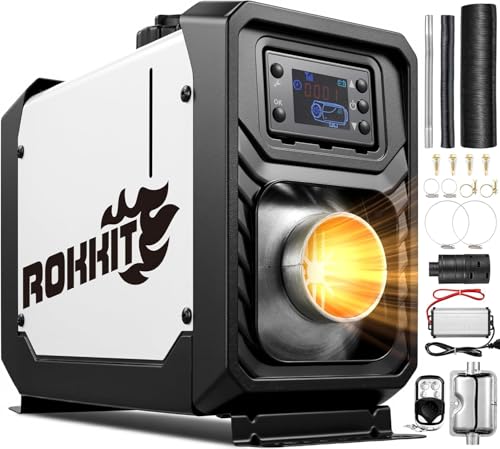
Best for: Backup option or second unit in a larger tent setup where consistency of heat is critical. This model mirrors the 8KW performance with an LCD and remote for easy operation.
Why chosen: It reinforces the same benefits as the other ROKKIT option—fast heat, low energy use, and strong safety features—giving you flexibility if you want multiple heat sources for different tent zones.
Who it’s best for: Users with a multi-room tent configuration or those who like redundancy for heating during extended camping trips.
Limitations: As with similar diesel heaters, ensure adequate ventilation and follow manufacturer installation instructions to prevent CO exposure or leaks.
VEVOR 8KW Diesel Heater

Best for: High-altitude camping, boats, or larger tents seeking automatic altitude compensation and Bluetooth app control. This unit supports 18,045 feet altitude adjustment, which helps maintain stable heat output in high-elevation camps.
Why chosen: The altitude compensation and Bluetooth app control add convenience for complex setups or seasonal camping where conditions vary. It includes a remote and LCD to provide multiple control options at the point of use.
Who it’s best for: Campers who value modern tech features and need dependable performance at higher elevations or in variable climates.
Limitations: Bluetooth app connectivity can vary by device; ensure the app is compatible with your phone and check for any software updates for best results.
Buying Guide: Key Considerations For Wall Tent Diesel Heaters
- Heat output vs. tent size: Larger tents benefit from higher kilowatt (KW) heaters. For small tents, 5KW is often sufficient, while 8KW models excel in bigger spaces.
- Power and voltage options: Look for multi-voltage units (12V/24V) and optional 110–240V transformers for flexible use in vehicles, garages, or camps.
- Fuel efficiency and tank size: Bigger tanks extend runtimes but add weight and length. Consider typical nightly use and fuel logistics when choosing a size.
- Ventilation and safety: Ensure proper installation with adequate ventilation. Features like overheating protection, CO sensors, and thermostats reduce risk during extended use.
- Control options: LCD displays, remotes, Bluetooth apps, and timer functions improve ease of use, especially when you’re inside the tent or wearing gloves.
- Altitude adaptation: If you camp at high elevations, choose models with automatic altitude compensation to maintain consistent heat output.
Frequently Asked Questions
- What size diesel heater do I need for a wall tent?
– For most wall tents under 200 square feet, 5–8KW heaters are common. Heavier tents or very cold climates may require 8KW or more. - Can I run a diesel heater indoors in a tent?
– Diesel heaters require proper ventilation to prevent CO buildup. Use them with venting and follow the manufacturer’s safety guidelines. - Do these heaters work with 12V or 24V power sources?
– Yes. Many models support 12V and 24V, with some providing 110V or 220V transformers for home or garage use. - What maintenance is required for diesel heaters?
– Regular checks of fuel lines, fuel tank seals, and air intakes; replace filters as specified by the manufacturer; ensure the exhaust system is clear. - Are altitude adjustments important for heating efficiency?
– Yes. At high altitudes, automatic altitude compensation helps maintain heat output and prevents inefficiencies.