Looking for a double-occupancy ice fishing tent that’s quick to deploy, well insulated, and sturdy in wind and snow? This guide compares five top hub-style, insulated ice shelters designed for 4–8 anglers. Each option is evaluated for setup speed, heat retention, interior room, and suitability for groups. Ideal buyers include group anglers, winter weekend warriors, and family ice fishing trips where space and warmth matter. Below is a quick summary table of the featured products to help you compare at a glance.
| Product | Best For | Interior Space (approx.) | Warmth/Insulation Note |
|---|---|---|---|
| ActiveTrail Ice Fishing Tent | Large groups, up to 6–8 people | 11.6 x 6.5 ft interior | Double-layer insulated fabric for wind and cold protection |
| Garvee Insulated Pop-Up Ice Fishing Tent (6–8) | Extreme cold, up to -30°C to -35°C | 11.4 ft x 5.7 ft x 6.6 ft | 420D 3-layer insulated fabric; +35% warmth |
| VEVOR Pop Up Ice Fishing Tent (4–6) | Compact groups that still need insulation | ~50 sq ft fishing area | 600D Oxford, 80g cotton insulation |
| Albott Insulated Pop-Up Ice Fishing Tent (6–8) | All-season warmth and durability | Large interior; 6–8 person capacity | Triple-layer fabric with Oxford cover |
| Nordic Legend Explorer Double Ice Shelter (8) | Best for very large teams | Double twin design; wide bottom | Standard 300D interior, fire-retardant |
ActiveTrail Ice Fishing Tent Insulated Hub Style Shelter

Best for: groups of 6–8 anglers who need ample interior space and solid wind protection. This hub-style shelter sets up in under 60 seconds, enabling quick access to a hot meal or heater space. It uses double-layer insulated fabric to reduce cold air intrusion and block wind. The interior dimensions are 11.6 by 6.5 by 6 feet, promising comfortable seating and gear room for a group. A carry bag and ice anchors are included for portability and stability in harsh winter conditions.
Why chosen: Its rapid pop-up hub design and substantial interior volume make it a strong all-around option for large groups who value ease of use and warmth. The insulation helps maintain a livable interior temperature in subzero weather. Caution: Ensure the tent is properly anchored in high wind to prevent movement or collapse during heavy snowfall.
Garvee Insulated Pop-Up Ice Fishing Tent (6–8)

Best for: teams that want reliable warmth in frigid conditions. This tent uses 420D 3-layer insulated fabric and a hub design to retain heat and block wind efficiently, performing well in temperatures as low as -30°C to -35°C. Dimensions around 11.4 ft by 5.7 ft by 6.6 ft provide ample room for 6–8 anglers and gear.
Why chosen: The combination of rapid setup, strong insulation, and spacious interior makes it a standout for cold-weather outings with several people. Limitation: The insulation is strong, but joint seams may require careful maintenance to minimize potential leakage during heavy snowfall if not properly sealed.
VEVOR Pop Up Ice Fishing Tent (4–6)

Best for: smaller groups that still want warmth and a quick setup. This shelter uses 600D weatherproof fabric and 80g fluffy cotton insulation, keeping interior warmth even in cold conditions. It features a pop-up design, ventilation options, a removable window for airflow, and an internal storage bag for personal items.
Why chosen: Its pop-up ease is a key advantage for solo operators or small crews. Slight caution: The seams may leak under heavy snow or rain; ensure proper seam sealing and occasional maintenance for longevity.
Albott Insulated Pop-Up Ice Fishing Tent (6–8)
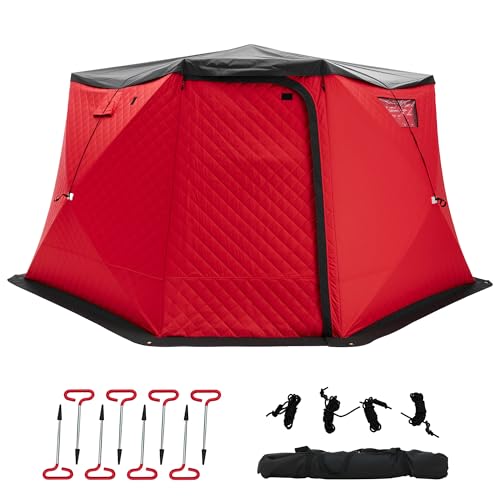
Best for: anglers seeking durable, all-season warmth with reinforced construction. The tent uses triple-layer fabric (Oxford plus cotton and lining) with an Oxford waterproof rain cover, designed to block wind, snow, and rain while maintaining warmth. Heavy-duty ice anchors and wind ropes secure it in challenging weather.
Why chosen: The fabric and construction offer robust wind resistance and tear resistance in harsh winter environments. Limitation: Triple-layer fabric can add weight and bulk, so consider packing space and transport needs.
Nordic Legend Explorer Double Ice Shelter (8)

Best for: large teams that need a wide, double-twin layout for multiple anglers. The shelter is described as a double twin with a wide bottom, featuring a 94″ x 180″ footprint and an 80″ height, designed to maximize interior space and comfort for extended outings.
Why chosen: Its double design approach offers expansive seating and gear space, making it ideal for big groups. Limitation: The larger size may require more extensive setup space and stronger anchors in windy locations.
Buying Guide: Key Considerations for Choosing a Double Ice Fishing Tent
- Size and capacity: Determine how many anglers you typically fish with and ensure interior dimensions support seating, gear, and a heater if used.
- Insulation and fabric: Look for double-layer or triple-layer fabrics and weatherproof coatings to maximize warmth and block wind and snow.
- Setup speed and style: Hub-style pop-up designs offer the fastest setups, while others may require more time. Consider solo setup vs. group setup needs.
- Ventilation and airflow: Removable windows or vents help manage condensation and air quality inside the shelter.
- Anchoring system: Ensure the shelter includes reliable ice anchors and ropes, and assess performance in expected wind conditions.
- Portability: Carry bags, weight, and packed dimensions affect transport to remote ice spots.
- Durability: Reinforced seams, wind ropes, and zipper quality impact long-term performance in cold, wet environments.
Frequently Asked Questions
- What size is best for a 6–8 person ice shelter? Look for interior dimensions around 11–12 feet long and at least 6 feet wide with height of 6–7 feet to accommodate chairs and gear.
- Are hub-style tents easier to set up alone? Yes, hub designs typically require minimal time and effort and can be set up by a single angler in under a minute.
- Which insulation level matters most in very cold environments? Insulation level and fabric layering have the biggest impact on warmth; seek double-layer or triple-layer insulation with windproof fabric.
- What are common drawbacks of larger shelters? They require more space, heavier transport, and more robust anchoring in windy weather.
- Should I prioritize ventilation or maximum wind protection? A balance of ventilation and insulation reduces condensation while maintaining warmth; choose models with removable windows or vents.
- How important are ice anchors? Essential in windy conditions; ensure the shelter includes robust anchors and staking options compatible with your ice type.