Looking for a true two-person sleeping bag that performs in cold conditions? This guide highlights five double sleeping bags ideal for winter camping, family trips, or car camping where extra warmth and space matter. Each option targets a specific buyer type—families, couples, tall sleepers, or budget-conscious campers. Below, find a quick product comparison and a buying plan to help you pick the right fit for your cold-weather adventures.
| Product | Best For | Insulation Type | Notable Feature |
|---|---|---|---|
| Kelty Tru.Comfort Doublewide 2P 20 Degree | Couples, family trips, shared warmth | Synthetic Cloud Loft | Removable top layer + built-in blankets |
| Naturehike Flannel Queen Size Double | All-season versatility, larger sleeper | Flannel inner with warm insulation | Two included pillows and adjustable 4-season modes |
| TETON Mammoth 20 Degree Double | Family camping, base camp | Poly-flannel with dual-layer | Very spacious and easy to compress into sack |
| MEREZA Flannel Double Sleeping Bag | Softness-focused warmth, cold nights | 100% flannel | OEKO-TEX certified, soft touch |
| FORINBUY 0 Degree Flannel Double Sleeping Bag | Cold-weather couples, RV travelers | 3D hollow synthetic insulation | Waterproof shell, independent foot zipper |
Summary: The Kelty and TETON options prioritize extra space and dual-layer warmth for family or shared camping, while Naturehike, MEREZA, and FORINBUY offer flexible modes and warm flannel interiors for all-season use or tougher cold snaps. Consider space, weight, and how you’ll ventilate when choosing.
Kelty Tru.Comfort Doublewide 20 Degree Sleeping Bag

Best for couples and family camping where space and shared warmth matter. Kelty’s model features independent ventilation, a removable top layer, and two built-in blankets for adjustable comfort. The Cloud Loft synthetic insulation provides warmth with quick-drying performance, while the oversized shoulder space (64 inches) and total length (84 inches) support relaxed sleeping arrangements. The included silky bag liner adds a smooth feel. The main limitation is its bulk and higher packing size compared to lighter, single-purpose bags, which may matter on backpacking trips.
Naturehike Flannel Double Sleeping Bag

Best for all-season versatility with a cozy interior. This double bag unfolds to a generous 87 by 63 inches and includes two soft pillows. It can function as a double cover for milder conditions or as two separate layers for colder climates. The adjustable modes make it easier to tailor warmth. A possible drawback is the extra size when used as a single sleeper or in tight camping spaces.
TETON Mammoth 20 Degree Double Sleeping Bag

Best for family camping and base camps where extra space and warmth are priorities. The Queen-size dimensions (94×62 inches) emphasize room to spread out or cuddle with children. A long compression sack aids packing, and dual-side zippers enable easy entry from either side. A limitation is that it may be too large for compact tents or hikers who value ultralight gear.
MEREZA Flannel Double Sleeping Bag
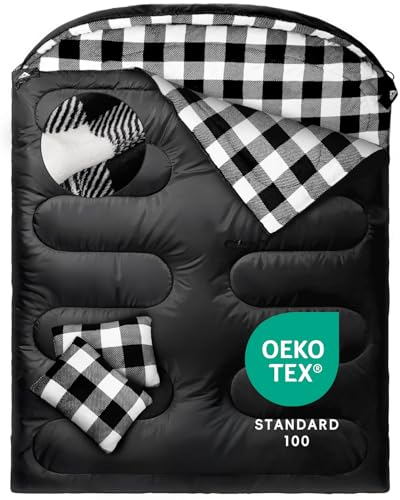
Best for warm, soft sleep with a focus on comfort. Made from premium 100% flannel, its brushed surface provides warmth retention and a cozy feel. OEKO-TEX certification adds assurance for sensitive sleepers. The trade-off is bulkier fabric compared with synthetic options, which can affect packing size for backpacking trips.
FORINBUY 0 Degree Flannel Double Sleeping Bag

Best for extra-cold nights where maximum warmth and moisture protection matter. The 3D hollow synthetic insulation provides reliable warmth, while the waterproof outer shell helps in damp conditions. An independent bottom zipper expands foot space for natural movement. Choose this if you expect consistently cold or damp nights; avoid if you need ultralight gear for backpacking.
Buying Guide: Key Considerations For Double Winter Sleeping Bags
What size should you pick? Double bags come in queen-sized or larger formats. For small tents, measure interior space and choose a bag with a compact footprint or a bag that compresses well. Consider bed-width compatibility with your sleeping surface so you don’t feel confined.
What insulation and warmth level matter? Synthetic insulations like Cloud Loft are quick-drying and affordable, while flannel interiors add warmth and softness but increase bulk. In truly cold conditions, look for bags rated for 0–20 degrees Fahrenheit with dual layers or quilts for supplemental warmth.
How important is ventilation? Independent top layers, dual zippers, and foot vents help balance heat retention and airflow to prevent overheating or condensation inside the bag.
How versatile should the bag be? Some double bags offer 3-in-1 configurations or the ability to split into two sleeping sacs. This can be valuable for mixed camping scenarios—like family trips where kids sleep inside sometimes and adults want separate comfort on others.
What are the packing and portability considerations? Larger, two-person bags require bigger packs or vehicle storage. Look for bags with easy-to-use compression sacks and shoulder straps for transport. Durability against moisture and abrasion is a plus for outdoor use.
FAQ
- Are double sleeping bags better than two separate bags? Double bags provide shared warmth and space, which is convenient for couples or families, but two separate bags can offer more individual temperature control and easier cleaning.
- What temperature rating should I look for? For winter use, target bags rated near 0 to 20 degrees Fahrenheit, with dual-layer insulation for extra warmth.
- Is flannel interior good for all-weather use? Flannel interiors add warmth and softness but can be bulkier. They’re ideal for colder nights and casual camping, not ultralight backpacking.
- Can double bags be used indoors as a blanket alternative? Yes, for sleepovers or as a large blanket alternative, though size may be impractical for day-to-day indoor use.
- How do I maintain warmth in a double bag? Ventilate during warmer nights, use the removable top layer if available, and ensure proper layering with sleeping pads underneath for insulation from the ground.
- What should I consider about the bag’s shell material? Waterproof or water-resistant shells help in damp environments; breathable shells enhance comfort in varied weather but may require additional layering for warmth.