If you’re searching for a warm, plush sleeping surface that folds up for easy transport, a down-filled or faux-down style sleeping mat can deliver cozy comfort without bulk. These mats are ideal for campers, car travelers, or hotel guests who want a cushioned, warm layer on hard floors. The top picks below are selected for warmth, support, portability, and stability on varied surfaces. They’re best for: backpackers seeking a compact option, families hosting sleepovers, car campers needing a guest bed substitute, and anyone prioritizing a soft, insulating top layer during cool nights.
| Product | Best For | Notes |
|---|---|---|
| Thick Camping Sleeping Pad | Warmth-focused campers | 3″ thick faux rabbit fur; wide and stable |
| CYMULA Memory Foam Camping Mattress Pad | All-season comfort with memory foam | OEKO-TEX certified materials; water-resistant bottom |
| Uniqwamer Thick Camping Sleeping Pad | Double-wide comfort for couples | 74.8″ x 27.56″; plush lamb fleece top |
| ATEPA Self Inflating Sleeping Pad | Backpackers seeking ultralight warmth | R-value 2.3; self-inflating; compact |
| MOXILS Sleeping Pad | Inflatable, quick setup | Built-in pump; 75″ x 25″ |
The following five mats represent a range of sizes, materials, and design focuses—from plush faux fur to memory foam and self-inflating options. Each section includes who benefits most, why it was chosen, and a practical caveat to consider.
Thick Camping Sleeping Pad With Faux Rabbit Fur

This 3-inch thick sleeping pad provides ultimate camping comfort and warmth with a plush faux rabbit fur top. It’s designed for cot or floor use and aims to transform any campsite, car trip, or guest room into a cozy retreat. Best for campers who prioritize a luxurious feel and extra insulation on tent floors or hard surfaces. The pad is wider than typical mats, measuring 75″L x 28″W x 3″Th, which supports longer sleepers and those who share space with a partner. A non-slip surface helps it stay in place on various terrains, giving you a stable sleeping surface to minimize shifting during the night. Caution: bulkier than compact foam pads, so consider pack size if you’re minimizing weight and space for backpacking.
Who it’s best for: Individuals who want a soft, warm, and stable surface for tent floors or car camping, and those who value extra width for side sleepers.
CYMULA Memory Foam Camping Mattress Pad
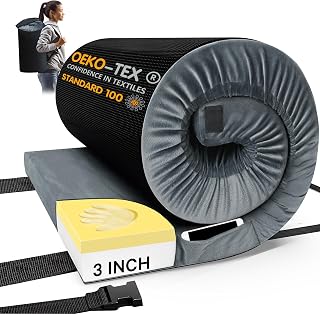
CYMULA’s pad uses high-density memory foam that adapts to body shape, providing enhanced pressure relief and support compared with traditional sleeping pads. It’s described as a high-level sleeping experience that helps the body rest and stay energized after a night on uneven ground. Safety and materials are emphasized through OEKO-TEX certification and a fiberglass-free flame-retardant layer, aiming to reduce skin irritation while improving environmental impact. The bottom is waterproof and non-slip to handle damp or rocky surfaces. Caution: memory foam can be less breathable than foam-only designs in very warm conditions, potentially a warmer night surface.
Who it’s best for: Sleepers who want contouring support, enhanced warmth, and a safer, chemical-free fabric choice for extended trips.
Uniqwamer Thick Camping Sleeping Pad (Double-Sided)

This mat offers a double-sided design with a plush lamb fleece top for luxurious warmth and a blue star-patterned bottom for durability and water resistance. The 74.8×27.56-inch size provides comfortable space for one sleeper who wants a generous surface or for sharing with a small child on a guest bed. It’s marketed as versatile for indoor and outdoor use, suitable for camping cots, tent floors, or casual home use as a guest bed. Caution: not as compact as ultralight pads, so packing efficiency can be a consideration for hikers with strict space limits.
Who it’s best for: Couples or solo campers who want a premium, double-sided surface that prioritizes warmth and surface stability, with strong versatility for indoor use as well.
ATEPA Self-Inflating Sleeping Pad

ATEPA offers a self-inflating sleeping pad that weighs about 1.65 pounds and packs to a compact size, ideal for minimalist backpackers who still want warmth. With an R-value of 2.3, it provides reliable insulation from cool ground conditions, making it suitable for three-season use. The foam core is designed to trap heat and maintain warmth during cool nights. It also features a 3D-sculpted foam design to distribute pressure evenly for side and back sleepers. Caution: self-inflating pads can be more susceptible to punctures or valve issues if punctured or mishandled during setup.
Who it’s best for: Lightweight hikers prioritizing warmth per ounce, with a compact packable footprint for multi-day treks.
MOXILS Ultralight Inflatable Sleeping Pad

The MOXILS pad emphasizes an inflatable design with a built-in pump for quick setup, delivering a 75″ x 25″ sleeping surface and a total weight suitable for backpacking. It’s positioned as a practical option for those who want fast setup without carrying separate pumps or heavy gear. The surface is designed for durability and weather resistance, with a compact carry bag and repair kit included for field adjustments. Caution: taller sleepers may find the 25″ width tighter than wider pads, depending on sleeping style.
Who it’s best for: Backpackers who value rapid inflation, compact packing, and a reliable traveling surface without external pumps.
Buying Guide: Key Purchase Considerations
What size do you need?
- Standard vs. extra-wide: If you’re tall or sharing the pad, choose a wider model to avoid overlap or a cramped sleep.
- For campers who use cots, measure the cot length and width to ensure the mat fits with stability on uneven surfaces.
What insulation level is right?
- R-value guidance: look for R-value around 2.0–2.3 for three-season warmth; higher values are better for cold nights outdoors.
- Consider climate: milder environments may prioritize comfort with a plush surface; harsher climates benefit from thicker insulation.
Materials and safety.
- Faux fur or plush tops provide comfort, but consider weight and heat retention if you’re a warm sleeper.
- Memory foam and laminated surfaces offer contouring support but can add weight and require careful storage to prevent moisture damage.
Portability and setup.
- Self-inflating vs. inflated with a pump: self-inflating pads balance weight and convenience; inflatable pads offer fast setup but may need a pump or foot-based inflation.
- Pack size: ensure the folded dimensions fit your pack or vehicle space for travel comfort.
Durability and terrain compatibility.
- Bottom materials: waterproof or water-resistant bottoms perform better on damp or rocky ground.
- Surface wear: plush tops may compress over time with frequent use; check care instructions for longevity.
Frequently Asked Questions
- What is the advantage of a faux-down sleeping mat?
- Are self-inflating sleeping pads warmer than air-filled ones?
- How do I choose the right size for a sleeping mat?
- Can these mats be used indoors as guest beds?
- What care is required for plush tops?
- Do these mats work on rocky or uneven ground?
Faux-down mats offer plush comfort and warmth without real animal down. They’re typically easier to clean and can be less expensive than high-end down products, while still delivering a soft sleeping surface.
Self-inflating pads often provide better insulation due to their foam core which traps heat, though warmer results depend on thickness and materials used.
Measure your sleeping space and mattress/bed length. For solo sleepers, 72–75 inches is common; for couples, consider 74–78 inches or wider options if available.
Yes. Several mats are marketed for indoor versatility, including home use as floor cushions or temporary guest beds.
Follow the manufacturer’s care instructions. In general, keep away from sharp objects, dry off moisture promptly, and store in a dry, ventilated area to prevent odor and mildew.
Most models include a non-slip or rugged bottom to handle uneven surfaces, but some materials may be less stable on very rough terrain. Choose a thicker or wider pad for difficult ground.