Looking for a reliable emergency water filter bottle? This guide highlights five top options ideal for hikers, campers, travelers, and anyone building a readiness kit. Each pick is evaluated for filtration strength, portability, and practicality in urgent situations. The best fits vary by user—seekers of rugged reliability, compact design, built-in navigation, or high-capacity filtration will find a clear match here.
| Product | Filtration Details | Best For |
|---|---|---|
| LifeStraw Personal | 0.2– micron filtration; removes bacteria, parasites; reduces microplastics | Lightweight solo travelers and bug-out kits |
| SurviMate 5-Stage Bottle | 0.01 μm hollow fiber UF; NSF/ANSI 42 & 372; built-in compass | Backcountry outings and navigation-focused hikers |
| 5 High-Capacity Emergency Water Straws | Five filters; >99.99% bacteria and parasites; 0.1 μm microplastics | Group camping and extended travel kits |
| Bachgold Squeeze Foldable Bottle | Dual-stage filtration; 0.2 μm membrane; ultralight | Thru-hikes and ultralight explorers |
| SurviMate 5-Stage Bottle (Second Model) | 0.01 μm UF membrane; NSF/ANSI 42 & 372; built-in compass | Compact kits with long-term use |
LifeStraw Personal — Water Filter For Hiking And Emergency
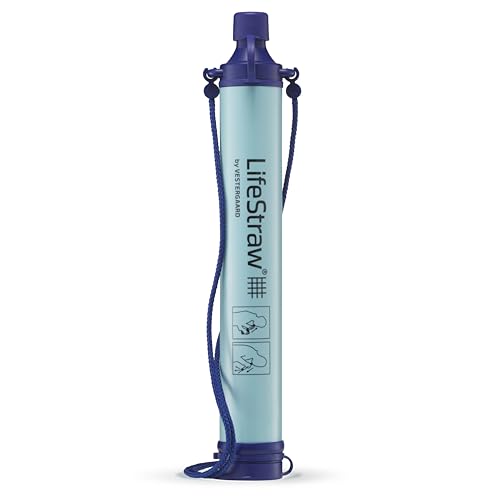
The LifeStraw Personal filter removes 99.999999% of waterborne bacteria and 99.999% of waterborne parasites, making it a strong choice for solo travelers and emergency kits. It also reduces turbidity and microplastics down to 1 micron, supporting safer drinking water from natural sources. Best for lightweight, no‑fuss filtration on the trail or in a survival scenario, where compact gear matters. Caution: replacement filters may be required over time; plan for spares in long trips.
SurviMate 5-Stage 0.01μm Ultra-Filtration Bottle

This bottle uses a five-stage filtration system with a 0.01 μm hollow fiber UF membrane, delivering high filtration precision beyond typical 0.2 μm systems. NSF/ANSI 42 & 372 certification adds confidence for chlorine removal, heavy metals, and odors. Includes a built-in compass for navigation. Best for explorers who want robust filtration plus directional aid; limit is the single-bottle design that may require refills for larger groups.
5 High-Capacity Emergency Water Straws

This five-pack provides multiple filtration stages, removing >99.99% of bacteria and parasites and down to 0.1 micron for microplastics. The compact, light design makes it suitable for group readiness kits or travel packs where you want redundancy. Best for preparedness scenarios where you need multiple filtration options; caution: the overall flow may be slower during heavy use with several people sharing filters.
Bachgold Squeeze Foldable Bottle
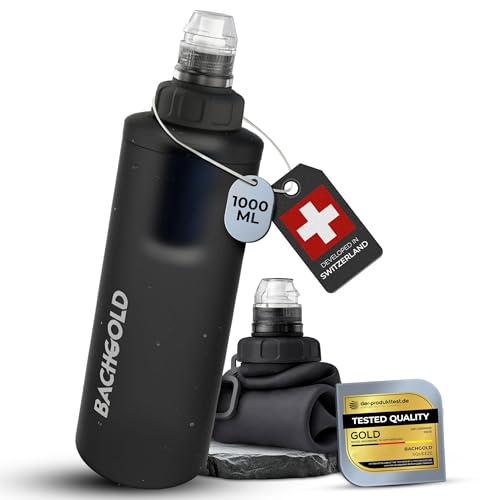
The Bachgold Squeeze combines ultralight portability with dual-stage filtration, featuring a 0.2‑micron membrane and an electro-adsorptive nanofiber layer. It’s designed for backpackers who want fast, no-fuss operation with minimal weight. Best for ultralight hikers and travelers who value quick access to drinkable water from uncertain sources; choose this if you prioritize foldable design and immediate drink-from-water flow. Limitation: smaller capacity may require more frequent refills on longer trips.
SurviMate 5-Stage Bottle (Second Model)

Second SurviMate model with similar 5-stage filtration and NSF/ANSI 42 & 372 certification. It includes a built‑in compass for navigation. Best for travelers who want a compact water bottle with long-term filtration reliability; avoid if you need a larger capacity bottle for an extended trek without refills.
Waterdrop Gravity Filter Straw
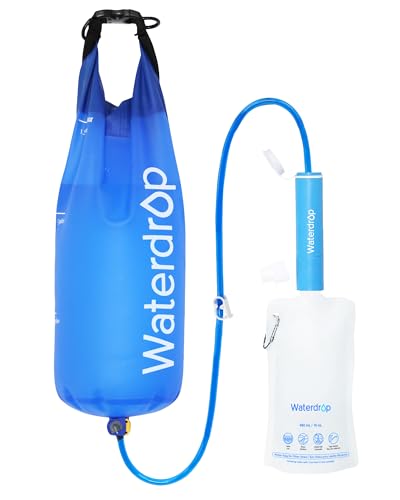
The Waterdrop gravity-fed system pairs a 5-stage filtration with a large 1.5-gallon bag. It can filter up to about 1,400 gallons and supports a high flow rate. Best for group camping or emergency kits where a gravity-fed setup provides steady supply. Caution: heavier to carry than a single-use bottle.
Buying Guide
Filtration level and pore size: For solo travel, 0.01 μm or better membranes offer strong protection against bacteria, parasites, and microplastics. For groups, consider multi-filter or gravity systems to share the load.
Filtration stages: Multi-stage filters (5-stage) typically deliver cleaner water and remove a wider range of contaminants, including chlorine and odors. Built-in accessories like compasses add navigational value for outdoor use.
Certifications: NSF/ANSI 42 and 372 certifications provide independent verification of taste improvement, lead-free materials, and contaminant reduction. Look for products with third-party testing to ensure reliability.
Portability and weight: Ultralight bottles are ideal for long treks, while gravity filters suit car kits or base camps. Foldable designs save space when packing for emergencies.
Capacity and lifecycle: Assess how much water you need per day and how many gallons the filter can process before replacement. Higher-capacity systems reduce the need for frequent replacements in prolonged scenarios.
Special features: Built-in navigation aids (like compasses) can be useful in unfamiliar terrain. Carbon filtering helps improve taste and odor but may not remove all contaminants; combine with other filtration stages if water quality is uncertain.
FAQ
- What is the best emergency water filter for solo travel? A lightweight bottle with a 0.01 μm membrane (e.g., SurviMate 5-Stage or LifeStraw Personal) balances portability and strong filtration for single travelers.
- Do these bottles remove microplastics? Yes, several models advertise microplastic reduction to sub-micron levels, notably down to 0.01 μm in some 5-stage systems.
- Is a built-in compass useful in an emergency water bottle? It can help with navigation in unfamiliar terrain; consider models that include compasses if you frequently hike off-trail.
- Should I choose a gravity filtration kit over a bottle? Gravity systems are better for group use or base-camp setups, while bottles are more portable for individuals.
- Are NSF/ANSI certifications necessary? Certifications provide independent validation of contaminant reduction and materials, improving trust in filtration claims.