Looking for a foam bed roll that delivers reliable comfort on campsites, trails, or impromptu sleepovers? This guide highlights five top foam camping sleeping pads, each designed to cushion hard ground while staying portable. Ideal for hikers, car campers, and weekend explorers, these options balance softness, support, and packability. The list covers mats with memory foam, foldable self-inflating designs, and traditional foam pads to suit different sleeping preferences and setups.
The following table summarizes key picks to help you compare at a glance, including who each product is best for and what sets it apart.
| Product | Best For | |
|---|---|---|
| CYMULA Memory Foam Camping Mattress Pad | Car campers and sleepover use | High-density memory foam with OEKO-TEX materials; portable with travel bag |
| Gaialoop Memory Foam Camping Mattress Pad, 4-Inch | Side sleepers needing extra thickness | 4″ thick support with dual-layer foam and washable cover |
| Memory Foam Camping Mattress Pad, 3-Inch | Budget-conscious hikers | Compact 3″ thickness with non-slip bottom and easy roll-up |
| Memory Foam Camping Sleeping Pad (Self-Inflating) | Backpackers and multi-day trips | Self-inflating, high-density foam, 10-second expansion |
| Wakeman Foam Sleeping Pad, 0.75-Inch | Lightweight, casual campers | Low-profile foam with non-slip surface and waterproof finish |
CYMULA Memory Foam Camping Mattress Pad
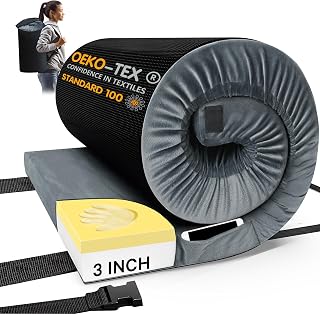
Best for comfort-seeking campers who value soft support and safety. This memory foam pad adapts to body shape and weight, providing full protection and a high-level sleeping experience on camping trips or sleepovers. The OEKO-TEX certified materials and fiberglass-free flame-retardant layer offer safety benefits for sensitive users and health-conscious buyers. A waterproof, non-slip bottom helps the pad stay in place on uneven ground, making it a solid choice for tents, car camps, and outdoor sleep setups.
Who it’s for: side sleepers or anyone prioritizing cushion and stability while camping. Why selected: combines memory foam comfort with safety certifications and convenient portability. Caution: may be heavier than basic foam pads due to high-density materials, which could affect packing weight for ultra-light backpackers.
Gaialoop Memory Foam Camping Mattress Pad, 4 Inch

Best for deep, stable support during rough ground conditions. The 4-inch thickness uses a layered foam system with OEKO-TEX certification, offering robust contouring for various sleeping styles and body weights. The removable, washable cover with a waterproof inner layer helps protect the foam from moisture and wear, extending lifespan on frequent camping trips.
Who it’s for: campers who want a plush sleep surface and easy maintenance. Why selected: thicker profile provides improved pressure relief on uneven terrains. Caution: heavier and bulkier than thinner pads, which may reduce packability for minimalist travelers.
Memory Foam Camping Mattress Pad, 3 Inch

Best for budget-minded campers who still want a memory foam experience. This 3-inch pad delivers adaptable support with high-elastic memory foam and high-density base foam. The dotted rubber bottom helps prevent shifting on tents or ground, and the detachable cover simplifies cleaning. It balances comfort with portability for casual trips and light expeditions.
Who it’s for: hikers or car campers seeking a compact memory foam option. Why selected: cost-effective option without sacrificing core memory foam benefits. Caution: thinner profile than the 4″ option, so it may offer less pressure relief for heavier sleepers or very hard ground.
Memory Foam Camping Sleeping Pad, Self-Inflating

Best for multi-day trips where quick setup matters. This pad combines self-inflating technology with memory foam to deliver cloud-like comfort and even weight distribution. It folds down into a compact size and inflates quickly, supported by a high-density foam blend. A waterproof, easy-clean cover helps protect the surface from moisture and debris.
Who it’s for: backpackers and campers who value fast setup and reliable insulation. Why selected: the self-inflating feature reduces time and effort on arrival. Caution: self-inflating mechanisms may require occasional maintenance to maintain optimal inflation, especially in humid environments.
Wakeman Foam Sleeping Pad

Best for casual campers who prioritize portability and a low-profile sleeping surface. The 0.75-inch thick foam pad offers lightweight protection from cold ground and insulates with a waterproof surface. Non-slip texture helps keep the pad in place on cots or tents, making it a simple, reliable option for family camping or sleepovers.
Who it’s for: families or solo travelers needing a straightforward, compact foam pad. Why selected: affordable basic foam option with practical features. Caution: thinner foam provides less cushioning on rocky or uneven ground compared with thicker models.
Buying Guide
What to consider when choosing a foam bed roll for camping:
- Thickness and support: Thicker pads (2–4 inches) deliver more cushioning, especially for side sleepers or uneven terrain. Thinner pads are lighter and more compact but offer less impact absorption.
- Material and safety: Look for memory foam or high-density foam with safety certifications (like OEKO-TEX). A non-slip bottom helps keep the pad in place, while waterproof covers protect against moisture.
- Portability and setup: Self-inflating designs save setup time. Foldable options with carry straps and storage bags maximize packing efficiency for backpackers.
- Durability and maintenance: Removable, washable covers extend life and simplify cleaning. Consider waterproof coatings or liners to resist dew or rain exposure.
- Intended use: Car camping often prioritizes comfort and ease of transport, while backpacking favors lighter weight and compact packing. Choose accordingly.
Frequently Asked Questions
- What is the difference between memory foam and traditional foam pads?
Memory foam contours to the body for pressure relief, while traditional foam provides more structured support and can be firmer. - Are foam sleeping pads waterproof?
Many have waterproof or water-resistant covers, but the foam itself is not typically waterproof; a waterproof cover protects the surface from moisture. - How thick should a camping foam pad be for side sleepers?
Most side sleepers benefit from 3–4 inches of thickness to cushion shoulders and hips adequately. - Can I wash the cover of a foam camping pad?
Yes, most pads with removable covers allow machine washing or spot cleaning. Always follow care instructions. - Is a self-inflating pad better than a non-self-inflating foam pad?
Self-inflating pads offer faster setup and adjustable firmness, while non-self-inflating pads can be simpler and lighter. - Which foam pad is best for backpacking?
Look for a lightweight, compact pad with a balance of thickness and pack size; self-inflating options often work well for backpackers.