Answering the need for reliable, portable power, folding solar panels for camping provide compact, lightweight charging on sunny days. These panels suit hikers, RV campers, and van lifers who want off-grid energy without heavy gear. This guide highlights five top options, explaining who each is best for and why. A quick buyer table helps compare key specs at a glance.
| Product | Watts | Best For | Notes |
|---|---|---|---|
| SOLUPUP 30W Foldable Panel | 30W | Lightweight day trips, solo hikers | IPX5 waterproof, USB-C/USB-A |
| FlexSolar 40W Foldable Panel | 40W | Lightweight backpacking, small devices | PD-C/USB-A outputs, ultra-portable |
| Renogy 200W Portable Panel | 200W | RVs, off-grid setups, higher power needs | Magnetic fold design, multi-port |
| HQST 200W Ultra-Light Panel | 200W | Camping with power stations, emergency prep | IP67 rating, lightweight |
| DOKIO 150W Portable Panel Kit | 150W | Power stations, RVs, trips with 12V systems | Standalone controller included |
SOLUPUP 30W Foldable Solar Panel for Camping

The SOLUPUP 30W panel is a compact, foldable solar charger designed for casual campers and hikers who need dependable charging in bright sun. It uses monocrystalline cells to deliver high energy conversion efficiency, allowing faster charging for small devices via USB-A and USB-C. A built-in smart chip identifies connected devices to optimize speed and safety, reducing risks of overcurrent or short circuits. The panel also features an auto-reconnect function for uninterrupted charging when sunlight returns after a temporary interruption.
Best for: solo campers or day hikers who want a lightweight, easy-to-pack solar option for phones, power banks, or small gadgets. Choose this if you prioritise compact size and simple USB charging in fair weather. Caution: limited total output means larger devices or multiple devices may charge slowly or need an additional battery pack.
FlexSolar 40W Foldable Solar Panel Charger

This 40W FlexSolar panel offers a practical balance of power and portability. It supports PD 3.0 USB-C and QC3.0 USB-A outputs, enabling fast charging for phones, tablets, and small power banks, plus a 19V DC port for direct power needs. An IC chip provides safe, automatic device detection and protection against overcurrent and short circuits. Its foldable design and light weight suit backpackers and campers who want more than a basic USB charger without carrying a heavy kit.
Best for: campers who need more watts than a basic panel but still want portability and reliable USB-C PD charging. Better for: charging a mix of phones and compact power stations in fair weather. Caution: no built-in energy storage; use with a compatible external battery or power station.
Renogy 200W Portable Solar Panel

Renogy’s 200W foldable panel is designed for campers seeking higher output in limited space. Its 16BB N-Type cell technology delivers up to 25% efficiency, enabling more energy capture than standard panels. The panel folds compactly with a magnetic closure for easy setup and storage. It offers USB-C PD (45W max) and USB-A ports for charging multiple devices, and MC4 output to connect with portable power stations or batteries.
Best for: RVs, vans, and off-grid setups that require substantial daytime power for devices, cameras, or small laptops. Choose this if you need higher wattage in a foldable form. Caution: heavier than smaller panels; plan for transport space and mounting needs.
HQST 200W Ultra-Light Portable Panel
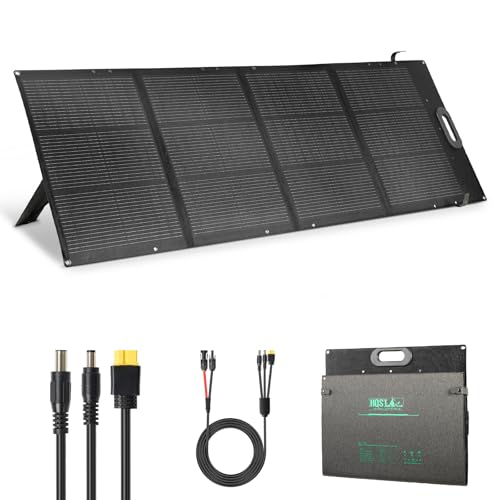
The HQST 200W panel emphasizes ultralight portability without sacrificing power. Built with next-gen 16BB N-Type cells, it achieves up to 25% efficiency and folds down to a slim profile. It includes a 4.9 ft 3-in-1 adapter cable compatible with many popular power stations. The foldable design, coupled with built-in buckles, makes storage and transport straightforward for camping trips, RVs, or emergency backups.
Best for: campers using power stations or backup batteries who want a balance of high wattage and portability. Better for: setups that benefit from a lighter panel and flexible mounting. Caution: higher wattage may require more space when unfolded and set up for optimal sun exposure.
FlexSolar 40W Foldable Panel With USB-C and USB-A

This panel emphasizes smart charging with dual fast-charging outputs and a 19V DC port. It includes an automatic device-detection IC and safety protections against overcurrent, overheating, and short circuits. Its foldable, ultra-light design makes it easy to carry on hikes or camping trips, and the compact form fits easily into backpacks or emergency kits.
Best for: campers needing reliable USB-C and USB-A charging from a compact panel. Choose this if you value smart charging and safety features. Caution: no built-in energy storage; plan to pair with a battery or power station for extended use.
DOKIO 150W Portable Foldable Panel Kit

The DOKIO 150W kit targets campers who need substantial on-the-go power with a standalone controller. It folds into a compact form and includes a 9.8 ft cable to position the panel in sun while keeping the controller shaded for safer operation. The included controller provides full protections and is designed to be easy to replace or upgrade later.
Best for: power-intensive use in RVs or larger camping setups where more wattage and a separate controller are advantageous. Better for: users who want a complete folding kit with safety features and flexibility in mounting. Caution: heavier and larger when unfolded; ensure adequate storage space in vehicles.
Buying Guide: Key Considerations For Folding Camping Panels
What size and wattage should you pick? For solo travelers, 20–40W panels are often enough to top up phones and small devices. Groups or RV setups benefit from 100–200W panels. Consider how quickly you need to recharge and whether you plan to run a larger device or a small power station.
Is portability more important than power? Ultra-light, compact panels are easier to carry but may offer less total output. Heavier panels typically deliver more watts but require more packing space and setup time.
Do you need multiple outputs? USB-C PD, USB-A, and DC outputs expand compatibility with phones, tablets, cameras, and power stations. A panel with built-in smart charging and safety protections reduces risk during outdoor use.
Protection and durability matter. Look for IP ratings (water/dust resistance), rugged coverings, and sturdy kickstands or mounting options to handle wind, rain, or uneven terrain.
What about energy storage? Panels alone won’t store power. If you need off-grid light or extended use, pair with a portable power station or battery pack to store energy for cloudy days or overnight use.
FAQ
- Q: Do folding solar panels work in cloudy weather? A: Yes, they still generate electricity, but output drops with less sunlight. Higher-efficiency cells help maximize energy under shade.
- Q: Can I charge a laptop with these panels? A: Some panels deliver PD-enabled USB-C power or high-widelity DC outputs that can power laptops, but check device wattage and panel output.
- Q: Are folding panels waterproof? A: Many have IP ratings or dustproof features, but you should still protect them from heavy rain when possible.
- Q: Do I need a battery or power station? A: For continuous off-grid use, pairing with a power station or battery increases reliability and allows charging during non-sunny periods.
- Q: How should I store folding panels? A: Store folded with the protective cover in place, away from sharp objects, and in a dry location to preserve cells and connectors.