Front-loading backpacking packs offer quick access to essentials without removing the entire pack. This guide compares five front-loading and versatile hiking packs, highlighting who benefits most from each design. Ideal buyers include day hikers needing rapid access, weekend campers seeking organized storage, and travelers prioritizing lightweight setups. The table below helps you compare key features at a glance.
| Product | Capacity | Best For | |
|---|---|---|---|
| Koculemi Tactical Hydration Backpack | 2L bladder + roomy pockets | Trail runners, cyclists, short hikes | Detachable front pouch for quick-access items |
| IGOLUMON 60L Hiking Backpack | 60L | Longer trips, multi-day uses | Ergonomic torso adjustment and light frame |
| Eberlestock Brooks 3500 | 3,626 cu in | Backcountry hunts and multi-day trips | Roll-top with front access and EMOD compatibility |
| N NEVO RHINO 35L | 35L | Lightweight day hikes, travel | Breathable suspended back panel for airflow |
| Mardingtop 75L Molle | 75L | Expedition-style trips, heavy gear | Rain cover and MOLLE webbing for modular gear |
Koculemi Tactical Hydration Backpack

The Koculemi backpack centers on rapid access and durable build. It includes a 2L water bladder and a detachable front tactical pouch, designed to keep small essentials like a phone, wallet, or gels within arm’s reach. This makes it a practical choice for cyclists, climbers, or hikers who pause frequently to grab items without pulling off the pack. The two roomy backside pockets enable carrying extra layers, a compact first-aid kit, snacks, or a portable charger, supporting 4–6 hour rides or day hikes where light packing is key.
Who this is best for: casual to mid-level hikers and cyclists who value quick access to essentials and a rugged, water-repellent shell. Why selected: the detachable front pouch and front-access design minimize interruptions on the trail or road. Caution: the overall capacity is more compact, so bulky gear may require careful packing.
IGOLUMON 60L Hiking Backpack

This 60L pack emphasizes capacity and comfort. Made from durable nylon, it is water-resistant and features reinforced seams and SBS zippers for rugged outdoor use. Its 22.5 x 13 x 9.8 inch frame provides a substantial cargo area while keeping weight manageable. A multi-compartment layout supports organized packing, including a bottom pocket for shoes and multiple side pockets for quick grabs. The torso adjustment and built-in support panel help distribute weight, reducing back fatigue on longer trips.
Who this is best for: hikers planning multi-day trips or weekend falls back on a single pack. Why selected: the combination of high capacity, structured compartments, and ergonomic fit makes it a versatile option for varying environments. Caution: bulkier when fully loaded; you may need to adjust straps to maintain comfort on steep ascents.
Eberlestock Brooks 3500 Pack
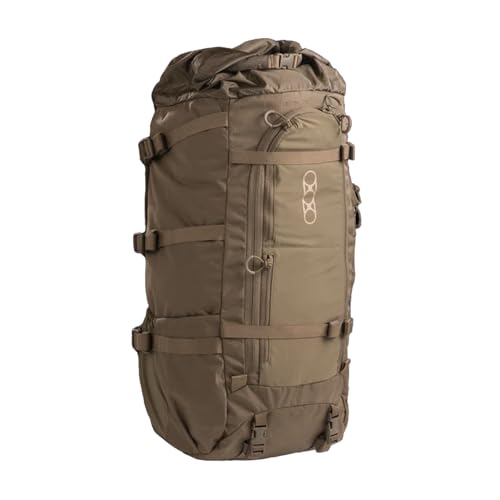
The Brooks 3500 is built for ultralight, modular use. It offers 3,626 cubic inches of storage in a roll-top design with front zip access and stretch pockets, making it suitable for backcountry hunts and extended treks. It is designed to integrate with Eberlestock EMOD or Mainframe systems, allowing a customized load-hauling setup. This pack suits travelers who want a lightweight base with expandable capacity and adaptive attachment options.
Who this is best for: backcountry travelers who prioritize modularity and quick access when carrying essentials. Why selected: its roll-top layout and front-access pockets provide flexible capacity management. Caution: compatibility depends on using EMOD/Mainframe components sold separately, which may affect overall setup.
N NEVO RHINO 35L Internal Frame

The NEVO RHINO 35L emphasizes breathable comfort and light weight. With a dry rain cover, external compartments, and an internal frame, this pack balances load distribution with airflow. It measures 31×14.5×8.6 inches and weighs around 2.67 pounds, offering sufficient space for 2–5 day trips while keeping weight down. The suspension system promotes airflow and reduces back sweat, aided by a supportive back panel and padded straps.
Who this is best for: travelers seeking a lighter, breathable day-to-overnight pack. Why selected: reinforced seams and a built-in rain cover add practicality for variable weather. Caution: 35L capacity may be limiting for longer expeditions requiring substantial gear.
Mardingtop 75L Molle Internal Frame

This 75L pack targets serious expeditions with MOLLE webbing for modular gear, hydration compatibility, and a large hydration compartment for up to 3 liters. The pack uses 600D polyester and a rain cover, making it versatile across climates. It is designed to keep tools and trekking gear accessible via MOLLE attachments, ideal for campers who need to tailor their kit to the environment. The front loading or accessible compartments help in quick retrieval of essentials without fully unpacking.
Who this is best for: expedition hikers and tactical-style setups that require extensive modularity. Why selected: strong MOLLE framework and hydration compatibility offer high customization. Caution: heavier when fully loaded; plan weight distribution to avoid back strain on long ascents.
Buying Guide
What to consider when choosing a front-loading hiking pack
- Capacity vs. weight: Balance your typical trip length with expected weight. For day trips, 20–35L is common; for weekend trips, 35–60L; for longer expeditions, 60L or more.
- Access design: Front-loading or front-access compartments speed retrieval. Check whether pockets are detachable or fixed and how they affect balance.
- Fit and comfort: Look for adjustable torso length, padded straps, breathable back panels, and load distribution features to reduce fatigue.
- Durability: Material weight (denier), stitching quality, zippers, and water resistance determine long-term performance in variable weather.
- Hydration compatibility: If you rely on a bladder system, verify compatibility with bladder size and tube routing for easy sipping on the move.
- Modularity: MOLLE systems and attachment points allow customization for camping gear, trekking poles, or travel accessories.
- Weather readiness: Rain covers and water-repellent coatings help protect gear during sudden showers and dew.
How to compare options quickly
- Best for quick access: Packs with detachable pouches and front pockets.
- Best for high capacity: 60L–75L models for multi-day or expedition use.
- Best for weight-conscious travel: Ultra-light designs around 2–3 pounds with optimized frame.
- Best for modular gear: MOLLE-enabled packs support a customized setup.
Maintenance and care tips
- Clean with mild detergent after rugged use; air dry away from direct heat.
- Check zippers and seams regularly; repair or replace worn components to extend life.
- Store unloaded and dry to prevent mildew and fabric fatigue over time.
FAQ
- What capacity is best for weekend trips? A: 35–60L is typically ideal for a couple of days with clothing, food, and essential gear.
- Are front-loading packs less stable than traditional top-loading ones? A: Stability depends on weight distribution and torso fit; properly adjusted packs can be stable in varied terrain.
- Do I need a hydration bladder? A: If you value hands-free hydration during activity, a compatible bladder is beneficial.
- Can MOLLE packs carry bulky gear? A: Yes, with proper organization and attachment points, MOLLE packs can accommodate diverse items.
- How important is a rain cover? A: Important for protecting gear from rain and dew; ensure it’s included or readily available as an accessory.
- Is a reinforcing frame necessary? A: Internal frames help distribute weight; choose according to your load and comfort preferences.