If you’re outfitting an RV, you need a refrigerator that’s reliable on multiple power sources and fits your space. This guide highlights top gas and electric RV fridges that balance cooling performance, energy efficiency, and installation flexibility. Ideal buyers include full-time travelers needing propane compatibility, weekend campers seeking 12V operation, and RV owners who want a quiet, durable design for compact kitchens. Below, you’ll find concise product picks, each with who it’s best for and potential limitations. A quick buying table is included to compare core specs at a glance.
| Product | Power Options | Capacity | Best For |
|---|---|---|---|
| RecPro Gas & Electric (Black) | 110V-120V, 12V, propane | 6.3 cu ft | Multi-power flexibility and compact space |
| RecPro Gas & Electric (Stainless) | 110V-120V, 12V, propane | 6.3 cu ft | Modern finish with same multi-power versatility |
| Dometic Americana 8 cu ft | AC power primarily | 8 cu ft | Durable, design-focused with efficient lighting |
| Alpicool T50 53 Quart | 12V DC (vehicle power) | 53 qt / ~50 L | Dual temperature zones and portable versatility |
| RecPro 10 Cu Ft 12V | 12V DC | 10 cu ft | Large capacity with durable, travel-ready build |
RecPro 6.3 Cu Ft Gas & Electric Refrigerator — Black

This RecPro model offers multiple power options: 110V-120V, 12V, or propane. It is ideal for smaller RV layouts needing flexible installation. Best for: travelers who require propane as a backup or primary option and space-conscious campers. Limitation: the cooling performance may require pre-chilling for best results, so plan for a 12-hour pre-chill period before loading food.
RecPro 6.3 Cu Ft Gas & Electric Refrigerator — Stainless
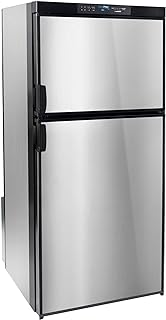
This stainless version mirrors the black model’s multi-power setup, offering the same versatility in a modern finish. Best for: RV interiors where a brighter, stainless aesthetic matters. Limitation: both finishes share identical operational notes; plan for proper ventilation when using propane mode.
Dometic DM2872RB1 Americana Refrigerator — 8 Cu Ft

Designed with a strong full surround steel frame, this model emphasizes cooling performance and durable construction. Best for: RV layouts that prioritize robust hardware and a quiet, bright interior thanks to the LED lighting. Limitation: primarily optimized for AC operation; consider a compatible power setup if you rely on 12V or propane in mobile scenarios.
Alpicool T50 Dual Temperature 53 Quart Refrigerator

Alpicool’s T50 provides dual temperature control, allowing one zone to be a fridge and the other a freezer. Best for: travelers needing versatile climate control for food and beverages, or for installations with limited space where dual-zone operation is beneficial. Limitation: relies on 12V power and may require careful temperature planning for long-term freezing needs.
RecPro 10 Cu Ft 12V RV Refrigerator

This larger, 10 cu ft model emphasizes a 12V design with frost-free operation and double-door access for easy loading. Best for: longer trips or families needing substantial food storage in a compact RV kitchen. Limitation: primarily 12V operation; ensure your battery system or alternator can support extended cooling, and verify fit for your cabinet space.
Buying Guide: How To Choose The Right RV Refrigerator
Choosing between gas, electric, or dual-power RV refrigerators depends on how you travel and where you camp. Consider the following questions to refine your pick.
- What power sources will you rely on most: propane, shore power, or 12V from the vehicle? A multi-power model offers flexibility in off-grid or full-hookup conditions.
- What is your available space and door configuration? Double-door designs provide easier access but may require more cabinet clearance.
- What storage capacity do you need for your travel style? If you cook regularly on the road, aim for 6–10 cu ft depending on kitchen layout.
- How important is interior lighting and energy efficiency? LED lighting and efficient compressors reduce power draw and improve usability in low-light conditions.
- Will you run the fridge in hot or cold climates? Frost-free or efficient insulation helps maintain stable temperatures with less energy use.
Installation And Usage Tips
- Pre-chill time: Plan a 12-hour pre-chill period for best cooling when loading fresh groceries.
- Ventilation: Ensure proper ventilation around propane-powered models to maintain safe operation and cooling efficiency.
- Door orientation: Check reversible door options to fit your RV’s layout and access needs.
- Power planning: For 12V systems, map battery capacity and alternator output to avoid unexpected shutdowns during travel.
Frequently Asked Questions
- What is the best RV fridge for full-time travelers?
- Do RV fridges run on propane safely?
- Is a larger capacity fridge worth it for weekends?
- Should I choose a fridge with LED lighting?
- Can I install a residential fridge in an RV?
- What maintenance is required for RV refrigerators?
Multi-power models that support propane, 12V, and AC are often preferred for reliability in varied camping conditions.
Yes, when installed and vented according to manufacturer guidelines, propane operation is designed for safe RV use.
It depends on space and how much you cook away from home; larger capacities provide more storage but require more space and power planning.
LED lighting improves visibility and uses less power, which is beneficial for off-grid camping.
Residential fridges are generally not recommended for RVs due to weight, power draw, and cooling design differences.
Regular cleaning, seal checks, and ensuring proper venting and insulation help maintain performance and efficiency.