Answering the needs of campers who want reliable location sharing, SOS coverage, and independent navigation, these GPS trackers are designed for off-grid terrain and remote trails. The best picks include compact satellite communicators for emergencies, handheld navigators with rugged builds, and device-agnostic messaging solutions. This guide highlights who each product is best for and why it stands out in camping scenarios, from weekend hikers to backcountry expeditions.
| Product | |||
|---|---|---|---|
| Garmin inReach Mini 2 | Satellite Communicator | Backcountry hikers who need global SOS | Two-way messaging and MapShare location sharing |
| Spot Gen 4 | Satellite GPS Messenger | Families and youth campers who value simple SOS and tracking | GPS tracking with SOS and movement updates |
| NiesahYan Handheld GPS | Rugged handheld navigator | Solo trekkers needing precise multi-GNSS positioning | Sunlight-readable display and multi-GNSS support |
| ZOLEO Satellite Communicator | Two-way satellite messaging | Smartphone users who want satellite texting | SMS and email via Iridium from a phone |
| Spot X | Two-way satellite messenger | Group trips and vehicle-based adventures | Bluetooth pairing and standalone messaging |
Garmin inReach Mini 2: Compact Satellite Communicator

The Garmin inReach Mini 2 is a compact satellite communicator designed for hikers and campers who require reliable two-way messaging and global SOS capabilities. Its small form factor makes it easy to carry on long treks or mount on a pack without adding bulk. The device offers MapShare location sharing and TracBack routing to help you return to your starting point, provided you have an active satellite subscription. This model suits backcountry travelers who want a dependable emergency link and simple family-check-in options while off-grid.
Best for: Backpackers and solo trekkers who need dependable emergency messaging and easy shareable location data. Choose this if you want a highly portable, rugged satellite communicator with straightforward SOS functionality and live location updates.
Caution: Satellite services require an active subscription, and some jurisdictions regulate satellite devices. Consider local regulations before use.
Spot Gen 4 Satellite GPS Messenger

Spot Gen 4 provides critical, life-saving communication when cell service is unavailable. It transmits GPS coordinates and supports SOS to emergency responders. The device offers movement-based location updates, which can be valuable for tracking a hiker’s progress or ensuring someone knows your exact location. It’s well-suited for families or groups venturing into remote areas where cellular networks are unreliable.
Best for: Families or small groups who want a straightforward SOS device with continuous location updates. It’s also suitable for kids’ outdoor activities where a simple, independent tracking option is beneficial.
Caution: Requires a Spot service plan; ensure the plan aligns with travel destinations and expected coverage.
NiesahYan Handheld GPS: Rugged Navigator

This rugged handheld GPS focuses on precise positioning with multi-GNSS support (GPS, GLONASS, BEIDOU, QZSS) for improved accuracy in challenging environments. The device emphasizes a bright 3.2-inch sunlight-readable display and physical buttons that are easy to use with gloves. It targets hikers and campers who demand dependable navigation in backcountry light, and it includes a compact form factor for backpackers.
Best for: Solo hikers and adventurers who need reliable navigation in sunlight and varied terrain. Beneficial for routes where map accuracy and quick waypoint retrieval matter most.
Caution: While data provides robust features, users should verify compatibility with regional maps if offline mapping is a priority.
ZOLEO Satellite Communicator: Global SMS & SOS
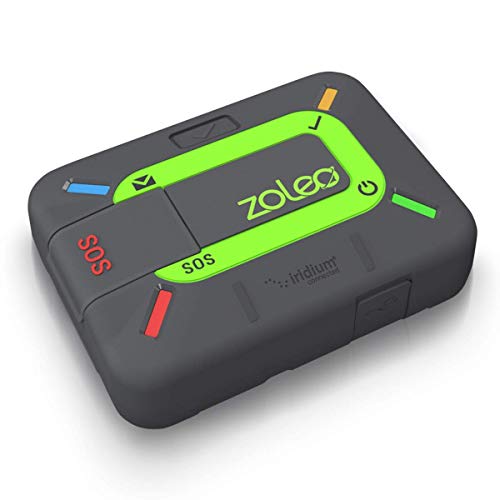
ZOLEO bridges satellite messaging with a smartphone, enabling global SMS and email via the Iridium network, plus an emergency SOS with GPS location. This solution is ideal for campers who want satellite connectivity without learning a new device interface, as it leverages a familiar phone experience. It also supports optional travel risk management coverage for added security on longer expeditions.
Best for: Smartphone users who want seamless satellite messaging without sacrificing their device familiarity. A strong choice for tech-savvy campers who value easy texting and location sharing beyond cell service.
Caution: Service plans are required, and additional coverage or memberships can influence overall cost and availability in remote regions.
Spot X With Bluetooth: Two-Way Messenger

Spot X combines Bluetooth integration with a standalone GPS messenger, allowing near-field connection to a smartphone while also functioning as a dedicated satellite device. It supports SOS, two-way messaging, and real-time GPS coordinates. This is useful for group trips or scenarios where proximity-based control via Bluetooth enhances coordination with other devices or members of your party.
Best for: Group camping or vehicle-based trips where a Bluetooth-enabled companion device helps coordinate check-ins and emergency communication. Not ideal if Bluetooth range is limited in dense terrain.
Caution: Requires a subscription and service plan; ensure coverage aligns with your travel destinations and itineraries.
Buying Guide: How To Choose The Right Camping GPS Tracker
What kind of tracking do you need? Decide between satellite communicators for off-cell emergencies, or GPS trackers with real-time location updates for asset or group tracking. Consider whether you prefer two-way satellite messaging, SOS-only devices, or smartphone-integrated options. For backcountry camping, a dedicated satellite device is often more reliable than depending on a smartphone in remote areas.
Key considerations
- Coverage and network: Satellite options rely on networks like Globalstar or Iridium. Check service availability in your usual destinations and plan terms.
- Battery life and durability: Look for rugged construction, IP ratings, and long battery life for multi-day trips.
- Ease of use: If you plan to trek in cold or challenging weather, physical buttons and simple interfaces can be advantageous.
- Emergency features: SOS buttons, check-in features, and location sharing help ensure safety — verify the responsiveness of the emergency services tied to the device.
- Compatibility: If you prefer smartphone integration, options like ZOLEO can extend messaging through a familiar interface; if you want a standalone unit, consider devices like Spot Gen 4 or Garmin inReach Mini 2.
- Cost and plans: Subscriptions vary by service level and destination. Factor ongoing costs into your camping budget.
What’s best for different campers
- Best for solo adventurers: Compact satellite communicators (Garmin inReach Mini 2) for tiny packs and reliable SOS.
- Better for families and group trips: Spot Gen 4 or Spot X with messaging and SOS across multiple users.
- Choose this if you want smartphone familiarity: ZOLEO enables SMS and email via satellite using a phone.
- Avoid this if you only need basic navigation: A simple handheld GPS without satellite messaging will save cost but lacks emergency connectivity.
Maintenance and setup tips
- Keep firmware updated and verify map data before long trips.
- Test SOS and check-in features in a safe environment to confirm operation.
- Carry spare batteries or Portable Power Banks for extended trips in remote areas.
Frequently asked questions
- Do I need a subscription for satellite trackers? Yes, most devices require an active service plan for messaging and SOS features.
- Can these devices work when I’m out of cell service? Yes, many use satellite networks that operate globally or regionally, depending on the plan.
- Which device is best for beginners? Spot Gen 4 offers straightforward SOS and tracking features ideal for new users.
- Are these devices waterproof? Many models have water resistance, but check IP ratings for your specific use case.
- Can I use these devices with my smartphone? Some options like ZOLEO connect via smartphone, while others are standalone.
- What is TracBack routing? A feature on some devices that helps you navigate back to your starting point using saved routes.